Key events of Ireland’s EU Council Presidency
Ireland’s Presidency of the Council of the European Union will see the State host over 270 events, including the largest gathering of international leaders ever held in Ireland.
The State will chair around 180 council preparatory bodies, such as working parties and committees, in Brussels and Luxembourg during the Presidency. Most events held in Ireland will be hosted in Dublin at venues including Dublin Castle, Farmleigh House, and government buildings. Some events will also take place in Cork, Kerry, Limerick, Mayo, and Wicklow.
The most high-profile event of the Presidency will be Ireland’s hosting of the European Political Community summit. Forty-seven heads of state and government will attend the event which will be the largest gathering of international leaders ever held in Ireland.
The European Political Community aims to facilitate coordination between European heads of state and government of EU and non-EU countries on matters of shared strategic importance. The summit takes place around every six months and is generally hosted by the member state holding the rotating Presidency of the council.
The eighth summit of the European Political Community was held in Yerevan, Armenia in May 2026 under the theme ‘Building the future: Unity and stability in Europe’. Leaders discussed how they could coordinate action to strengthen democratic resilience, advance connectivity, and reinforce economic and energy security.
Ireland will host the ninth meeting of the summit in November 2026. When attending the summit in Yerevan, Taoiseach Micheál Martin TD said: “Responding to Europe’s competitiveness challenges and to the changed security landscape will be an important focus for our EU Presidency, which begins in July.
“I look forward to welcoming members of the European Political Community to Dublin for its next summit meeting in November.”
The State will also host an informal meeting of the European Council. It is an opportunity for the leaders of the 27 member states to discuss current political developments and strategically important matters.
Cyprus held the last such meeting in April 2026 during its presidency. The meeting focused on Russia’s invasion of Ukraine and the conflict in the Middle East, and the multiannual financial framework for the period 2028 to 2034.
Additionally, Ireland will host 22 informal ministerial meetings of the Council of the EU. This will include meetings of housing and consumer policy ministers of member states.
“We will leverage the Presidency as an opportunity to enhance the involvement of Ireland’s youth, and rural and regional communities, in EU affairs.”
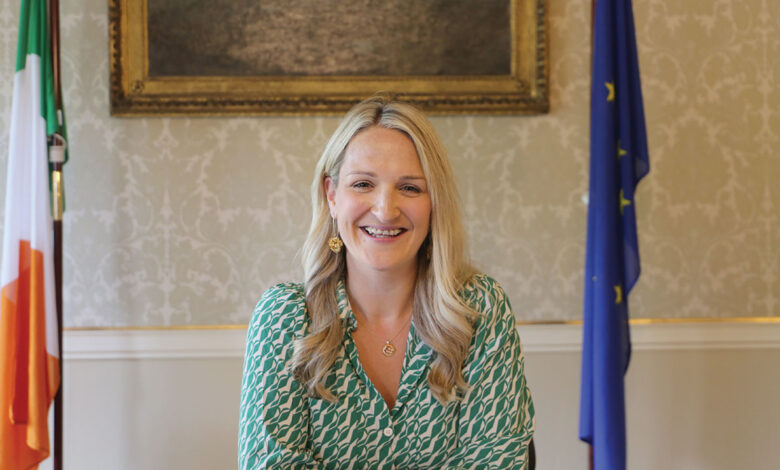
Minister for Foreign Affairs and Trade Helen McEntee TD
The EU Council meets regularly to discuss 10 different policy areas known as ‘council configurations’. Meetings see national ministers for the configuration up for discussion convene to discuss policies and adopt legislation. The council Presidency sets the overall work programme for the configurations and organises informal meetings for ministers. The 10 configurations are as follows:
- Agriculture and Fisheries Council (AGRIFISH);
- Competitiveness Council (COMPET);
- Economic and Financial Affairs Council (ECOFIN);
- Education, Youth, Culture, and Sport Council (EYCS);
- Employment, Social Policy, Health, and Consumer Affairs Council (EPSCO);
- Environment Council (ENVI);
- Foreign Affairs Council (FAC);
- General Affairs Council (GAC);
- Justice and Home Affairs Council (JHA); and
- Transport, Telecommunications, and Energy Council (TTE).
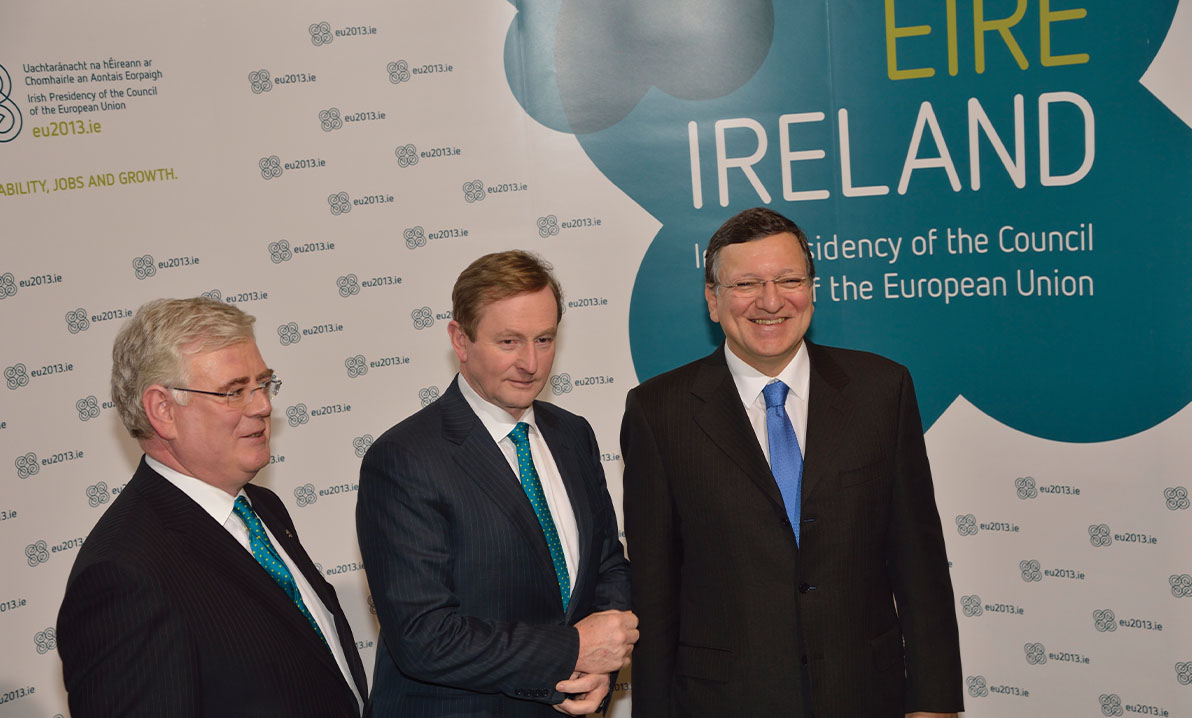
Each Irish government minister will chair a meeting of the council during the Presidency, with Dublin Castle set to host 16 of these meetings. The remaining six will take place in Cork, Kerry, Limerick, Mayo, and Wicklow.
The State will also host around 250 conferences, political events, and stakeholder engagements, and additional events organised by universities, cultural institutions, civil societies, and business groups.
During a Dáil Éireann debate in May 2026, Minister for Foreign Affairs and Trade Helen McEntee TD said: “I am determined to ensure that the entire country can engage with and benefit from the Presidency, and we are also progressing work to develop a programme of domestic outreach and engagement.
“We will leverage the Presidency as an opportunity to enhance the involvement of Ireland’s youth, and rural and regional communities, in EU affairs.”
Minister of State for European Affairs, Thomas Byrne TD, says: “The task ahead of us in taking on the EU Presidency is very significant, and I know from the programme of visits that I have been undertaking to EU and European capitals in recent months, that expectations of the Irish Presidency are very high.
“Across the Government, we will work hard to meet those expectations and deliver a successful EU Presidency that enhances Ireland’s international standing and influence and delivers for Europe and its people.”