How will Ireland utilise the EU Council Presidency?
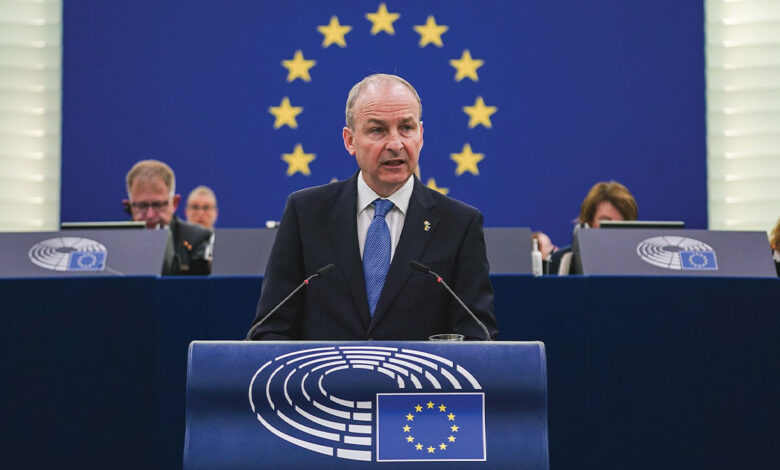
eolas Magazine looks ahead to Ireland’s imminent Presidency of the Council of the European Union, which will give the State a significant opportunity to shape the European agenda at a time of geopolitical and economic uncertainty.
2026 marks the eighth time that Ireland will have the Presidency of the Council of the European Union, with the State having previously held the role in 2013, 2004, 1996, 1990, 1984, 1979, and 1975.
Describing the presidency as a “generational moment”, Minister of State for European Affairs and Defence Thomas Byrne TD has outlined an ambitious programme focused on competitiveness, security, enlargement, and democratic resilience.
Taoiseach Micheál Martin TD has emphasised the practical economic dimensions of the presidency, including trade, entrepreneurship, the EU budget, and efforts to reduce the cost of doing business.
The Presidency will place Ireland at the centre of EU decision-making from 1 July 2026 until 31 December 2026. In Brussels and Luxembourg, Irish ministers and officials will chair around 180 Council preparatory bodies and lead negotiations with the European Parliament across a broad range of legislative files.
Ireland will also inherit ongoing policy discussions and legislative negotiations from the soon-to-end Cypriot presidency, while responding to any emerging challenges during its six-month term.
The Government’s priorities align closely with the EU Strategic Agenda 2024-2029, which is framed around the themes of values, security, and competitiveness. Among the most significant issues expected to dominate the Irish Presidency are EU enlargement, economic competitiveness, security and defence cooperation, and negotiations on the next Multiannual Financial Framework (MFF).
As was the case in Ireland’s 2004 presidency, the enlargement agenda is likely to feature prominently. Against the backdrop of Russia’s invasion of Ukraine, Ireland has consistently supported membership applications for candidate countries including Ukraine and Moldova. Although Ukraine’s accession is unlikely to occur through the term of Ireland’s presidency, its accession is likely to be progressed.
Competitiveness represents another central pillar of Ireland’s agenda, as recent concerns regarding Europe’s productivity and innovation performance have intensified at an EU level following former President of the European Central Bank and Italian Prime Minister Mario Draghi’s report on the future of European competitiveness.
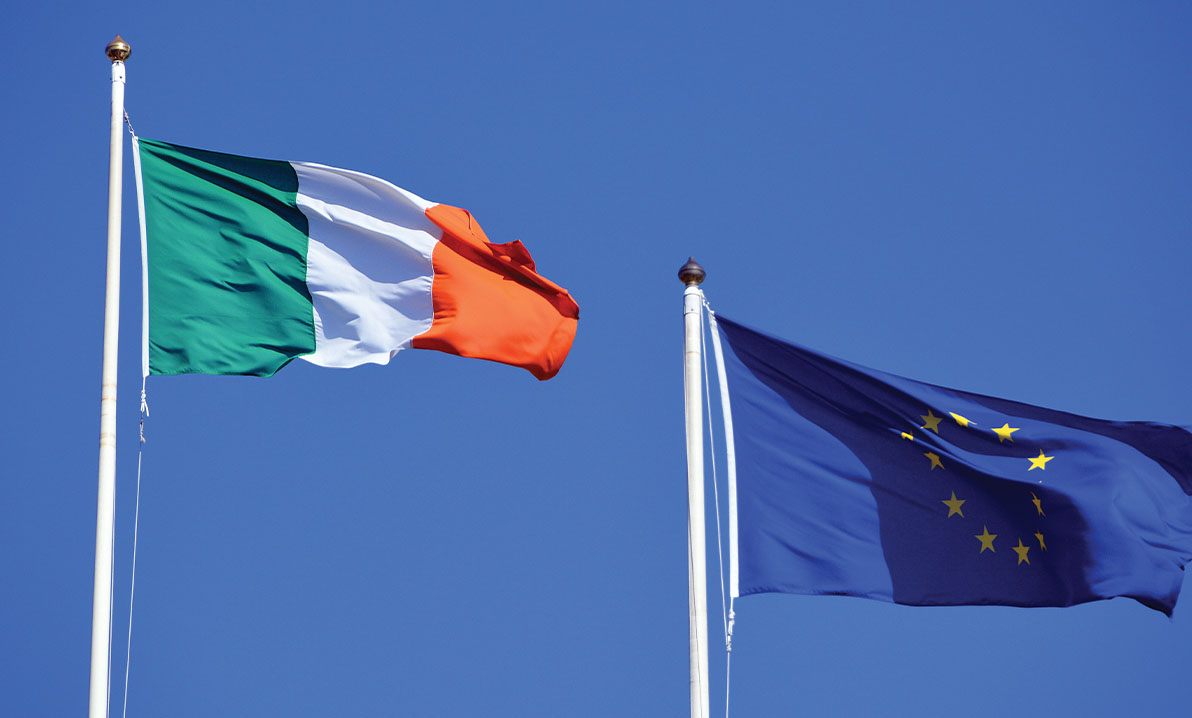
Security and defence are also expected to receive considerable attention. While Ireland continues to maintain its long-standing policy of military neutrality, it is prioritising the removal of the ‘triple lock’ on Defence Forces engagement, which would give the State a peacekeeping role independent of Russia’s veto in the UN however has been criticised by opposition Dáil parties as a slippery slope towards military alignment. Continued EU support for Ukraine is expected to remain a consistent feature of discussions throughout the Presidency, especially given the lack of enthusiasm for Ukraine’s defence from the Trump administration in the US.
Perhaps the most politically sensitive challenge facing Ireland will be advancing negotiations on the EU’s long-term budget for 2028-2034. Minister of State Byrne has identified the MFF as a priority for the General Affairs Council, arguing that decisions taken during the negotiations will shape the future direction and ambitions of the Union.
Alongside these policy objectives, the Government has placed considerable emphasis on democratic resilience. Byrne has highlighted concerns regarding disinformation, foreign interference, and threats to democratic institutions, signalling support for advancing the European Democracy Shield initiative in cooperation with Ireland’s European Commissioner Michael McGrath.
The logistical scale of the Presidency will be significant, as Ireland is expected to host more than 270 presidency-related events, including 22 informal meetings of EU ministers. Dublin will welcome leaders from up to 47 countries for a summit of the European Political Community, alongside an informal meeting of the European Council. These events will constitute one of the largest programmes of international diplomacy ever hosted by the State.
Beyond formal policymaking, the Presidency will also be used to showcase Ireland internationally. Government plans include cultural initiatives, youth engagement programmes, and partnerships linking Irish counties with EU member states. Ambassadors will participate in community outreach activities across the country, while universities, businesses, and civil society organisations are expected to host hundreds of associated events.
However, the Government’s proposed priorities have been criticised by some, as Sinn Féin has called for Irish unity to become a central political objective of the Presidency. In its submission to the Government consultation process, the party argues that the EU Presidency presents an opportunity to advance discussion on constitutional change on the island of Ireland.
Senator Conor Murphy has pointed to polling suggesting support for Irish unity within the European Union and argues that Brexit has strengthened the case for constitutional change. The party contends that preparations for a future border poll and potential reunification should begin now, with the Presidency providing a platform for wider European engagement on the issue.
Ireland’s 1990 presidency was dominated by German reunification following the fall of communist dictators in much of Eastern Europe and was shortly followed by the collapse of the Soviet Union.
Ireland is in a different place compared to its last presidency of the Council of the EU, as it now stands as a resilient economy compared to 2013, when the EU-IMF bailout and austerity measures dominated politics under Enda Kenny’s government.
This will be the first presidency Fianna Fáil has presided over since Bertie Ahern’s successful ‘big bank’ enlargement spell in 2004 and, if reports are to be believed, will be the final big event of Micheál Martin’s reign as leader of Fianna Fáil before backbenchers aim to remove him.
Therefore, this presidency and the achievements over the next six months may well define the legacy of this enigmatic Fianna Fáil leader, who has now served as his party’s leader longer than anyone apart from Éamon de Valera.