Innovating for a secure, sustainable, and affordable energy system
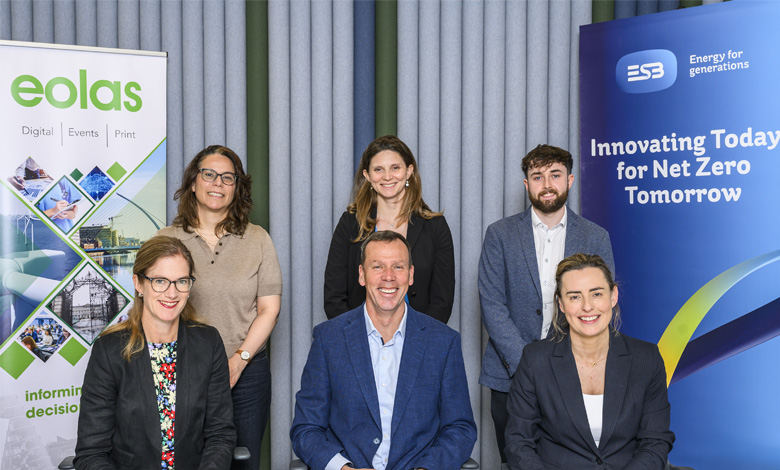
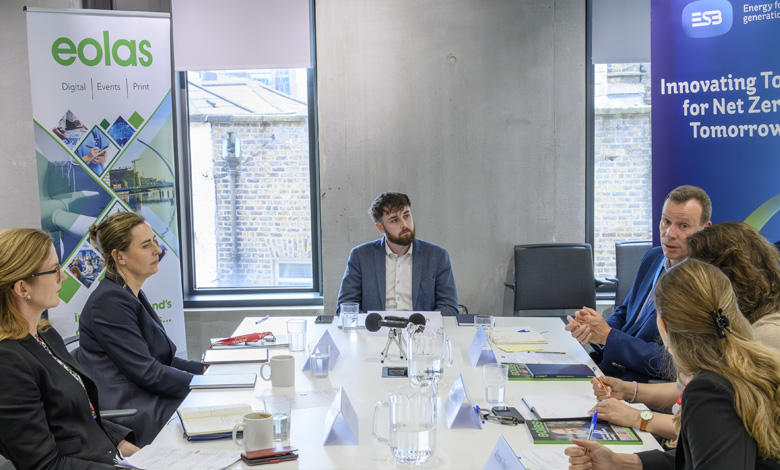
ESB hosted experts from across the energy sector for a discussion on innovating for a secure, sustainable, and affordable energy system.
What one current innovation shows particular promise in making energy cleaner, more secure, and more affordable?
John Walsh
The current combination of solar PV and batteries will be fundamental in transitioning to an affordable, secure, and sustainable energy system. We have seen the price dropping for both technologies really quickly and the combination of the two means we can start to not just produce solar electricity when it is bright and sunny, but also store it and make it available 24 hours per day.
Anna Kennedy
I am particularly interested in dynamic tariffs and the potential they have to support a cleaner, more flexible
energy system. I am also paying close attention to the development of smart energy management systems behind the meter. Companies such as 1KOMMA5° in Germany are already demonstrating how homes can automatically optimise energy use in response to price and grid signals. Dynamic tariffs have many benefits, but they can also place a lot of responsibility on consumers, many of whom may not fully understand how their meter or tariff works to optimise its use.
Anne-Lise Laurain
AI is the innovation with the most promising future, but not everyone is sufficiently equipped to apply it in the correct way yet. Many are currently using it for basic tasks. The technology exists; we now must go about enabling the efficient use of AI; especially for utilities with critical applications. However, I do not think conditions are quite right yet for everyone to use AI safely and securely.
Lisa Ryan
No one technology will achieve the energy transition. On the supply side, offshore wind is key for Ireland. We have an amazing resource that we must exploit, but we have been slow to do so and this must be accelerated. Flexibility and storage are required to exploit high shares of renewables. Dynamic pricing and smart controls would help with flexibility and this, of course, links with AI. Vehicle-to-grid (V2G) will be a key technology when a large number of EVs are operational in the system. Each produces between 40KWh and 100KWh of electricity which is enough to power a household for two to seven days. That will be critical during droughts and ‘dunkelflaute’.
Maria Keany
The combination of offshore wind and solar, and its integration on to the grid, is going to be key. We must assess how this can be done safely while limiting curtailment. At present, we have short- and medium-term storage, and long-term storage is going to be critical. On the customer side, automation is essential. We can only rely on customers to turn appliances on or off so much, so I think it is crucial that this is automated to take the pressure off customers.
What are Ireland’s strengths and challenges regarding the emergence of innovation and its adoption in real-world applications?
Anne-Lise Laurain
Ireland being an island makes it unique in dealing with the high penetration of renewables, especially wind. Ireland also has an innovation mindset which you do not see everywhere in Europe. I believe that the development of flexibility that can be achieved with real-time tariffs is going to be very important. The Free Electrons programme started by ESB is very interesting as it demonstrates utilities collaborating in an international programme to ensure that critical innovation technologies are tested and shared.
John Walsh
As a nation, we are natural entrepreneurs, that is part of the Irish DNA. In terms of the challenges, sometimes it can be hard to get things done in Ireland. We can put roadblocks and obstacles in the way, particularly for demonstrating and piloting new technologies; so we need to make it easier to trial new things. I have been really impressed by the rate of change in Spain since the electricity outage last year. I think it shows what a crisis can do to unlock some of the inertia that is there in systems.
Maria Keany
Ireland is small and, within that, the energy community is very small which makes it much easier to collaborate. There are really strong links between industry, academia, and policymakers. We have really strong research capabilities amongst the universities and they are good at working together. I would echo what John said. Sometimes turning research into deployment can be a lot slower than we would want it to be.
Lisa Ryan
I think the fact that we are relatively small, which Maria mentioned, benefits trialling things. The size of the island of Ireland makes it a perfect place to run EVs. Most people drive a relatively small number of kilometres per day and we have a dispersed population. This can work against us in relation to the grid, but regarding EV use, it means many people have driveways where they can charge them. Our fabulous wind resource is another big strength. We should be leading rather than following in that regard at this stage. In terms of the challenges, we are missing some key infrastructure and we have not been effective in implementing and building infrastructure. From a regulatory perspective, we try to do things properly but we sometimes overcompensate which makes it difficult to get things done.
Anne-Lise Laurain
I believe every country is facing those same issues. Creating long-term policies is very difficult and it is needed for innovation. That is because innovation requires investment and people may not invest if there is not long-term security. Many countries face difficulties at the implementation phase because the energy industry can be very political and there are many things that are out of the control of the engineers developing those new technologies.
Anna Kennedy
Although we are good at rolling out pilots, we are very weak at following through and deploying them at large scale. One of the biggest barriers is capital and accessibility. At EnergyCloud, we work with many households experiencing energy poverty, with an energy budget of €1 per night. For those,
night-time use of the energy from their pre-paid meter for technologies such as heat pumps or batteries may mean they do not have credits left to cook the next day. It is a two-tier energy system: on one side are households that can afford smart technologies and benefit from lower costs and flexibility. On the other are people struggling to afford even the most basic energy needs.
“The current combination of solar PV and batteries will be fundamental in transitioning to an affordable, secure, and sustainable energy system.”
John Walsh
What role does collaboration play in finding innovative ideas and turning them into real-world solutions for the energy sector?
Lisa Ryan
No single discipline or organisation can solve the challenges of the energy transition alone. Within academia, economists, engineers, and technical experts must work together to ensure solutions are practical and accurately modelled. Beyond academia, collaboration with industry, policymakers, and communities is critical to implementing technologies and gaining societal support. Increasingly, the challenge is less about technical solutions and more about public engagement, policy, and social acceptance. Ireland’s new National Energy Research Centre reflects this approach by bringing together multiple disciplines, industry partners, policymakers, and society to work collectively on energy transition challenges.
Maria Keany
Effective progress requires academia, industry, regulators, government, and communities working together. Research programmes such as the NexSys Research Programme demonstrated the importance of multidisciplinary collaboration by combining engineering with social policy, economics, mathematics, and climate science to address energy challenges more holistically. This collaborative model will continue through Ireland’s new National Energy Research Centre. From an academic perspective, industry partnerships are especially important because they provide the practical, real-world context needed to ensure research can be applied effectively and deployed at scale in the energy system.
John Walsh
We need collaboration right across communities, industries, governments, and international partners. Locally, it is important to understand the perspectives and needs of households, businesses, energy users, and sectors such as data centres, all of which use energy differently. National collaboration is equally important for managing infrastructure and policy, while international collaboration allows countries to learn from one another’s experiences and innovations. Because the energy transition is part of a global system, sharing knowledge and perspectives internationally is essential to ensuring that solutions are scalable, coordinated, and capable of supporting long-term transition goals.
“Although we are good at rolling out pilots, we are very weak at following through and deploying them at large scale.”
Anna Kennedy
Anna Kennedy
Collaboration is often described as difficult, but it is essential if we are serious about delivering the energy transition at the speed required. Complexity is frequently used as a reason for slow progress, particularly when multiple stakeholders are involved, but successful examples already exist. Projects such as EnergyCloud demonstrate that collaboration between housing bodies, energy companies, retailers, grid operators, and communities can deliver tangible results. Thousands of households in Ireland have already benefited from free energy initiatives through these partnerships. Bringing together multiple organisations with different priorities, systems, and objectives is not easy, but it is possible. In fact, without that level of cooperation, innovation will remain stuck at pilot stage and large-scale implementation simply will not happen quickly enough. The energy transition cannot be delivered by any one sector acting alone.
Anne-Lise Laurain
Collaboration in the energy sector must operate globally because many countries are facing similar transition challenges. International cooperation prevents duplication of effort and allows organisations to learn from both successes and failures elsewhere. Through global utility networks and collaborative research initiatives, energy providers can share experiences, innovation strategies, and lessons from real-world implementation. Creating safe environments for honest exchange is particularly important, as organisations often learn more from failures than successes. International collaboration also helps countries respond more proactively to emerging risks and system challenges, rather than waiting until problems occur locally. This shared learning approach is essential for accelerating innovation and strengthening resilience across the global energy system.
“International cooperation prevents duplication of effort and allows organisations to learn from both successes and failures elsewhere.” Anne-Lise Laurain
How will industry collaboration and innovation support consumers by helping make energy more affordable and resilient to external events?
Maria Keany
We must reduce dependence on fossil fuels through greater renewable energy deployment and improved grid infrastructure. On the consumer side, automation will be increasingly important. Smart systems can help manage energy use and provide flexibility to the grid without relying on consumers constantly changing their behaviour or manually controlling appliances. This can lower bills while improving system efficiency and resilience. Collaboration between industry, researchers, and policymakers is essential to ensure these technologies are practical, scalable, and accessible for consumers as part of the wider energy transition.
Anne-Lise Laurain
Collaboration helps reduce the risks associated with adopting new technologies because solutions can be tested, shared, and improved across different organisations and countries. This avoids duplication of effort, reduces costs and risk, and allows technologies to be implemented more quickly and confidently. In that sense, collaboration directly supports affordability by making innovation more efficient and lowering barriers to deployment. Shared learning and coordinated implementation are therefore critical to accelerating the transition while ensuring consumers benefit from safer, more reliable, and more cost-effective energy systems.
Lisa Ryan
Technologies such as offshore wind, smart controls, and vehicle-to-grid systems require both capital investment and supportive regulation. Collaboration between industry, academics, policymakers, and regulators can help de-risk these investments and create incentives for innovation that benefit consumers rather than simply increasing profits. Ireland can also learn from countries such as Denmark, where many energy innovations are already commonplace. Greater collaboration and policy support can help accelerate the rollout of proven technologies, making the energy system more flexible, affordable, and capable of responding to future challenges.
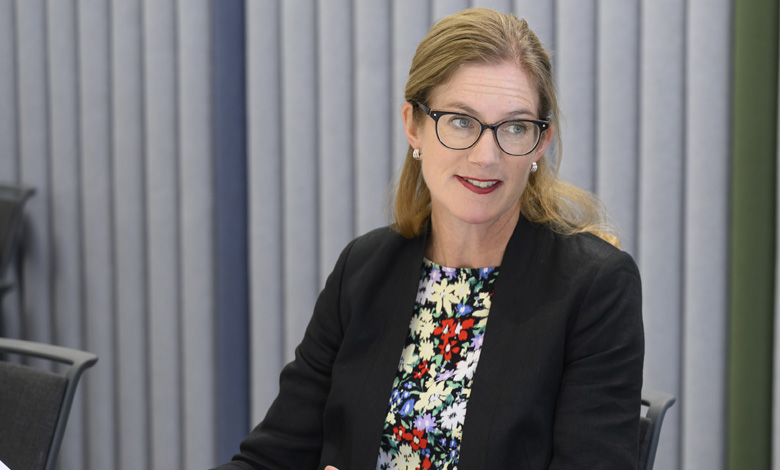
“Greater collaboration and policy support can help accelerate the rollout of proven technologies.”
Lisa Ryan
Anna Kennedy
Consumers should not be expected to constantly change their behaviour to manage energy demand. Much of that complexity should be handled through software, automation, and AI working in the background to optimise energy use automatically. Technologies such as small-scale solar panels, heat pumps, and smart controls can help reduce costs and improve resilience if supported by the right policies and incentives. Other countries, including Germany, Sweden, and regions in the southern hemisphere, have already implemented practical solutions that could be adapted locally. Collaboration is therefore not only about working across sectors domestically, but also about learning from successful examples elsewhere and applying them more quickly and effectively in Ireland.
John Walsh
Collaboration will be critical both in how energy is produced and moved, and in how it is used. Expanding low-cost renewable energy can reduce dependence on expensive fossil fuels, but delivering this requires much broader collaboration than in the past. The energy sector now needs to work closely with industries such as automotive, telecommunications, and finance to enable technologies like vehicle-to-grid systems. Collaboration must also extend beyond industry to include communities and NGOs in projects such as community solar initiatives. By involving a wider range of stakeholders, the energy transition can become more affordable, sustainable, and resilient while delivering benefits more directly to consumers and local communities.
Maria Keany
Future energy systems also need to focus much more on demand, not just supply and transmission. The demand side can become an active part of the solution by providing flexibility and helping balance the grid. This includes bringing sectors such as data centres into the conversation, despite some of the criticism they currently face. With the right collaboration and technologies, large energy users can contribute positively to system resilience and flexibility. Achieving this will require looking beyond the traditional energy sector and involving a broader range of industries and stakeholders in energy planning and innovation.
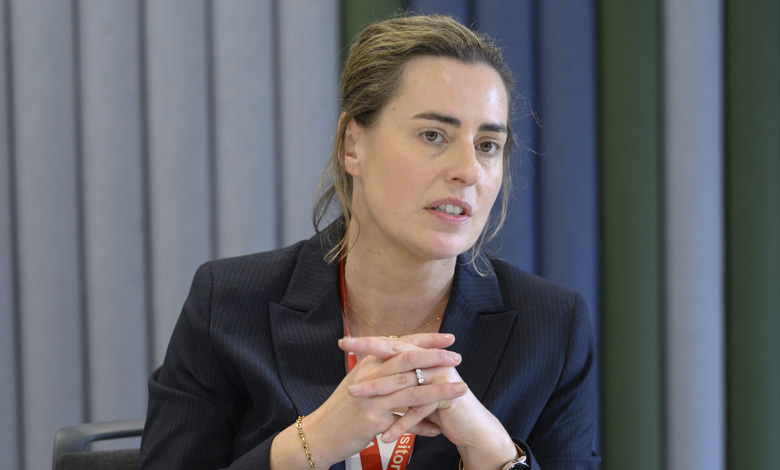
“It is important to provide long-term certainty and clearer pathways for industry in the policy and regulatory environment where possible.”
Maria Keany
How can the policy and regulatory environment best support energy innovation in Ireland?
Anna Kennedy
What EnergyCloud would like to see addressed is the continued level of energy poverty in Ireland and the need to make energy-saving measures more accessible to everyone. We would like to see the process of introducing single retrofitting measures simplified, and that renters would be able to avail of these. At the same time, there should be stronger recognition within policy of the levels of renewable energy currently being wasted or curtailed, while many households continue to struggle with high energy costs and inadequate heating. Ireland has an opportunity to better connect surplus renewable generation with those experiencing energy poverty through innovative, socially focused energy initiatives.
John Walsh
Policy, regulatory frameworks, and innovation are not natural bedfellows. Innovation is about trying new ideas and evolving, and includes failing, failing again, and failing better. In a highly regulated environment, that can be a challenge. I have two asks, the first of which would be to reduce the regulatory requirements for testing pilots and demonstration projects with academic institutes and research centres. We should be sandboxing pilot and demonstration projects. Secondly, we have a relatively high cost of electricity relative to natural gas in Ireland. Our spark gap spread is relatively high compared to other European countries. We should rebalance some of the policy burdens on electricity and redistribute them to enable a more favourable spark gap spread in Ireland. This would greatly accelerate the adoption of electrification.
Lisa Ryan
Achieving an energy transition requires incentives which must be facilitated by the regulatory environment. Our ambition is for a large renewable electricity generation system, but this must be facilitated on the demand side. EnergyCloud provides a good example of excess electricity being made available to lower income households. However, there is not really an incentive for organisations to do that. It requires policymakers to enable this. Similarly for innovation, if incentives are not in place for organisations to trial new things, it is difficult for them to do that. A regulatory environment that facilitates the trial of different technologies and systems, perhaps through sandboxing, is required. The establishment of the Offshore Wind Energy Clearing House demonstrates a recognition of the need to bring people together. However, more will be required as we cannot expect industry to invest if there are no requirements or incentives.
Maria Keany
It is important to provide long-term certainty and clearer pathways for industry in the policy and regulatory environment where possible. On infrastructure deployment, offshore wind has been identified as an enabler of the energy transition but there is a lot of infrastructure that is not in place. There needs to be more joined-up thinking on policies to provide industries considering investing in offshore wind in Ireland the ability to invest. Why would they invest if the necessary infrastructure is not in place? Policies in Ireland, particularly around the energy transition and climate, can compete with each other which causes problems for infrastructure development.
Anne-Lise Laurain
Long-term policy is critical to enable innovation and the energy transition. As John was saying, trialling things, failing, and learning from those failures is not always facilitated by a regulatory environment. The US has an impressive culture for allowing the termination of publicly funded programmes when they are not working. The UK has a good system where there are multiple rounds for trials to be stopped if they are not working. It is important to have a safe environment to be able to fail and it is critical to make adoption of innovation safe. This is where regulatory sandboxes are key as you do not want to implement something that may not be safe.