Capitalising on the global interest in the Irish Language
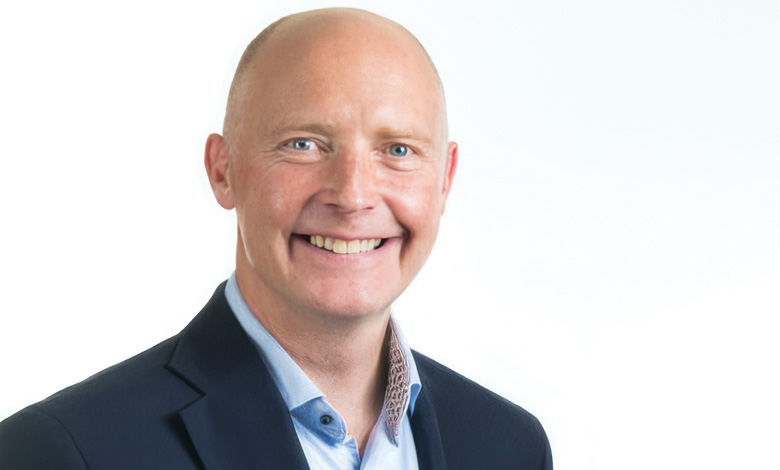
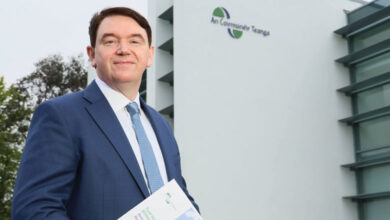
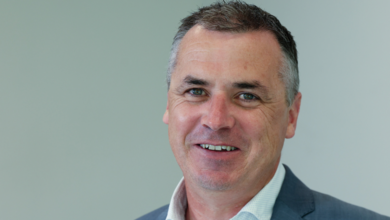
“The quiet recovery of Ireland’s ancient tongue,” is how The Economist magazine described the remarkable growth in interest in the Irish language in April 2026, writes Tomás Ó Síocháin, CEO of Údarás na Gaeltachta.
This piece was originally written in Irish. Please click here to access the Irish language version.
That growth, alongside 40 years of work by Údarás na Gaeltachta, presents a remarkable opportunity for the language and Gaeltacht communities across a number of areas.
1,873,997 is the number of people in Ireland that identified as having the ability to speak Irish in the 2022 census. The recent publication of the Government’s Action Plan for Irish Language Public Services 2026-2028 creates the platform to meet the needs of those speakers, and Gaeltacht regions are particularly well positioned to deliver.
For the second year in a row, sales by Údarás na Gaeltachta client companies have exceeded €1 billion. Their expenditure in Ireland’s economy totalled €570 million; together constituting a substantial benefit to the national economy.
These companies created 681 new jobs in 2025, bringing total employment across Gaeltacht areas in seven counties to 9,716; a figure that has remained stable since 2024. This foundation enables families to settle and raise the next generation in the Gaeltacht, where supports are available for those who continue to use Irish as a community language.
Support continued in 2025 through the Community and Language Development and Community Development Organisations Fund (€7.8 million). Roinn na Gaeltachta funding, through Údarás na Gaeltachta, will support the 28 Language Plans and the 33 Language Planning Officers, with a budget of €3.9 million allocated tothis work in the current year.
436 people are working within the gteic network, which comprises 29 digital hubs located throughout the Gaeltacht, with gteic@Campas Íosagáin, gteic@Toraigh, and gteic@Baile na Finne opening soon. The Irish Language Development Scheme for client companies was launched during 2025, with 15 companies, employing a total of1,139 employees, already registered in the scheme.
Over €70 million in competitive research funding has been secured by 14 projects from the Disruptive Technologies Innovation Fund (DTIF) in which Gaeltacht companies receiving support from Údarás na Gaeltachta participated, reinforcing the emphasis on research and innovation as drivers of high-quality, sustainable employment.
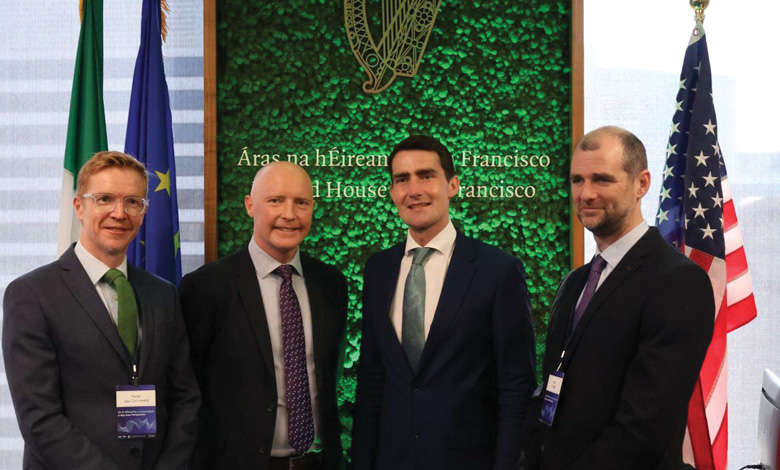
The development of Irish language tools using AI is a good example of where these objectives align. At a recent conference on artificial intelligence and low resource languages, hosted by Údarás na Gaeltachta and the Consulate General of Ireland, San Francisco, one message came through clearly: AI is already determining which languages thrive in the digital age and which are left behind. Irish, as an official language of both the State and the EU, is well placed to be among those that thrive.
To meet that demand, Údarás na Gaeltachta is working with Trinity College Dublin, University College Cork, University of Galway, and Dublin City University to develop tools and methods using AI and other technologies to improve the deliveryof public services and the capacity to deliver them.
AI is already determining which languages thrive in the digital age and which are left behind.”
Research by Údarás na Gaeltachta shows that young, skilled workers want to live and work in Gaeltacht areas across the seven Gaeltacht counties; Galway, Donegal, Kerry, Mayo, Cork, Waterford, and Meath.
As in other parts of the country, housing is a challenge, with five times the national average of holiday homes in Gaeltacht areas. Údarás na Gaeltachta is working, through the CCMA, with local authorities to support and improve the delivery of housing through shared use of land andwater infrastructure, and by funding a dedicated Gaeltacht derelict homes officer in Mayo County Council to liaise with all local authorities.
Ongoing investment in the organisation’s property portfolio saw over €18 million spent on essential and development works on Údarás property, including large-scale projects such as the upgrade of Gaoth Dobhair Business Park, Co. Donegal; Maigh Cuilinn Community Centre, Co. Galway; and Campas Íosagáin, Co. Cork.
Major design and planning work was also carried out during 2025 on projects including Ionad Fiontraíochta na nDéise, Indreabhán Education and Youth Centre, and the new Marine Centre in Carna.
An investment of €4 million was announced for visitor centres on Oileáin Árann and Oileán Chléire. UNESCO Global Geopark status was awarded to Joyce Country and Western Lakes Geopark, the first such designation in Ireland to include a Gaeltacht area.
The audio-visual production sector is particularly important in this context, raising the profile of Gaeltacht communities both nationally and internationally. During 2025, 460 additional jobs (100 full-time, 360 part-time) were created in this sector; a contribution worth €4 million to Gaeltacht areas this year. According to Údarás na Gaeltachta research, it is the largest sector where Irish is used as a working language.
Across technology, education, housing, and enterprise, the evidence points in the same direction. With the right decisions and supports the Irish language can thrive – on digital platforms, in classrooms, in coworking hubs, and, most importantly, in the Gaeltacht, where a new generation has decided it wants to ensure that Irish thrives and that the unbroken link that goes back millennia remains intact.
The momentum is real. The opportunity is now.
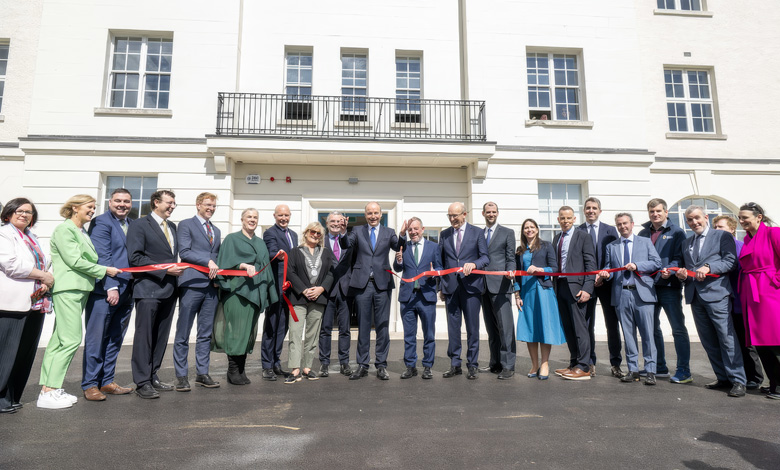
The gteic Gaeltacht digital network
The gteic network, developed by Údarás na Gaeltachta, is a strategic digital hub network supporting both the public and private sectors.
With 30 coworking hubs across Gaeltacht regions, it provides flexible workspace for remote workers, entrepreneurs, businesses and public bodies seeking more sustainable, regionalised ways of working.
Through facilities such as gteic@Campas Íosagáin in Baile Bhúirne, Co. Cork and gteic@Gaoth Dobhair in the Donegal Gaeltacht, employees can work close to their communities while accessing high-quality digital infrastructure.
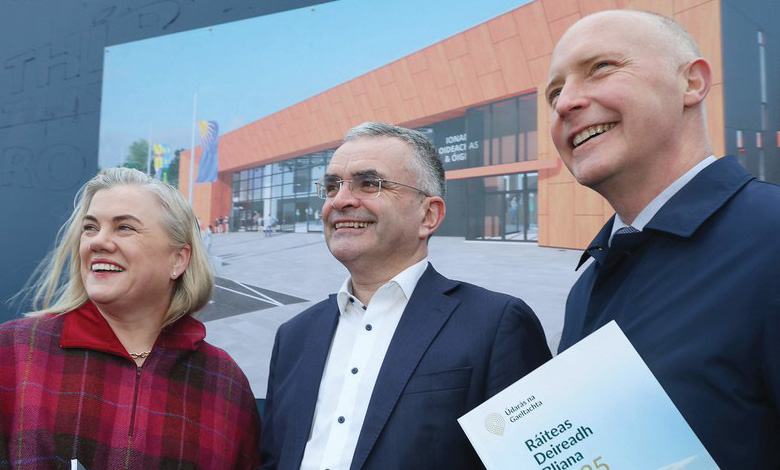
Beyond workspace provision, the hubs function as dynamic collaboration environments. They are ideally suited for team meetings, strategy days, workshops, and corporate off-site professional events.
At gteic@Campas Íosagáin, there is a strong emphasis on training, education, and networking, positioning it as more than a remote coworking hub and rather as a centre for engagement across the public, private, and education sectors in areas such as AI, cybersecurity, and the Irish language.
The gteic network represents more than workspace provision. It is a national ecosystem that connects communities, supports sustainability, and shapesthe future of work in the Gaeltacht.
By enabling professionals, graduates, and organisations to live and work in Irish-speaking regions, it ensures that the Gaeltacht plays a central role in Ireland’s evolving digital and public sector landscape.
A desire to learn
A major national study carried out by Amárach Research in partnership with Údarás na Gaeltachta and Gaelchultúr in December 2025 shows that 68 per cent of adults say they want to improve their Irish. Among those under 35, that figure rises to 73 per cent,
These are not abstract aspirations. When Údarás recently launched a series of 12-week QQI-accredited Irish language courses with MSLETB, delivered by Gaelchultúr and aimed specifically at people in employment, nearly 700 people expressed interest, with 60 enrolling.
The success of films like An Cailín Ciúin and artists like Kneecap has brought Irish before new audiences, generating a sense of pride not seen in generations. Gaelscoileanna are producing fluent young speakers who expect to use Irish in daily life. Digital platforms have opened doors for learners who previously had none, including newcomers to Ireland. And the Official Languages Act is steadily normalising Irish across public sector communications.
The work is already underway. What matters now is securing the infrastructure and seizing the opportunity before us.”
This is in addition to the Limistéir Pleanála Teanga and the network of Oifigigh Pleanála Teanga or Language Planning Officers across Gaeltacht areas, supporting the use of Irish as a living language in homes, communities and businesses.
Young adults are at the heart of this story. More than half of those under 35 are already using Irish in at least one setting, and 73 per cent of people aged 18 to 24 want to see Irish used more frequently by businesses and public organisations – an increase on the 48 per cent reported for the same age group in 2024.
The same cohort is thinking about the next generation too: 45 per cent of adults under 44 say they would choose Irish-medium education for their children if it were available locally.
The demand is there. The priority now is making sure the opportunities and supports are in place to meet it. Find out more about Irish language classes and services at udaras.ie.
AI and the Irish Language
Artificial intelligence (AI) is reshaping how people work, learn and communicate, and AI tools for the Irish language feature prominently in the Government’s plan to strengthen Irish language services for the public, in order to ensure that the language is central and functional in the technological era ahead.
AI na Gaeilge, an initiative led by Údarás na Gaeltachta to ensure that the Irish language keeps pace with other languages in the digital age, seeks to meet the increasing demand for Irish language services and tools.
Over recent years, Údarás has built close partnerships with academic and industry collaborators – among them ABAIR at Trinity College Dublin, University of Galway, and the ADAPT Centre at Dublin City University.
Supported by Roinn na Gaeltachta, the work spans speech synthesis, corpus development and the prototyping of new tools. These tools enable Irish language chatbots on existing databases, web reader apps as Gaeilge, live subtitling, and a data management roadmap for the safe and structured use of AI.
In April 2026, Údarás and EY published a landmark report, AI na Gaeilge: Gap Analysis and Stakeholder Insights Report, which identifies the most pressing gaps affecting Irish in the public sector and sets out a practical roadmap to address them.
Technology developments alone, however, will not be enough. The Údarás is equally focused on developing AI skills within Irish-speaking and Gaeltacht communities, and on fostering enterprise opportunities, so that these communities are full participants in the change ahead, not simply as end users, but as innovators and leaders.
The message at the core of this initiative is a straightforward one: Irish is a living, modern language, with more than 1.8 million speakers as identified in Census 2022 and it is well placed to thrive in Ireland’s digital future. The work is already underway. What matters now is securing the infrastructure and seizing the opportunity before us.