Why flexible mobility is becoming a business growth tool
As demand and business needs continue to expand and cost and capex pressures rise, for many institutions, vehicle requirements are no longer predictable enough to fit neatly into a traditional fleet model.
For state bodies delivering the National Development Plan, local authorities, semi-state organisations, NGOs, and development boards, the challenge is increasingly the same: deliver more, demonstrate value for money, and keep projects moving while remaining responsive as priorities and workloads shift.
The scale is significant. A construction company may need additional vehicles when a new project mobilises. Renewable energy and climate technology businesses can have teams moving between multiple sites. A film production may require a substantial number of vehicles for several weeks or months before demand falls away almost immediately.
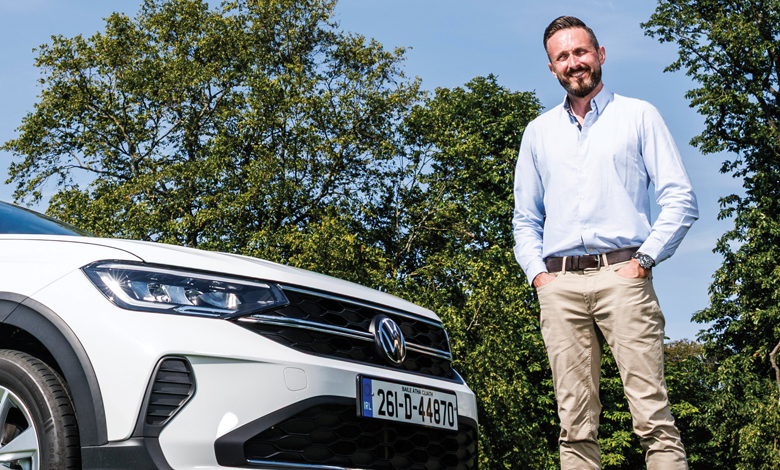
“Organisations increasingly want mobility to reflect what is actually happening in their business,” says Joe Quirke, Commercial Director and Head of Country, Ireland at Europcar. “That means having the right vehicles available when and where they are needed, with the flexibility to adjust capacity as projects, budgets, and service demands change.
“The updated National Development Plan commits €275.4 billion in public capital investment from 2026 to 2035.
“The ESRI’s Quarterly Economic Commentary, Autumn 2026 forecasts modified domestic demand growth of 3.4 per cent in 2027 and housing completions of just under 40,500.
“All of this is changing the way businesses think about mobility.”
Mobility that follows the business
Europcar’s flexible fleet solutions enable organisations to access vehicles from a single day through to longer-term periods of up to two years or more, giving businesses the ability to scale vehicle numbers up and down as circumstances change.
That flexibility is particularly valuable in project-led and fast-growth sectors. For public sector, semi-state, and project-led organisations, that scalability can be critical.
The same principle applies to organisations supporting Ireland’s wider growth sectors. State agencies and development bodies that enable inward film production, regional enterprise, or major events can experience short-term mobility peaks, while semi-state organisations with nationwide operations may need to adjust fleet capacity as service demand and ESG commitments evolve.

The objective is to maintain the right fleet mix at the right time, reducing idle capacity and helping ensure mobility supports successful project delivery; on time and within budget.
“A fleet should enable growth rather than constrain it,” says Quirke. “If a business wins a new contract, starts a new project, or needs to mobilise a team quickly, transport considerations should not become a bottleneck.”
Beyond the monthly vehicle cost
The conversation is also increasingly moving towards the lifetime cost of mobility. Buying vehicles requires capital expenditure, while conventional long-term leasing can leave organisations committed to costs even when utilisation changes. Europcar’s model is designed to enable scaling your fleet up or down as and when you need to, aligning vehicle provision more closely with actual requirements, without having to worry about high up-front investment costs, servicing, maintenance, and breakdown assistance.
“Cost efficiency is not simply about finding the lowest daily or monthly rate,” according to Quirke. “It is about understanding what mobility is costing the organisation overall, and making sure the fleet is being used efficiently.”
Europcar’s proposition is designed for a broad range of decision-makers, including procurement and operations teams, facilities and travel managers, fleet and sustainability leaders, and organisations with distributed workforces.
Data, visibility, and business continuity
Technology is another increasingly important part of that equation.
Europcar operates Ireland’s only 100 per cent IoT connected Telematics-enabled rental fleet, with exclusive supporting capabilities including ‘Track and Trace’ and rapid vehicle replacement. The technology is intended to give organisations greater visibility and transparency around vehicle usage, while helping reduce disruption when a vehicle becomes unavailable.
“If somebody needs a vehicle to reach a customer, visit a site, or carry out essential work, an unavailable vehicle becomes an operational issue,” Quirke says. “Being able to respond quickly and keep that person, crew, or team moving is a fundamental part of the service.”
Digital visibility and reporting can also help organisations make better-informed decisions about how their vehicles are being deployed, helping them to move fast and allocate fleet resources where they are needed most. Europcar’s model is powered by a state-of-the-art digital ecosystem that eliminates administrative friction, provides complete real-time visibility, and automates vehicle dispatch and collection.
Making lower-emission mobility more accessible
Sustainability remains another significant part of the mobility conversation.
Organisations with ESG and emissions-reduction targets are increasingly examining their transport footprint, but electrifying an entire owned fleet in one step may not be practical for every company.
Flexible access to electric and hybrid vehicles can provide an alternative route, allowing businesses to introduce lower-tailpipe emission vehicles into appropriate parts of their operations without immediately committing to fleet ownership or having to consider installing the infrastructure required to support EVs. Europcar has continued to expand access to hybrid and electric vehicles within its Irish fleet, maintaining a mix of vehicle types designed to meet differing business requirements even within an organisation.
“The transition will be different for every organisation,” says Quirke. “The important thing is giving businesses practical options so that they can make progress on sustainability without compromising their operational needs. The wider Europcar mobility ecosystem is constantly adapting to reflect this.
“With this in mind, Europcar has partnered with Ireland’s largest eMobility Services Provider (eMSP), enabling access to over 4,500 public chargers across 1,500 locations nationwide, providing inclusive charging solutions that reduce range anxiety and support the transition to greener fleets.”
A more adaptable approach
Ultimately, the shift is about making mobility respond to business activity rather than forcing businesses to structure their operations around a fixed fleet.
For organisations entering new markets, winning projects, mobilising temporary teams, or simply trying to use capital more efficiently, that distinction is becoming increasingly important.
“The starting point for us is understanding what the customer is trying to achieve,” Quirke concludes. “Where do their people need to be? When do they need vehicles, and what for? How might that requirement change?
“Once mobility is built around those questions, it becomes more than vehicle rental. It becomes a fundamental operational tool that can help a business adapt and grow.”