
The future of digital governance
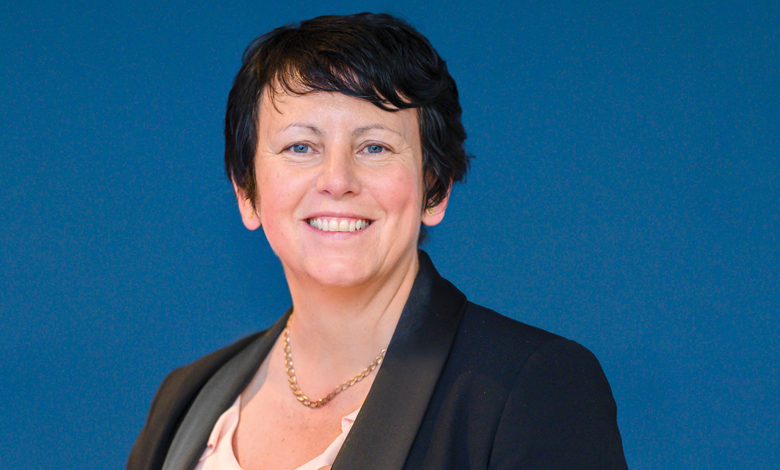
New Government Chief Information Officer (CIO), Louise McKeever, speaks to Gareth Hamill about her approach to the role, Ireland’s current digital landscape, and the upcoming projects she is keen to progress.
Louise McKeever says “it is a very interesting time to move into this role”, referencing the Government Digital Wallet, the life events reform, the Digital Public Services Plan 2030, and the Irish Presidency of the Council of the EU.
Before becoming Government CIO, McKeever worked as an IT programme manager with responsibility for large scale digital transformation and new business models in the Department of Social Protection before joining the Department of Agriculture, Food and the Marine in 2021, where she served as the CIO for over five years.
Describing the new role, McKeever says: “My mandate is to lead Ireland’s digital transformation by building shared capabilities, increase collaboration, and to enable government to deliver better, more connected public services.”
As “no stranger to operating across government”, McKeever says she is “very familiar with the terrain and delivering better public services to the citizens of Ireland”.
However, she does note that “central government is very different because it deals with all departments and all public service bodies” meaning that “the scale of activity is much bigger”.
Former Government CIO Barry Lowry stepped down in April 2026 after almost 10 years in the role.
Reflecting on her predecessor, McKeever says: “Barry was always an advocate of building strong relationships across government and empowering teams to succeed.”
“My mandate is to lead Ireland’s digital transformation by building shared capabilities, increase collaboration, and to enable government to deliver better, more connected public services.”
In an interview with eolas Magazine in March 2026, Lowry offered this advice to his successor: “Leaders should remove obstacles rather than micromanage. The idea is to get things out of the way for them.”
In response to this, McKeever says: “It is a strong leadership principle. Empowering teams is far more effective than trying to direct every detail.”
Describing her own approach to the role, McKeever says “collaboration is key, obviously communication, bringing people together, and setting that vision of ‘what are we trying to achieve?’”.
She adds that “transparency, building up trust, and relationships” are also “critical principles”.
When asked about her priorities in the role, McKeever says that she is focused on the delivery of the digital wallet and the life events reform.
Digital Wallet
In line with the EU’s eiDAS legislation, the Government Digital Wallet will allow citizens to store important government documents such as birth certificates, passports, and driver’s licenses on their phone.
Under the legislation, EU member states must provide at least one certified digital identity wallet available to citizens by the end of 2026 and private organisations by the end of 2027. Citizens can voluntarily use it to store and share verified credentials.
The consultation period for the wallet ended in June 2026 with the responses due to be published shortly, with the Government CIO saying that “those findings will help shape the development of the wallet”.
McKeever says a national pilot scheme will begin imminently, adding: “We are going to start with a slow onboarding over the next three to four weeks, and then we will increase that up over the next two to three months.”
She continues: “I think from not just a European perspective, but certainly from a global perspective, the rollout of the digital wallet will be groundbreaking.”

“AI will change the way we work, but I do not believe the primary objective in government is to replace people. AI adoption provides opportunities to deliver better public services and provide better outcomes for citizens.”
When asked about citizens who are uncomfortable with the concept of a digital wallet because they feel it is governmental overreach, McKeever says: “That came through as part of the consultations and I think it is really important to note that it is not mandatory to use the wallet.”
After the consultation period ended, the Irish Council for Civil Liberties and Digital Rights Ireland sent a letter to the Department of Public Expenditure, Infrastructure, Public Service Reform and Digitalisation outlining their concerns with the legality and security of the wallet.
McKeever says that this feedback has “been taken into consideration as part of the consultation process”.
Life Events
The other major project which McKeever says will bring huge benefits to citizens is the life events programme as part of the Government’s mandate to make all key public services available online by 2030.
This approach centres public services around key life events such as starting school, the birth of a child, marriage, and retirement in order to make it easier for citizens to access the services relevant to their needs.
Describing the benefits of this approach, McKeever says “it is kind of masking all the complexities of services across government”, meaning citizens “will go to one single place to avail of services so they do not have to go to various different departments”.
McKeever is confident of reaching the 2030 target but notes that because each life event incorporates services from different government departments, it will not be straightforward.
“The key challenge is bringing each of those departments together, who have different maturity in relation to their infrastructure and delivering that within the whole of government.”
She adds: “From my perspective, it is about driving on the whole-of-government approach in relation to the life events.”
Although the project is only in its early stages, McKeever is already excited about its potential: “The future direction of it is very much around the customisation of services for citizens. So, if you are applying for a particular service then there is a proactive piece where you could be entitled to another service.”
AI adoption
Speaking about additional projects that she is keen to advance, McKeever says: “I think there are lots of opportunities for the adoption of AI, it depends on the scenario for each department and we are testing the water in that regard at the moment.”
McKeever highlights the progress being made regarding the adoption of AI, noting: “Each government department is at various different stages in relation to operationalising AI and very much the focus has been on productivity.”
One AI project being progressed is the “enhanced search capability” on the GOV.IE website, which will use AI to improve its search function, according to McKeever. The pilot on GOV.IE was launched on 28 July 2026.
In partnership with this is the GOV.IE AI assistant; although the pilot for this project is not yet ready to go live.
McKeever says this will fundamentally change how citizens interact with the website.
“When you are searching something currently, it gives you links back where you click into them yourself, whereas this will actually give you a summary of all those links based on your ask.”
Asked about the potential of AI adoption to cause job losses, McKeever says: “AI will change the way we work, but I do not believe the primary objective in government is to replace people. AI adoption provides opportunities to deliver better public services and provide better outcomes for citizens.”
Transformation overview
Overall, McKeever is positive about the state of Ireland’s digital governance, saying: “I think we are doing well in relation to transformation in general, but I think there is always room for improvement.”
Specifically, McKeever says: “Our digital maturity is quite high if we look at various different ratings across Europe, and also in trust and AI adoption as well. So, we would score quite high across digital, data, and AI.”
When asked about areas of focus for Ireland’s digital transformation, McKeever says: “I suppose like every other, not only European state but globally, it is around skills and training.
“AI literacy is certainly an area that we probably need to focus on.”
In June 2026, the OECD’s Digital Government Outlook scored Ireland highly but noted that Ireland’s framework for AI transparency could be further developed.
Commenting on this, McKeever says: “I think more broadly, particularly in the context of AI and to build trust, transparency is key. It is always a core leadership priority to increase the transparency across government, and I think that is a work in progress.”
A project which McKeever says is central to the digital transformation but that citizens may not be aware of is digital public infrastructure, which she describes as the “building blocks”.
The Government CIO says that “it is infrastructure capability that actually enables an affordable and scalable digital government approach”.
“It is not new, it has been in the pipeline, and it is something that you have to build over time, but I see that as the enablement piece.”
Concluding, McKeever highlights the State’s potential to become a recognised global example of digital transformation.
“Ireland is in a strong position; it is recognised internationally across several areas, but there is more to do. We have the foundations of a digital government to build on. There is always room for improvement.
“If we can combine digital public infrastructure, responsible AI, life event services, and a culture of cross-governmental collaboration, we can become a leader in digital government.”