Accelerating infrastructure delivery
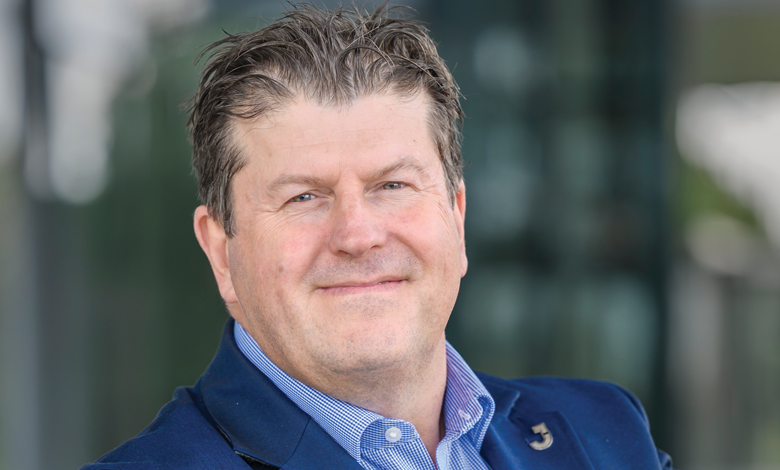
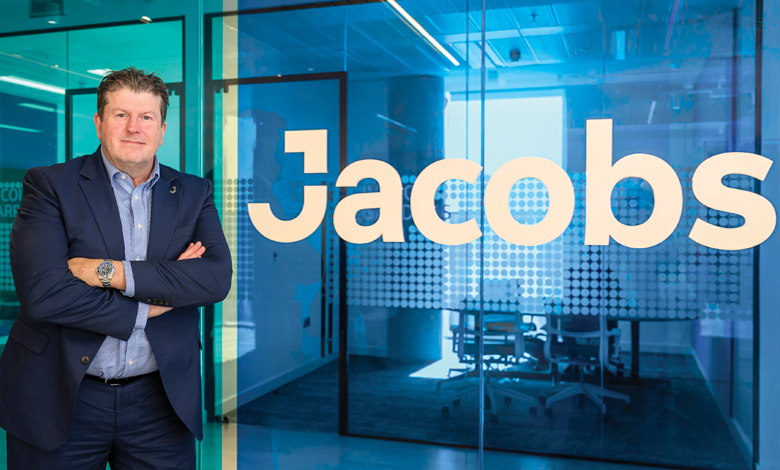
Mitch Tunikowski, Senior Vice President, Head of Growth and Sales Europe at Jacobs, talks to eolas Magazine about how Jacobs is shaping infrastructure delivery, its ongoing projects in collaboration with its clients, and why this is a critical moment for infrastructure delivery.
Mitch Tunikowski begins by noting that Jacobs has been in Ireland for more than 50 years and traces how the business and its role in the market has evolved in his time at the company.
“Ireland was Jacobs’ first office outside of the US. Now, it is one of the larger contributing businesses of the greater Jacobs family,” he says.
“I joined Jacobs in the life sciences industry. In 2009, we diversified to expand our work in the public sector. Since then, we have grown significantly, and we are now one of the leading services providers for public infrastructure in Ireland.”
The State has significant ambitions regarding infrastructure. The challenge, Tunikowski argues, is turning long-term plans into projects quickly enough to meet the State’s transport, housing, water, energy, and climate needs.
Tunikowski highlights significant projects Jacobs has been involved in including the M17/M18 Gort to Tuam project. It replaced the N17 and N18, providing bypasses to improve connectivity and reduce traffic congestion in the western region. The project, which opened in November 2017, also improved access to Shannon Airport and Ireland West Airport at Knock.
In September 2026, Transport Infrastructure Ireland (TII) appointed Jacobs and AECOM as the programme delivery partner for MetroLink. The project aims to deliver high-capacity, high-frequency metro railway for Dublin.
It is expected to run from Swords to Charlemont, connecting Dublin Airport with the city centre, Ballymun, and DCU along with major rail, Luas, and bus interchanges.
Further plotting the evolution of Jacobs, he identifies the organisation’s expansion into the water sector as key. Jacobs has been working with Uisce Éireann to deliver the Greater Dublin Drainage Project (GDD) and the Eastern and Midlands Water Supply Project (WSP) since 2013.
“Most members of the public are unaware of the number of hugely significant infrastructure projects that are ongoing.”
GDD aims to a deliver a new regional wastewater treatment facility and sludge hub centre at Clonshaugh, an underground orbital sewer from Blanchardstown to Clonshaugh, and an outfall pipe to return treated wastewater to a discharge point 6km out to sea. It is aimed at providing wastewater treatment for approximately 500,000 people in the Greater Dublin Area.
WSP aims to bring treated water from the Parteen Basin to Peamount in Dublin to support the water supply needs of 50 per cent of the State’s population.
MetroLink, WSP, and GDD are three of nine projects to be designated as critical infrastructure of strategic national importance under the Critical Infrastructure Act 2026.
A critical moment
When asked what makes the present moment critical for infrastructure delivery, Tunikowski points to the State’s decarbonisation goals. He then states that there is a “need to offer alternative sources of transport en masse”.
“That is why there are so many projects ongoing like Luas, DART+, BusConnects, and MetroLink to name a few. Ireland is becoming more mass transport-oriented which is a key focus of ours,” he says.
Tunikowski also says infrastructure delivery is critical in continuing to attract FDI. He says: “Ireland has attracted many multinational companies and a significant amount of FDI over recent decades. You must continue to invest in infrastructure to ensure you keep attracting that level of investment.
“Improving transport systems, the power grid, housing, and water supply and sewage treatment is key to this. If you fail to provide this infrastructure, these companies will invest somewhere else.”
Jacobs plays a key role in this delivery along with the National Transport Authority (NTA), Transport Infrastructure Ireland (TII), Iarnród Éireann, and Uisce Éireann. The organisation acts as a strategic advisor to the NTA on projects including the Greater Dublin Area Transport Strategy and BusConnects.
“With the NTA, we work in an advisory role to shape opportunities through design, delivery, procurement, and commissioning of sustainable, resilient infrastructure,” says Tunikowski.
He adds that Jacobs advised the NTA on its input to the National Development Plan and is currently working with the transport body on the delivery of 12 bus corridors.
He offers an insight into how buses may operate in the future: “Mass transit will have priority. There will be bus gates where buses, not cars, will be prioritised. Traffic light systems will be able to identify when buses are approaching. While cars will remain stopped at traffic lights, buses will be getting the green light.”
Along with TII, Jacobs is working to deliver a Luas service in Cork city which is intended to enable growth, sustainable mobility, and long-term city planning. On Jacobs’ work with TII, Tunikowski says: “MetroLink is our flagship project with TII and we recognise it is a nationally significant infrastructure programme to be involved with over the next 10 years.
“It is great to see how this project has evolved since it was first introduced as Metro North in 2005. It has changed a lot.”
Jacobs is also working with Iarnród Éireann on the redevelopment of the Limerick-Limerick Junction route. Tunikowski says: “It has a significant opportunity to upscale and offer enhanced capacity of the rail network. That will be a massive key to unlock the growth of the rail network.
“We need to help communities understand the longer-term benefit these infrastructure schemes could bring, both for them and for Ireland.”
“Most members of the public are unaware of the number of hugely significant infrastructure projects that are ongoing. For the size of this island, there are some mega infrastructure projects under way which is a fantastic opportunity to grow skills and employment in Ireland. Bringing in large contractors for this is great to see because this had diminished since the early 2000s.”
Planning
Discussing the planning process behind such projects, Tunikowski celebrates the fact that BusConnects secured planning without the need for an oral hearing for the 12 bus corridors, something he says is “very rare for a large infrastructure project”.
Continuing, Tunikowski says: “Current planning regulations do mean that it takes a long time to deliver major infrastructure.
“Construction costs have experienced significant inflation since then. That impacts your budget for these projects. Decisions need to be made quicker, projects need to be advanced thoughtfully, and challenges to decisions need to be addressed along the way.
“Taking the time to get early-stage design and planning right can improve the prospects for successful infrastructure delivery. It gives owners a stronger basis for decisions and helps identify risks before they become harder or more costly to address. Conditions can still change, so projects also need timely decisions and the flexibility to adapt as challenges emerge.”
When asked what can be learned from major infrastructure programmes in other countries, Tunikowski says: “Look at other programmes and the challenges they experienced, and do not repeat them. Making brave decisions upfront will minimise changes during construction. You do not want to be making changes during construction. The impact is huge.”
Climate
Discussing the importance of building climate resilience into infrastructure, Tunikowski outlines the impacts of climate change he has observed since arriving in Ireland.
“When I arrived here, rain was lower-intensity and persisted over a longer period of time. This is particularly evident over the last number of years and is contributing to more flooding.
“We must ensure design standards stay ahead of changing weather patterns like this. Using AI, we can understand forecast patterns and design infrastructure to be resilient against that.”
He states that effective planning can also reduce the impacts of climate change, adding: “We need to ensure we are engineering for the future. We also need to assess water reuse and capturing water more locally. Whatever we are designing for future generations must deliver an enhancement and not create a problem to solve.”
National Development Plan
Tunikowski praises the National Development Plan as an enabler for critical infrastructure delivery. He says: “A lot of countries do not have that, so it is good to be able to see what the Government plans to do in the long term. It informs us early of the level of staffing and types of skills we will need in the future.
“I see the National Development Plan as a set of binoculars. It allows us to prepare our future investments for infrastructure delivery. This enables transformation and continued growth.”
Tunikowski indicates that he is encouraged by the Accelerating Infrastructure Report and Action Plan (AIRAP). Identifying the need to speed up infrastructure delivery, he points to the development of Dublin Port Tunnel: “It is a critical part of keeping Dublin going.
“At the beginning, that received a significant amount of criticism from the public. But now, if the port tunnel is closed for maintenance, movement in Dublin stalls.”
This leads Tunikowski to discuss how the public tends to perceive large infrastructure projects being delivered in the State. He says: “We need to help communities understand the longer-term benefit these infrastructure schemes could bring, both for them and for Ireland.
“The National Development Plan and AIRAP can help people see what is planned and the outcomes it is intended to achieve, so people are prepared for what is coming and understand why it matters to their communities.”
Concluding, he draws a parallel with MetroLink and notes the significant positives it is intended to unlock: “MetroLink will transform how people move around the city, connecting communities, workplaces, educational institutions, and transport hubs. I look forward to people experiencing the benefits it can bring to Dublin.”
About: Mitch Tunikowski Mitch Tunikowski is Senior Vice President and Head of Growth and Sales for Jacobs’ buildings and infrastructure business across Europe and the UK. He joined Jacobs in 2002 and has held leadership roles spanning project delivery, governance, sales, and operations across Ireland, the UK, continental Europe, and the Middle East. |