Utilising public money in Ireland
There is a theory that the Irish are at their most grumpy after foreign holidays when they face the return to long commutes and inadequate public services, writes journalist Eamon Quinn.
Fast trains, free-flowing motorways, and well-built municipal cultural amenities of the sunny continental spots are still fresh in the mind.
The contrast between the Republic’s exchequer, one of Europe’s richest, and the missing physical and social infrastructure in the State is growing starker.
A mainline rail network changed little since the 1960s, a shameful private rental housing stock, or challenging ways to access basic GP services, are only some of the items on a long list of complaints.
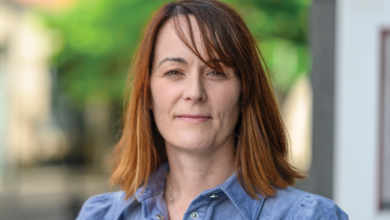
And now Irish economist Sinéad O’Sullivan has made something of a splash trying to make sense of it all.
Over recent newspaper articles and media panel shows, O’Sullivan has reached new audiences explaining that housing shortages, poor quality public services, and long commutes have a lot in common.
The Armagh City native has studied and worked for many years in the US, including as an economist at Harvard Business School and stints as an aerospace engineer and a human spaceflight designer at NASA and at the Jet Propulsion Laboratory. Her views therefore have clout.
Outings over the spring months included the Saturday weekend shows on RTÉ Radio and on The Pat Kenny Show at Newstalk.
Along the way there has been a bit of social media jousting with former Taoiseach Leo Varadkar, as well as the ruffling of the feathers of at least one outspoken analyst. She has attracted criticism from serving Fianna Fáil Minister of State with responsibility for mental health Mary Butler TD.
On the Free State podcast hosted by Joe Brolly and Dion Fanning, O’Sullivan wondered whether Simon Harris TD had taken on too much in triple-jobbing as Minister for Finance, along with his responsibilities as Tánaiste and party leader of Fine Gael.
An episode of a podcast by The Irish Times, she is a regular contributor to that paper, was neatly called: ‘What’s wrong with Ireland? Sinéad O’Sullivan has an answer’.
Listeners heard her analysis which was described as “the State’s failure to deliver things that are taken for granted in other similarly wealthy countries”.
The Irish economist “argues that Ireland lacks strong institutions capable of separating long-term delivery from electoral politics, resulting in costly, short-term fixes”.
In an earlier interview with The Irish News, O’Sullivan characterised public policy as serving foreign-owned multinational companies. Structural failings over delivering housing, transport, and other public services needed to be explained, she said.
The quarterly national accounts tell an accurate story of an expanding economy; even though its size is a matter of dispute depending on the GDP measure employed.
And the monthly Exchequer returns regularly tell a similar and more timely story of huge revenues collected in corporation tax receipts, and the still officially undisclosed role of Apple, Meta, and Eli Lilly as the three largest corporate contributors to the coffers.
But the State is failing to deliver on the things that make citizens truly well off, O’Sullivan said.
“We are extremely rich, but we do not translate that into outcomes that make us wealthy,” O’Sullivan told The Irish News.
“The contrast between the Republic’s exchequer, one of Europe’s richest, and the missing physical and social infrastructure in the State is growing starker.”
The economist described the Irish State, which, unlike France and Spain, had never promoted institutions whose job it was to think long term about housing, maternity hospitals, primary schools, and public transport.
With lots of cash in the system, TDs throw money at failing projects. Government politicians are then bewildered when short-term fixes make “long-term planning more difficult”.
Without the institutions, government officials and public planners spend their time chasing their tails trying to put out fires. Managing the delivery of everything from delayed hospitals and new trains to segregated cycle lanes is not easy without the proper institutions.
Most commentators know that many European countries encounter their own problems with infrastructure. The indebted British Government possibly faces a showdown with its international bond creditors.
It has acknowledged that the much-curtailed HS2 train route from London Euston to Birmingham, will not be fully complete before 2040 at the earliest. At £100 billion (€116 billion), the cost is also huge.
However, O’Sullivan’s remarks appear to be addressing a sense of growing bewilderment here. Unlike straitened Britain, the Republic has no lack of public money.
There is also €20 billion in combined resources already set aside in the Future Ireland Fund and in the Infrastructure, Climate and Nature Fund.
Following the O’Sullivan interviews, eolas Magazine canvassed the views of a number of journalists and economists over the delivery of public services.
Most mentioned the escalating cost and inadequate explanations for the delays in opening the €2.2 billion-plus National Children’s Hospital at St James’s in Dublin.
There were some surprising insights too: the shock of outsiders seeing the desolate lanes stretching from Croke Park to the Liffey quays sparked a discussion about public and private dereliction that few other European capitals would tolerate.
Others cited that most daily Dublin to Limerick train services are not direct services. They require a trek over a foot bridge at Limerick Junction.
Then there is the new rolling stock on the Belfast to Dublin route that will not be available for some time, despite the launch of hourly services two years ago between our two largest cities.
On social media, the temporary re-opening of Adare Station in County Limerick, closed to passengers since 1963, only for its planned closure at the end of next year’s Ryder Cup has prompted wry observations.
Trainless Tyrone and Donegal should enter a bid to host the next golf tournament, say the wags. There remains plenty of material for O’Sullivan to critique if she chooses to return to her theory of how a rich state can do so badly providing public services.
Eamon Quinn is an all-Ireland freelance writer who has served as business editor at the Sunday Business Post and the Irish Examiner, and as associate business editor at the old Sunday Tribune.