Investing for strategic success
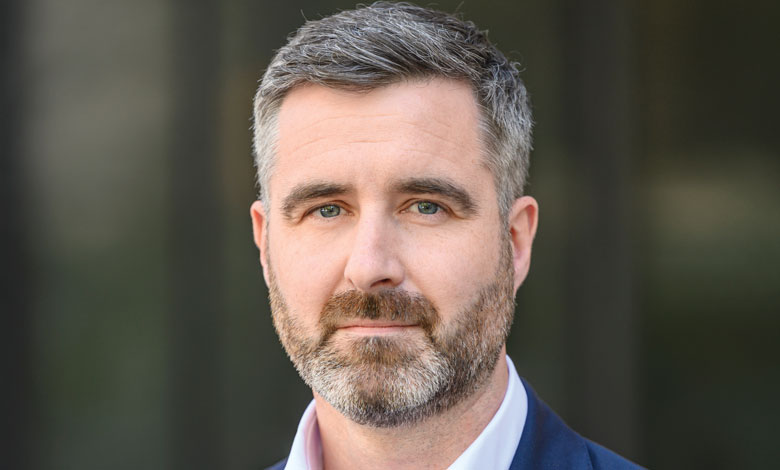
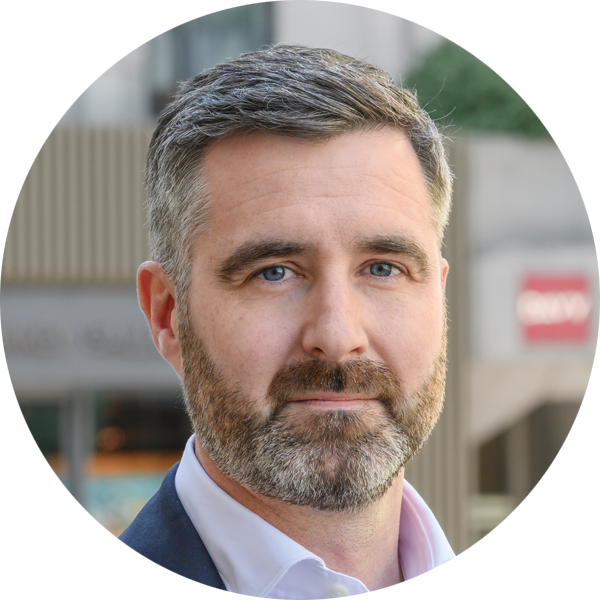
Donnchadh Ó Mórdha, Head of Institutional Consulting at Davy, talks to Ciaran Brennan about how Davy’s governance-led investment approach supports the strategic objectives and operational needs of Irish institutions, including semi-states, statutory bodies, local authorities, charities, credit unions and corporates.
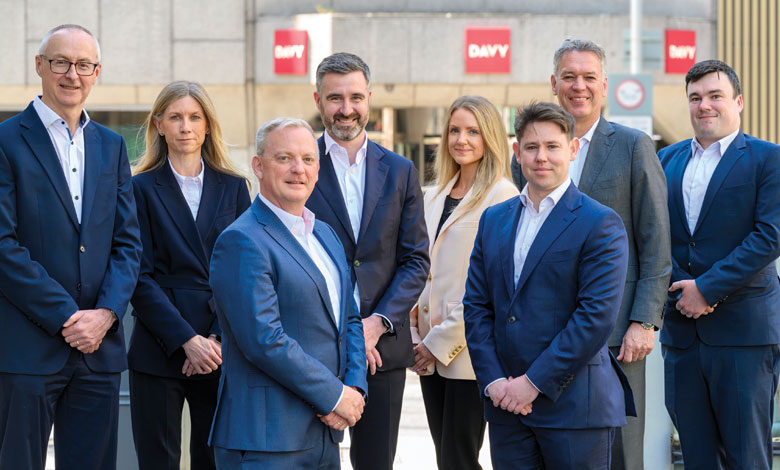
Davy’s institutional consulting team works with clients to steward cash and reserves to which they hold a “significant fiduciary responsibility”, explains Donnchadh Ó Mórdha who leads the team of 19 which works with approximately 300 clients, managing €5 billion worth of assets on their behalf.
“Our traditional client base was charities. We have also worked with credit unions for well over 25 years. That base has expanded significantly over the past decade to include public bodies, semi-states, local authorities, statutory bodies, and other parts of the Irish institutional landscape.”
Ó Mórdha says the team takes a “governance-led approach”, adding: “We work with clients to align their assets with their strategic objectives, mission, and the stakeholders they serve.”
The Head of Institutional Consulting says strong governance is central to how Irish institutions’ approach the investment of reserves. He says: “They tend to have high levels of turnover, are often publicly funded, and have significant operational and capital needs. Prudent financial management is essential.”
Risk and governance
Ó Mórdha explains that institutional investors’ “natural risk aversion” differentiates them from other investor types. He continues: “The capital they are stewarding and the financial reserves they hold are not their own.
“This capital, whether generated internally or externally, is often required to meet substantial demands, including operational needs, capital projects, and long-term liabilities.
“Most Irish institutions have traditionally dealt with a small number of deposit or investment counterparties. We endeavour to provide our clients with a broader opportunity set regarding the counterparties they can allocate to.
“More recently, interest rates have normalised and that pressure has eased, but inflation has emerged as a key concern.”
“This is typically within lower-risk investments such as deposits, government bonds, and money market funds, helping to mitigate concentration risk within the portfolio. At the outset, strong policy development is essential, establishing clear controls around permitted counterparties and instruments, minimum credit ratings, maximum exposure limits, and maturity profiles.
“Looking beyond the short term is important. If you have visibility on your capital needs over several years, you can build a laddered portfolio with staggered maturities, so you have liquidity when you need it and can lock in yields today. That gives you greater certainty.”
The institutional consulting team works with clients to ensure they are aware of the risks arising from their investments to understand what their exposures are.
“Typically, public bodies and semi-states holding cash reserves for a period would benefit from specialist treasury and cash management advice. The key risks they face are counterparty risk, inflation, interest rates, as well as liquidity and re-investment risk,” says Ó Mórdha.
“When we formulate an investment or cash management policy, we aim to articulate the risks clients are exposed to and how to mitigate them. The benefit of taking a governance-led approach is that implementation becomes much more straightforward.”
Ó Mórdha says Davy works “hand-in-hand” with clients to ensure their investment policies remain up to date. He says: “It is critical that we stay attuned to their evolving needs to ensure policies remain fit-for-purpose. Nothing is ever set in stone; policies and portfolios need to be reviewed and remain flexible to adapt to changing requirements within organisations.”
Overseeing investment decisions
Discussing challenges arising from investment decisions, Ó Mórdha identifies inflation as “a constant underlying risk”. Regarding the management of financial reserves, he says there is a need to retain value and protect the purchasing power of the organisation into the future. He adds that these reserves should be structured appropriately, with a clear distinction between short-term needs and longer-term allocations.
“We work with them to apportion reserves across short-term liquidity, looking at operational requirements, contingency reserves for unforeseen events, and their strategic requirements the coming years.
“Beyond that, it is about ensuring that where an institution has longer-term reserves, they are positioned to support its strategic plan; whether that is funding capital expenditure, meeting future liabilities, or delivering on longer-term objectives. It is critical that capital is invested in a way that retains real value over time.”
When discussing how institutions can navigate periods of higher inflation, Ó Mórdha says: “During periods of high inflation, it is going to be very hard for a cash or a cash alternative to deliver a level of return over and above that.
“Unless an institution can invest for more than five years, it may not be appropriate or possible for them to fully mitigate that risk. Where they do have a longer-term horizon, they can look beyond lower risk liquidity and bond investment to risk assets such as equities.”
Ó Mórdha explains that Davy’s clients have traditionally invested in equities within a diversified portfolio, underpinned by a strong investment policy.
He says: “Where there is an appropriate policy and the board understands the risk and return profile, allocating a portion of the portfolio to global equities can make a significant difference to meeting long term strategic objectives and obligations.”
Tracing investment challenges facing Irish institutions in recent years, Ó Mórdha says: “For several years, the challenge was that Europe had zero to negative interest rates and it was nigh impossible to deliver any kind of return on financial reserves. More recently, interest rates have normalised and that pressure has eased, but inflation has emerged as a key concern.
“We have seen a real erosion of capital for Irish institutions. Thankfully, there are ways to alleviate that. Investing reserves appropriately can help protect real value over time.
“The other challenge has been confidence around investing. Ireland naturally bears the scars of the global financial crisis and the post-Celtic Tiger downturn. There has been a journey for Irish investors, including institutions, in becoming more comfortable with investing capital outside of bank deposits.”
Responsible investing
Ó Mórdha explains that Davy’s clients aim to invest responsibly, underpinned by “strong values and the stakeholders they represent”. He continues: “The investments we make for them must respect and reflect those values. We must also ensure their reserves are not deployed in any way which could cause reputational damage or conflict with their ethos.”
The Head of Institutional Consulting says the area of responsible investing “has evolved massively over the last 20 years”. Previously, investors focused on which areas of the market they should avoid.
Now, investors are striving to invest in companies that reflect their values and lead the way on ESG. Ó Mórdha says there are increasing opportunities to “invest for social impact”, adding that it “does not mean that you are sacrificing return”. He also notes that shareholder engagement is another area of greater focus.
“For long-term investors, adopting a responsible investment approach does not need to come at the expense of returns.”
“Responsible investing is ultimately a decision for a client to make. We incepted our responsibly invested multi-asset portfolios back in 2014. Those portfolios have performed in line with those without a responsible overlay.
“For long-term investors, adopting a responsible investment approach does not need to come at the expense of returns. Our clients are typically very comfortable with that and understand that there can be some short-term divergence, which tends to wash out over time.”
Davy’s 100th anniversary
With Davy celebrating its centenary this year, Ó Mórdha reflects on the company’s legacy: “I was very fortunate that, early in my career, I became an assistant to Joseph Davy, who is the son of one of the co-founders, Eugene Davy.
“Because of that, I have always had a deep appreciation of the firm’s heritage and its ethos. We have had considerable continuity with our client base, with some charities having been clients of the firm since its foundation.
“As part of the Bank of Ireland Group, we have a supportive owner that shares our view of Davy as a people-orientated, client-focused business and continues to invest in the business.”
Although advising institutional clients has always been part of Davy’s offering, this aspect of the business “has evolved materially”, explains Ó Mórdha. Stating that Davy was founded as a “small, private client orientated broker”, he says the firm has always advised Irish charities.
He adds that the company “expanded into corporate Ireland” during the 1960s and 1970s. Continuing, he says: “We are privileged to work with many Irish organisations that deliver significant social and public value.
“The reality is that for the organisations that work with us, investment is not their focus; providing services or public benefit is. Investment is a necessity in terms of their ability to do that. We must constantly ensure our clients can continue to fulfil the mission, strategy, and vision they have.”
Concluding, Ó Mórdha says: “An institution’s investments should be a conduit to its strategic and operational success. It should never be a distraction.
“Our whole premise is about putting a governance framework in place that allows clients to position their reserves appropriately, while ensuring they maintain suitable liquidity and diversification, and earn a rate of return that is commensurate with their time horizon and risk profile.”
|
Profile: Donnchadh Ó Mórdha Donnchadh
|