Prioritising prisons

Following the announcements in Budget 2027, the justice sector is to have its funding increased by €400 million over the next year, with the vast bulk of the new money to be allocated to policing and prisons.
Budget 2027, announced on 6 October 2026, allocates around €5.9 billion to the justice sector, with the budget of An Garda Síochána having increased by €176 million with the goal of recruiting 1,000 new gardaí.
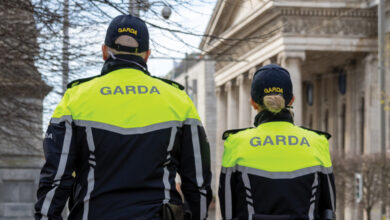
The Garda budget also aims to support the further rollout of body-worn cameras to frontline gardaí and the strengthening of training including pursuits training. In this context, funding for the Criminal Assets Bureau (CAB) is to increase by €1.9 million to €15.7 million.
The budget allocation for the Irish Prison Service is increasing by 18 per cent compared to 2026, with €686 million being allocated, an increase of €106 million. The Department of Justice, Home Affairs and Migration states that this will support the recruitment of more than 200 prison officers, investments in prison officer training, and improvements to IT and digital infrastructure.
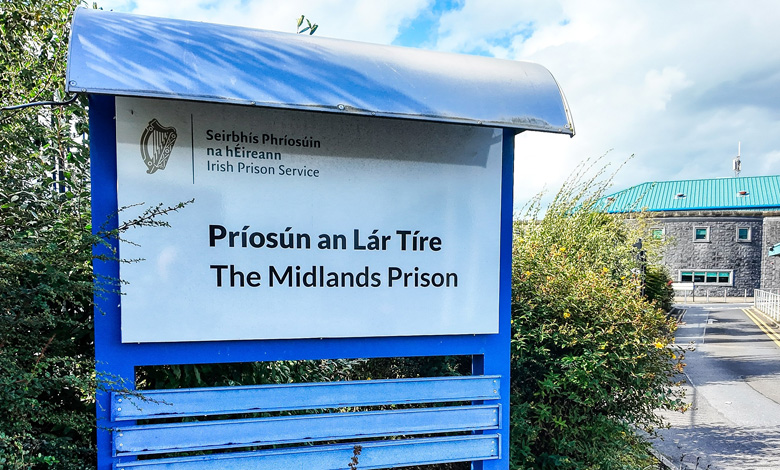
Complementing this is the capital budget, which increases by 40 per cent from €68 million to €95 million. This aims to support “major prison building” which aims to deliver 1,500 prison spaces by 2031. Among the most significant prison building projects scheduled to be undertaken in 2027 are Midlands Prison, with 102 spaces; continued development of Castlerea Grove Phase 2, with 126 spaces; the extension of the D wing at Cloverhill, with 270 spaces, the Castlerea Harristown Block, with 68 spaces; and the Dóchas Rowan Yard extension, with 52 spaces.
On migration, the Budget introduces significant cuts to spending, with the migration budget to be reduced by €682 million, or 38 per cent. This accounts for a reduction of €430 million on the cost of accommodation for people arriving from Ukraine under temporary protection, which is a reduction of 71 per cent.
Also on migration, the Budget has increased the budget for deportations by €2 million. The Department claims that further savings of €252 million will be made on costs of accommodation for people seeking international protection. The Department says this is due to “the ongoing significant programme of reform, value for money, and governance measures in the International Protection Accommodation System and the implementation of the [EU] Migration Pact”.
Cybersecurity
The National Cyber Security Strategy 2030 was launched on 7 October 2026, and follows on from the second National Cyber Security Strategy published in 2019. It addresses the systemic cyber risks the State faces and sets out the path to strengthening Ireland’s cybersecurity and protecting the digital world.
The vision behind this strategy is to build a secure, resilient digital infrastructure which protects Irish society and fosters innovation and a strong indigenous cyber ecosystem while engaging confidently with European and international partners to uphold a free, secure, and rules-based cyber space.
The National Cyber Security Strategy 2030 is structured around three pillars: detect and defend, enhance national resilience, and strengthen our cyber ecosystem. It includes 29 measures that will strengthen the State’s cybersecurity and resilience. These include:
- developing a national detection network, establishing a national cyber hub, and developing new national cyber defence services;
- fully implementing new EU cybersecurity legislation related to critical infrastructure and to products with digital elements; and
- establishing a cybersecurity research centre of excellence to drive world-class cybersecurity research in Ireland.
Domestic, sexual, and gender-based violence
Cuan’s annual report for 2025, published in July 2026, describes domestic, sexual, and gender-based violence as “a problem which is not receding”. Cuan states that its priority is raising awareness of channels for victims to report abuse.
Although CSO data indicates that overall violent crime has reduced as of Q2 2026, the number of female victims of assault and related offences rose by 4 per cent to 2,659 victims in Q2 2026 from Q2 2025.
Legislative priorities
The Government’s Autumn Legislation Programme outlines pieces of legislation by the Department of Justice, Home Affairs and Migration as priorities. These are:
- Civil Reform Bill;
- Criminal Justice (protection, Preservation of and Access to Data on Information Systems) Bill;
- Criminal Justice (Violation of EU Restrictive Measures) Bill;
- Criminal Procedure (Remote Hearings) Bill;
- Inspection of Places of Detention Bill;
- National Cyber Security Bill;
- The Judicial Council (Amendment) Bill; and
- Irish Nationality and Citizenship (Amendment) Bill.
Speaking following the budget announcement, Minister for Justice, Home Affairs and Migration Jim O’Callaghan TD says that the allocations “will result in increased and record investment to reduce and prevent crime, strengthen public safety, confront domestic, sexual, and gender-based violence, and continue reforming Ireland’s asylum and migration laws”.
Despite this optimism, recorded crime statistics by the CSO, published in October 2026, show that the number of crime incidents rose for most offence groups in the 12 months to Q2 2026.
The largest rates of increase were for dangerous and negligent acts (11 per cent); fraud, deception, and related offences (9 per cent); controlled drug offences (8 per cent); and weapons and explosives offences (6 per cent).
For those offence groups where there was a fall in the number of crime incidents, the largest rates of decrease were for sexual offences (-19 per cent), homicide and related offences (-9 per cent), and burglary and related offences (-6 per cent).
On migration, the story is somewhat better for Minister O’Callaghan, as according to the CSO, net inward migration was 59,700 in 2025 and 48,100 in 2026, based on the 12-month periods ending in April of each year, showing a decrease of 19 per cent between the two time periods.