
Planning reform: delivery focus
Ireland’s planning system is going through its biggest reforms in generations. Now comes the critical part: delivering the step change in homes and sustainable communities that are needed, writes Dearbhla Lawson of The Land Development Agency.
Ask most people what planning is, and they will describe a process: forms, objections, conditions, a site notice signifying change. Planning is often seen that way, as a system for managing development, risk, and constraint. But that is only half the story.
Planning is a strategic discipline. It shapes places, manages how they change and, crucially, enables them to grow. It is about weighing competing interests in the public good and delivering development that lasts. At its heart, though, planning is about possibility: imagining the future and creating the conditions in which people and places can thrive. That is why most of us became planners in the first place.
The reforms in the Planning and Development Act 2024, the final parts of which are about to commence, are very welcome. A more streamlined system, with greater policy certainty, gives the stability needed to build capacity and keep the pipeline moving. Certainty builds confidence, and confidence is what helps to get the homes built.
And we need a step change in housing delivery, at least 50,000 a year between now and 2040. Planning has a critical role in creating the conditions and capacity to get there. Achieving this requires planning for enabling infrastructure, in a far more joined-up way, with clarity on costs and viability, and investment decisions made at the earliest possible stage. If these key enablers are left until the end, you are building on hope rather than certainty.
Delivery focus
Delivery on this scale depends on sustained partnership between central and local government, The Land Development Agency (LDA), approved housing bodies, infrastructure providers, landowners, communities, and private sector delivery partners.
The LDA is on track to deliver more than 16,000 homes by 2030. But we do more than build. We coordinate land, assemble sites, support regeneration, and open pathways for large-scale, mixed-tenure development. With more than 40 projects under way across the State, the agency has built up real expertise in design, efficiency, cost effectiveness, and viability.
None of this is simple. Balancing environmental, placemaking, and fiscal considerations adds complexity and, as anyone who has ever embarked on an extension project knows, complexity adds cost. The answer is to share our learnings, keep innovating, listen and evolve to help in shaping progress and efficiencies where we can.
One example: drawing on our own experience, the LDA has developed the Apartments Typology and Low-Rise Typology booklets, which set out efficient standards for building typologies. Good standards support quality, efficiency, and better value. Better value means more homes that are viable and affordable. We will keep tackling and feeding back to help address the challenges and simplify, to keep focus where it belongs: on sustainable homes and thriving communities.
Building the pipeline
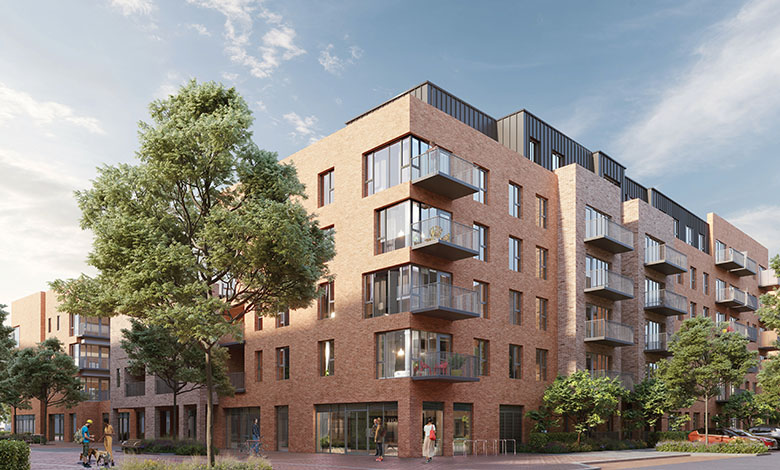
The LDA has a strong pipeline with capacity for up to 28,000 homes, on state lands and market acquisitions. Strategic land assembly is central to that. With key stakeholders, we coordinate masterplans for key sites and help to shape and enable these lands for development, because without land at scale, there simply is not the capacity to create new communities.
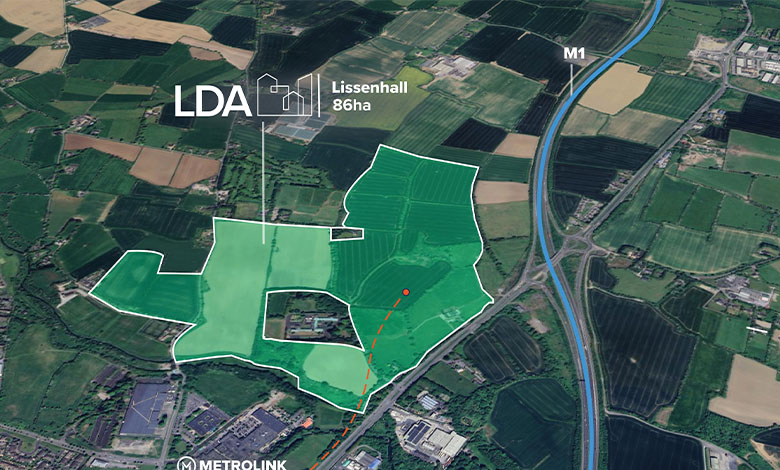
Lissenhall in Fingal shows the opportunity of what is possible. The 86-hectare site sits just north of Swords off the M1 and includes the proposed MetroLink Estuary terminus. It is a transformative opportunity for transport-led urban development in the Greater Dublin Area.
Together with Transport Infrastructure Ireland and MetroLink, and in consultation with Fingal County Council, we are commencing work on an infrastructure-led framework to unlock it. The aim is to enable these strategic lands and bring them forward for development. They are a central part of our pipeline which will support the step change in housing the State needs.
Two reforms, in my view, can make the biggest impact for planning for growth and delivery focus: the new 10-year development plans and urban development zones.
10-year development plans
The move to 10-year development plans is a generational opportunity to rethink what a plan is for: to raise its ambition, streamline it, and make it more strategic, more accessible, and more focused on outcomes.
A longer horizon also gives local authorities, state agencies, infrastructure providers, and delivery partners a framework to align around infrastructure investment, with delivery programmes tied to clear objectives.
Plans should be simplified and easier to read. Maps and three-dimensional modelling can move centre stage, showing where growth is planned, what infrastructure it needs and how communities will benefit. A picture, as they say, is worth a thousand words. Done well, the new plans could become genuine enablers: spatial, visual, and a clearer basis for public engagement and for tracking progress.
Urban development zones
Urban development zones (UDZs) provide a statutory framework for coordinated planning in places of strategic importance, and they will be critical to future capacity. They replace strategic development zones (SDZs), which underpinned successful new towns such as Adamstown and Cherrywood, although progress elsewhere was more limited.
Experience from the SDZs taught us that designation alone is not enough. Success depends on securing the infrastructure investment that new urban communities need.
So UDZs should not be seen as SDZs 2.0. They build on that experience, with a sharper focus on infrastructure provision, delivery mechanisms, and phasing. Rather than fixing detailed development quantum or other uses too early, they offer a framework that can evolve with housing need and market conditions.
Given the scale of need, UDZs will be particularly important for new towns and communities in key locations, especially large areas with multiple landowners and significant infrastructure requirements. They are expected to be identified where there is significant economic, social, or environmental benefit, and where they support the common good and national and regional objectives.
A key feature is the early identification of ‘critical land’, the land needed for infrastructure and community facilities. It is a welcome provision that safeguards and prioritises essential infrastructure. The framework will also allow land value uplift to help contribute towards that infrastructure and the communities it serves.
UDZs will form part of the development plan, with a detailed implementation framework prepared before government designation. Because the planning framework and infrastructure requirements are front-loaded, that work, led by local authorities with key stakeholders such as The LDA and delivery partners, needs to start early.
The LDA welcomes the opportunity to work with government, local authorities, the Housing Activation Office, infrastructure providers, and landowners to identify key locations for UDZs. We will also support infrastructure planning, coordination, and land assembly, and bring our viability and delivery expertise to the table. In the end, that is what all this reform is for: shaping and delivering sustainable, inclusive communities where people and places can thrive.
 Dearbhla Lawson
Director of Planning Services, The Land Development Agency
W: www.lda.ie