
Gary Gannon TD: ‘Prison should be a place of intervention, not a revolving door’
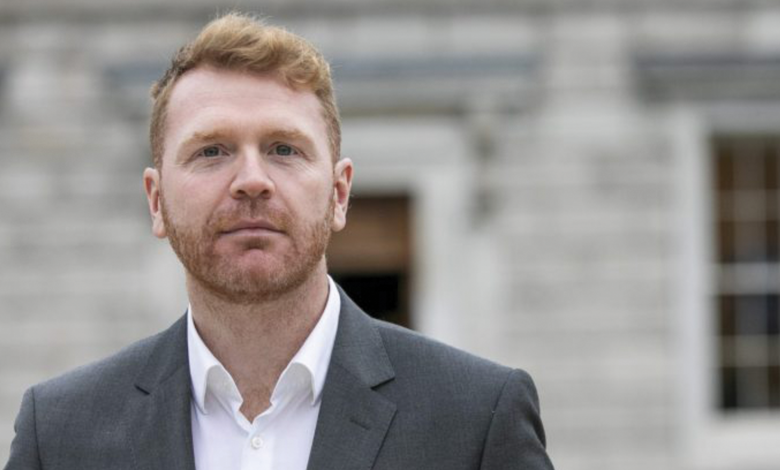
We should think about prisons in the same way we think about hospitals. We would never accept a health system where someone entered unwell and came out in a worse condition. We would call it a failure, writes Social Democrats justice spokesperson Gary Gannon TD.
But when it comes to prisons, we have somehow allowed ourselves to accept exactly that outcome.
Most people who enter our prison system will eventually return to their communities. So, are they less likely to cause harm when they come out? Right now, far too often, the answer is no.
Prison should be a point of intervention. A place where offending is absolutely confronted, but so is addiction, trauma, and mental ill health. Instead, we warehouse people, release them with the same problems, and act surprised when they return.
Earlier this year, we learned that there are about 4,000 people with addiction issues in Irish prisons. We also learned that the Irish Prison Service employs no dedicated full-time addiction nurses. Not one.
What do we imagine happens when somebody offends to feed an addiction, is imprisoned without treatment, and is released into the exact same circumstances?
They cycle through the courts, through prison, and back into the community. Then back before the courts again.
We need properly staffed addiction and mental health services in every single prison, with treatment continuing after release, with no exceptions.
We also need to radically reduce our reliance on short prison sentences. In 2024, 77 per cent of sentence committals were for 12 months or less. That sentence can cost somebody their home, job, and stability, while offering no chance of meaningful rehabilitation.
Yet every time I make this argument, the same accusation – ‘soft on crime’ – arrives.
The suggestion during the various back and forths I have had with the Minister in the chamber on the topic is that I want to release dangerous criminals. I have no difficulty with somebody losing their liberty for a heinous offence.
Victims deserve justice and some people must be removed from society because of the danger they pose. But if somebody is imprisoned again and again for theft or another relatively minor offence, at what point do we ask whether the sentence is working?
Despite the clear desire for showman optics from the Minister, there is nothing tough about repeating an intervention that has already failed.
Criminologist Ian Marder has done Trojan work on restorative justice and community sanctions over the last number of years, and I would highly recommend anyone who wants to learn more about the topic to look up his work.
I would put evidence such as the countless reports by Marder and others into action by properly resourcing the Probation Service. A service which contains some of the most underpraised people in our justice system and indeed our society: social workers.
“I object to accepting a system that takes damaged people, does almost nothing about what brought them there, and returns them to society in a worse position.”
Social Democrats justice spokesperson Gary Gannon TD
We ask social workers to meet people in the wreckage of their lives. To see the person behind the worst thing they may have done. To find the thread of possibility that remains when almost everyone else has let go. Then we deny them the resources to do it.
A properly supervised community sanction can involve a myriad of interventions. It can require somebody to confront the harm they caused, comply with treatment, and rebuild their life. It carries consequences. It also offers something a crowded cell so often fails to do; a realistic chance that there will not be another victim. And is that not the whole point of a well-functioning justice system?
When the Inspector of Prisons appeared before the Justice Committee back in January 2026, he described the most inhumane and degrading conditions. Overcrowding, he told us, was undermining safety, mental health care, and rehabilitation. That evidence should have been a watershed moment.
There is another part of this conversation that begins long before an adult prison. It begins in childhood.
The forthcoming Youth Justice Strategy needs to be earth shatteringly different. We are constantly hearing about a crisis in antisocial behaviour among teenagers – mostly young boys – on scramblers, or joyriding stolen cars. We need to ask how a child reaches that point.
Children do not fall into the criminal justice system from nowhere. The path is always marked by poverty, trauma, school exclusion, unmet needs, exploitation by adults, and a care system without the placements or staff to keep children safe.
The State can be present at every stage of a child’s life and still fail to intervene at the moment it matters. Then, years later, politicians arrive to boast about locking them up.
Successive governments have stripped communities of youth services, family supports, and opportunities, then watched children fall through gaps everybody knew were there. Punishing the consequence might produce a headline. It does not erase the failure.
Finally, I would establish a citizens’ assembly on prisons and penal reform. We are not short of reports, evidence, or people who know where the system is breaking down.
We lack the political courage to ask: what do we actually want prison to achieve?
A citizens’ assembly could hear from victims, frontline professionals, and people with lived experience. It could examine overcrowding, community sanctions, mental health diversion, and what has reduced reoffending elsewhere.
It could give Ireland a publicly supported vision for a system judged by its outcomes rather than the number pushed through its gates.
I have no objection to prisons existing. I object to accepting a system that takes damaged people, does almost nothing about what brought them there, and returns them to society in a worse position.
Every person who does not reoffend means another person who does not become a victim. If our prisons are going to exist, they must be places of intervention, and the measure of their success should be how few people ever need to return.