
Boots on the ground
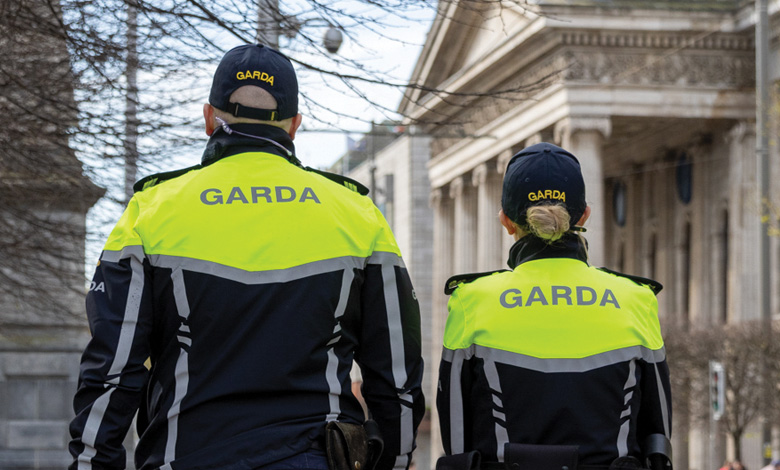
The introduction of high-visibility policing has seen a reduction in robbery, assault, and criminal damage in areas where the initiative has been introduced in Dublin.
Trust is earned one interaction at a time and An Garda Síochána’s High-Visibility Policing Plan has increased the public’s interaction with the organisation via increased Garda presence on our city’s streets.
High-visibility policing (HVP) sees more members assigned to dedicated foot patrols on routes through the key thoroughfares of our cities, in locations that were selected following an analysis of calls for service, crime trends, and feedback from businesses and the community.
High-visibility policing places an increased focus on policing public order offences, antisocial behaviour, drug dealing, aggressive begging, and shoplifting, with a pro-arrest policy for recidivist offenders including strong bail objections where appropriate.
Over the last 18 months, high-visibility patrols have been introduced into Dublin city centre and parts of suburban Dublin, Cork city, Limerick city and Galway city, with the first HVP Plan introduced in March 2025 in Dublin city. Resources were specifically deployed to the central Dublin Garda divisions which encapsulate Store Street and Pearse Street Garda stations.
There has been a reduction in key crimes in areas where high-visibility policing has been introduced in Dublin.
Provisional data indicates that during the period from April 2025 to March 2026 in Dublin City Centre, there were on average 18 arrests every day, (nearly 6,500 total arrests during the period) and on average 35 charges/summonses issued every day (over 13,500 total charges/summonses altogether during the period).
Quarterly trends from Q1 2024 up to the end of June 2026 in Dublin city centre show sustained improvements in several key areas:
- criminal damage incidents were less than half of what they had been (in Q1 2024) by the end of June 2026;
- theft remains the largest crime category by volume, but the trend is declining and there has been a 38.76 per cent decrease in the number of thefts in Q2 2026 compared to Q1 2024; and
- assaults and robbery were the lowest they had been in 2.5 years by the end of Q2 2026.
Assistant Commissioner for the Dublin Metropolitan Region Jonathan Roberts says: “We are very pleased with the success of the initiative so far. We have had very positive feedback from local communities, from members of the business community, and from retailers.
“It provides a great deal of reassurance to the public to see guards on the street. We have seen incidents of assault decrease, criminal damage incidents are less than half of what they were, and theft is down significantly.”
In the 12 months to April 2026, the high-visibility policing strategy in Dublin was extended into DMR East (Dún Laoghaire town, Shankhill village, Blackrock village, Dundrum village including the town centre) and DMR South (The Square Shopping Centre, Tallaght village, Rathfarnham village, Crumlin village, Rathmines village, Rathgar village, and Terenure village.)
Tallaght Garda Kevin Mitchell describes the reaction of locals to the high-visibility beats: “You cannot go too far without somebody stopping you and saying that they are happy to see guards out on the beat. We have the beat here in the Square and another one in Tallaght village. There is a much older demographic in the village and it is the elderly population out there would be stopping you, constantly telling you that ‘we are just delighted to see you out and about patrolling’.”
Garda Mitchell says they encounter lost children, and “a lot of tourists looking for directions, and looking to be pointed to the direction of bus stops and Luas stops and businesses that have maybe theft incidents to report, or damage to property”.
“It is a good variety, a good mix of stuff that people want to report to you or want to chat about.”
As part of the Dublin City High-Visibility Policing Plan, Garda pop-up clinics were set up in Dublin’s docklands on the north and south side. The first clinic was held on 25 July 2025.
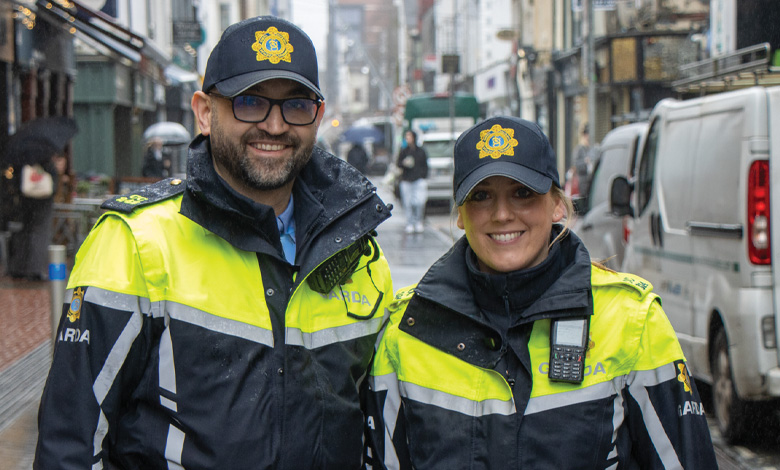
The clinics provide an opportunity for local organisations, business stakeholders, and members of the public to seek guidance and advice from the Community Policing team on a range of issues.
There is a particular focus on a ‘business watch’ scheme aimed at supporting staff working in retail in the area.
Cork
High-visibility patrols were no longer the preserve of Dublin as of November 2025, when An Garda Síochána in the Cork city division launched permanent high-visibility patrols, following allocation of probationer gardaí and transfers of additional gardaí to the Cork city division.
In total, 11 high-visibility posts/beats across the city were selected with a designated operating time between 8am and 4am. A total of 23 gardaí are assigned to this operation every day.
Limerick
The High-Visibility Policing Plan commenced in Limerick city on 4 March 2026. This has seen gardaí from Henry St Garda Station and Roxboro Road Garda Station deployed on a daily basis on high visibility patrols on eight dedicated patrol areas.
Galway and Waterford
In August 2026, high-visibility patrols were launched in Galway, following the allocation of 28 new gardaí to the Galway division, while it has just been announced that high-visibility policing is being rolled out in Waterford.
Deputy Commissioner for Operations Shawna Coxon says: “Dealing with lower-level crime taking place openly on our streets plays an important role in preventing more serious incidents from developing.
“The introduction of high-visibility policing has been a significant success, and where we have already captured the data, we have seen numerous crime categories fall. High-visibility beats will be introduced into other cities and urban areas in 2026 and 2027 as we continue to grow Garda numbers.”
All data from An Garda Síochána is operational, provisional and subject to change. Official crime statistics are published by the Central Statistics Office.