From asset delivery to operational readiness

Ireland’s rail ambition is accelerating. From major network upgrades to future capacity expansion, investment is being made at a scale not seen for decades, writes Matt Gibson, Technical Director, Amey.
As the pace, scale and complexity of that investment increase, the strain on the existing railway to accommodate the change multiplies, raising the risk that programmes are not operationally ready on time.
This risk is where a programme’s success comes into focus – with operational readiness being the measure by which success is judged by passengers, operators and policymakers alike. Success is not measured by how much infrastructure is delivered, but by how that infrastructure performs once passengers and freight depend on it.
Completion is not delivery
So, if a rail programme is not delivered when construction is complete, when is it delivered?
A railway is delivered when it enters operational service. This can only happen when construction is complete and the whole railway system is operationally ready.
Too often, operational readiness is treated as a late stage activity, being addressed once the bulk of the engineering is complete. For complex rail programmes, this pushes risk to the very end of the programme, when decisions made during design and delivery can constrain operational readiness.
Being ready to bring new capability into service requires more than technical completion; it demands strong stakeholder management, integrated decision making, effective assurance, and the alignment of people, processes, data and assets across the operational and maintenance organisations.
Why asset led delivery models struggle at handover
If operational readiness is the true indicator of successful rail delivery, an obvious question follows: why do so many programmes struggle to achieve it?
Part of the answer lies in how delivery is structured. Procurement and programme are organised around assets and disciplines; civils, power, rolling stock and so on, with work broken into packages that are designed, delivered and contracted separately.
This approach is effective for managing these segregated scopes. But viewed through the lens of operational readiness, its limitations become clear. Integration risk remains with the client, allowing design decisions to be locked in before their operational implications are understood.
Without clear accountability for ensuring the whole railway system is operationally ready, the programme’s ultimate success is left to chance. This is not a failure of engineering capability. It is a structural consequence of how rail programmes are commissioned, packaged and governed.
‘Systems integration’ is frequently cited as the answer, however, this is often not effectively delivered. Whilst an integrated design is critical, it cannot be successfully implemented unless its integration into the whole railway system is achieved.
On the projects Amey supports, this gap is addressed by placing operational readiness at the centre of delivery. Integration, assurance and the transition into service are treated as programme outcomes, not activities to be absorbed at the end of a programme.
Partnering for programme outcomes
Truly managing risk to operational readiness demands more than simply investing in systems integration; it calls for procurement and delivery models that are aligned to programme outcomes rather than individual stages or assets. Traditional approaches of procuring fragmented scope stage by stage leave the client ultimately accountable for achieving operational readiness as an integrated outcome.
Partnering models offer an alternative. By structuring procurement around shared outcomes for the programme, risk is managed collectively. This incentivises focus on railway system outcomes, encouraging integrated, best-for-railway decision-making, and reduces the likelihood that operational readiness risks will impact late in the programme.
Where delivery partners are jointly accountable for achieving railway outcomes, operational readiness becomes a core focus throughout delivery, not a problem to be solved at the end.
Core Valley Lines: operational readiness in practice
If operational readiness depends on delivery being organised around outcomes rather than assets, what does that look like in practice?
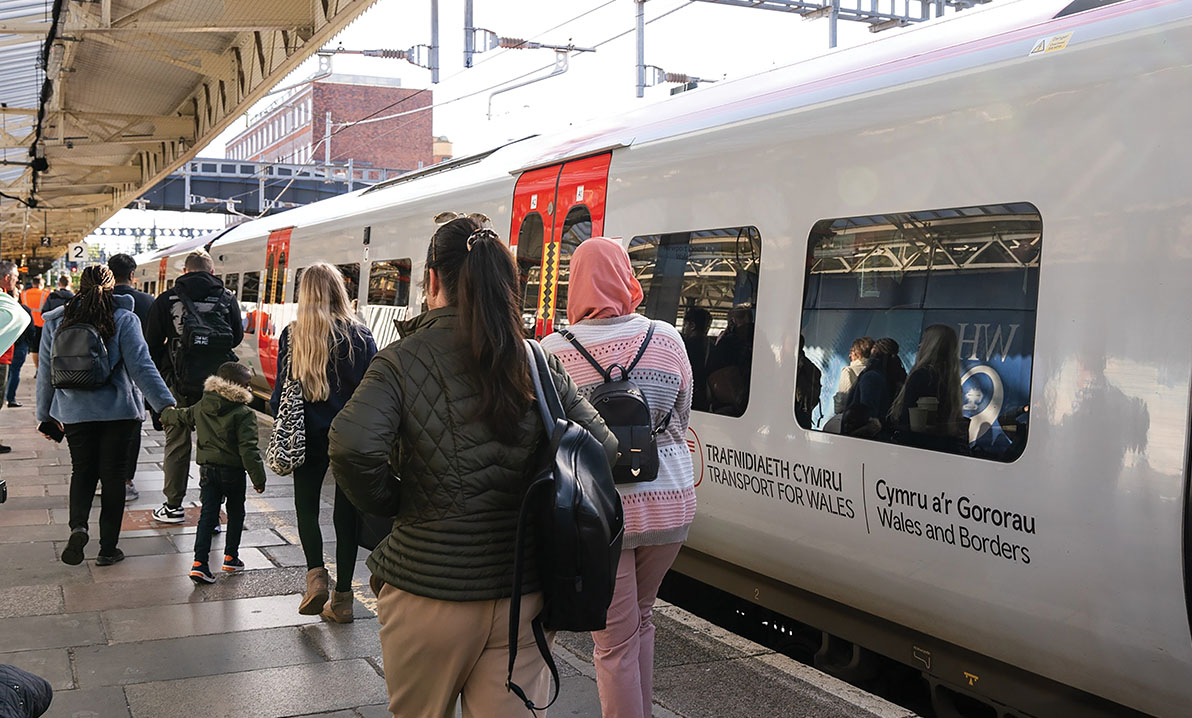
The Core Valley Lines (CVL) transformation in Wales, delivered by Amey in partnership with Transport for Wales, provides a clear illustration. From the outset, the programme was shaped around a defined set of operational and passenger-oriented outcomes, rather than the delivery of individual assets in isolation. These outcomes focused on increasing network capacity, reducing journey times, decarbonisation, and improved accessibility.
Every aspect of delivery was aligned to achieving these outcomes. The assets brought into use – and the integration, assurance, and readiness activity that sat alongside them – were treated as the means to deliver operational performance, not ends in themselves.
Stakeholder management, design choices, construction sequencing, testing strategies, operational development, and assurance and approvals were all managed against their contribution to delivering service outcomes.
The lesson here is not that the CVL model should be replicated wholesale. It is that programmes designed around clearly defined outcomes and supported by delivery partners prepared to take end-to-end accountability for operational readiness are better placed to manage complex operational readiness challenges and support a smoother transition into service.
Owning the moment of service
Ireland’s momentum is clear, and with it comes a simple expectation: the on-time delivery of a railway system that people and businesses can rely on.
As investment scales, what matters most is who is prepared to take responsibility for the moment a railway enters service, and for the performance that follows. That is the real operational readiness challenge.
Amey is excited to bring our experience in operational readiness and systems integration to Ireland, working and partnering with clients to turn complex programmes into operationally ready railways; strengthening connectivity and driving up productivity at a national scale.