Untapped potential: Strategic asset management
As Ireland prepares to invest unprecedented levels of capital under the National Development Plan between 2025 and 2035, the question is no longer just what we build, but how well we manage the public infrastructure we already have, writes Cathal Masterson, TII Director of Commercial Operations.
One suspects that the Public Accounts Committee (PAC) of the State of South Australia did not realise that it would help kick-start a new philosophy and discipline for better management of public infrastructure when it commissioned a series of reports about 40 years ago to understand potential costs and timescales for renewing the State’s stock of public infrastructure.
These PAC reports highlighted that infrastructure agencies in South Australia responsible for managing water and waste, public housing, public works, transport, health, and educational infrastructure, did not have policies or tools for managing vital public infrastructure over its expected life.
The PAC reports labelled this problem a “policy vacuum”. However, it was the consequences of this vacuum that made politicians, civil servants, and infrastructure managers sit up and take heed.
The State was sleepwalking towards a future reality in which its entire capital budget for public infrastructure would eventually be consumed by the needs of existing assets, with little left for new infrastructure, unless action was taken.
The solution proposed was simple but it was also revolutionary for its time. The State needed to radically change its approach and focus on managing infrastructure assets over their full life cycle rather than just for the construction phase.
Perhaps not everyone appreciated that the solution being tabled was not the normal bid to be allocated more money given that long-term funding projections for asset renewals and funding shortfalls were central in the analysis and explanation of the problem.
Rather, the discussions centred around changing management practices and improving decision-making to reduce future financial challenges for the State, whilst preserving performance and reliability of the assets as efficiently as possible. Thus, the seeds were planted for the modern discipline of infrastructure management, or strategic asset management, as it came to be known.
One of the most influential and impressive people involved in this work for the PAC was Penny Burns, an experimental economist who cut her teeth working in the public water sector in South Australia.
“The challenge is not just how much we invest, but how well we manage the existing public infrastructure.”
Burns has written about this time in her captivating book titled The Story of Asset Management: Infrastructure. We can afford to buy it. Can we afford to keep it?, published in 2023, where she describes her work in identifying the assets of the major infrastructure agencies, and modelling the age distributions and future renewal costs.
Burns now refers to this period as the first asset management revolution, in which the work gained widespread attention across the rest of Australia and internationally.
Her mantra: strategic asset management is not about engineering it is about making better long-term decisions on public spending, is one which still holds water today.
So that is the end of the story right? Not quite. The discipline of asset management has certainly matured and there are significant resources available for all asset managers and strategists across all sectors. This includes specific international standards combined with asset management associations promoting best practice and educating policymakers and practitioners.
It is now commonly understood that operations and maintenance costs will greatly exceed construction costs over the life cycle of public infrastructure, and it is also generally accepted that deferral of asset renewal activity will result in increasing backlogs and higher costs ultimately.
However, the full life cycle costs for asset renewal are still not necessarily being factored into longer-term infrastructure plans being prepared by governments today. In many developed economies, public assets are not routinely being managed effectively over their full life cycle to maximise the full value of the original investment.
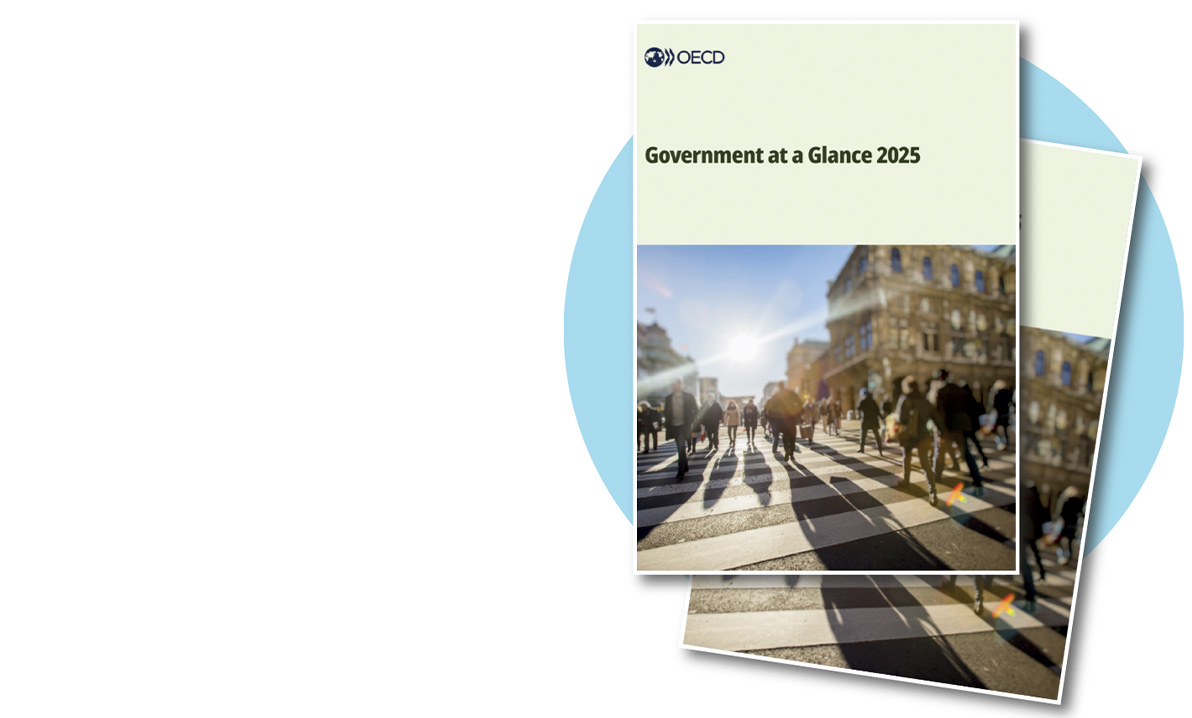
The OECD’s Government at a Glance 2025 report assesses over 30 OECD countries, including Ireland, on their approach to governance of infrastructure and asset performance management.
This OECD report highlights various systemic weaknesses across most of the countries in the planning, strategic management, and approach to decision-making for public assets. The OECD assessment concludes that the majority of countries assessed:
- do not require asset management plans under law;
- do not have fixed asset registers covering all government assets; and
- do not conduct ex-post evaluations of major investment programmes.
The OECD report also assesses each country’s approach towards ensuring the resilience of critical infrastructure and delivering climate-resilient infrastructure, highlighting the importance of national governance in this area, if national infrastructure is to be adapted to limit service disruptions and improve its capacity to recover from shocks.
On the face of it, it would seem that the key lessons emerging from the Australian work in the 1980s have yet to be fully absorbed by many.
International examples underline the urgency and many readers will be aware of the poor state of Germany’s motorway bridges. What might be less well understood is the poor state of Germany’s broader stock of public infrastructure.
The German Economic Institute, which surveyed companies in Germany to determine whether they are regularly affected by infrastructure deficiencies in their business activities, reported that “over 84 per cent of the companies surveyed reported being regularly affected… in 2025”.
How much does the State of Transport Infrastructure Affect Businesses in Germany? highlights that “roads and railways caused the most significant problems” with almost 80 per cent of companies reporting impacts from road deficiencies, and 60 per cent noting impacts from underperforming rail infrastructure.
Approximately half of the rail network requires repair or renewal, contributing to congestion and reduced reliability. Passenger rail punctuality is reported at around 56 per cent, while freight rail performance is even lower, in some cases below 50 per cent.
The state of the infrastructure is now considered by many commentators to be a competitive issue and the German Government has introduced a €500 billion infrastructure and climate fund to tackle the problems.
In other jurisdictions, the risk which exercised the South Australian PAC of the majority of a state’s longer-term capital investment programme being consumed by a backlog of infrastructure renewals works is starting to become more evident.
The Québec Infrastructure Plan 2025-2035, which outlines an impressive funding package of $164CAD billion over a 10-year period, is allocating 65 per cent of planned infrastructure investments to “the long-term viability of existing infrastructures”.
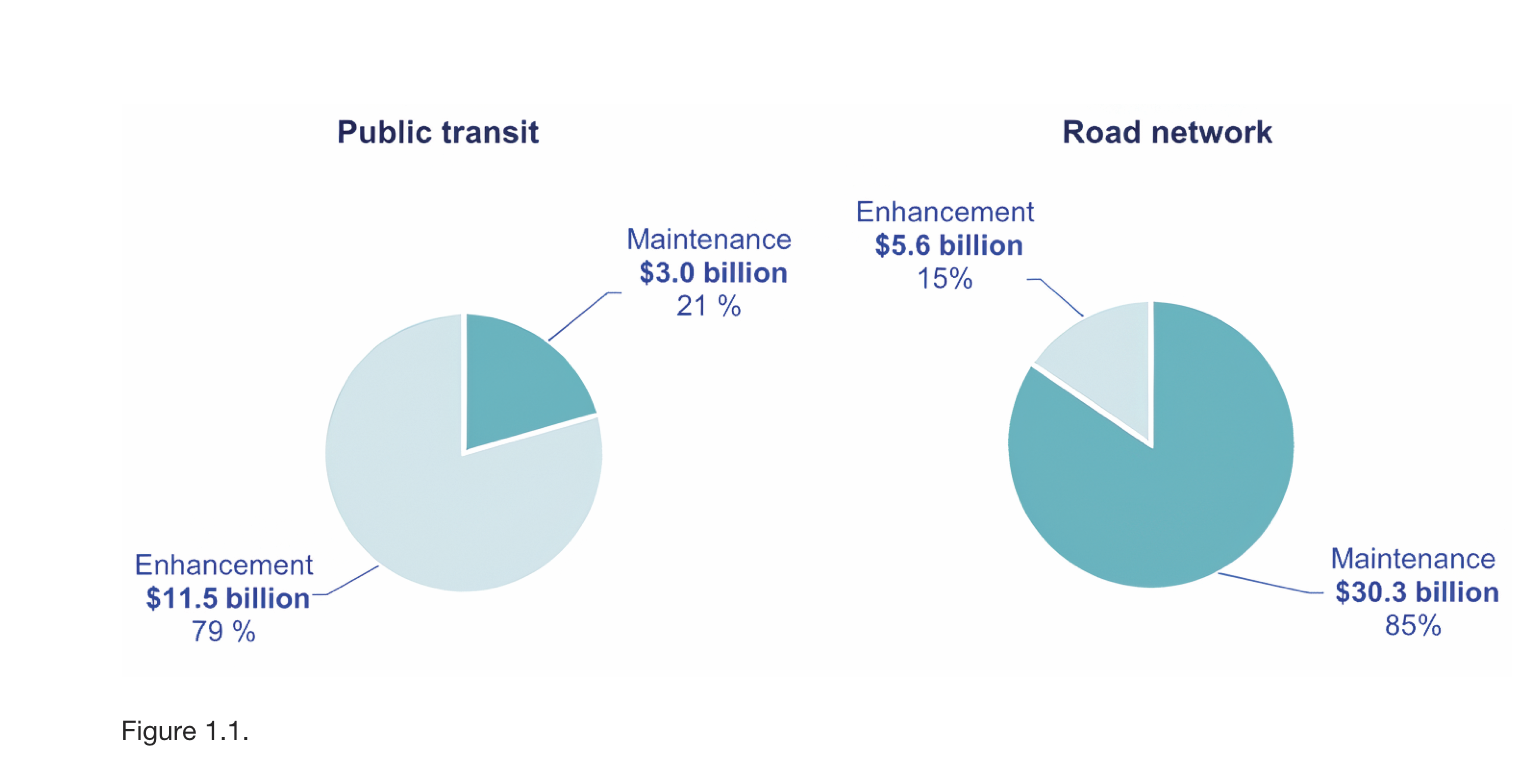
For the sub-category relating to road network, almost 85 per cent of roads funding is being allocated to existing road infrastructure, due to its age and condition. Figure 1.1 below, from section A of the Infrastructure Plan showing the proposed investments in public transport and the road network for the period 2025-2035, clearly shows the difference in profile for the ageing road network infrastructure when compared against the more modern public transport infrastructure.
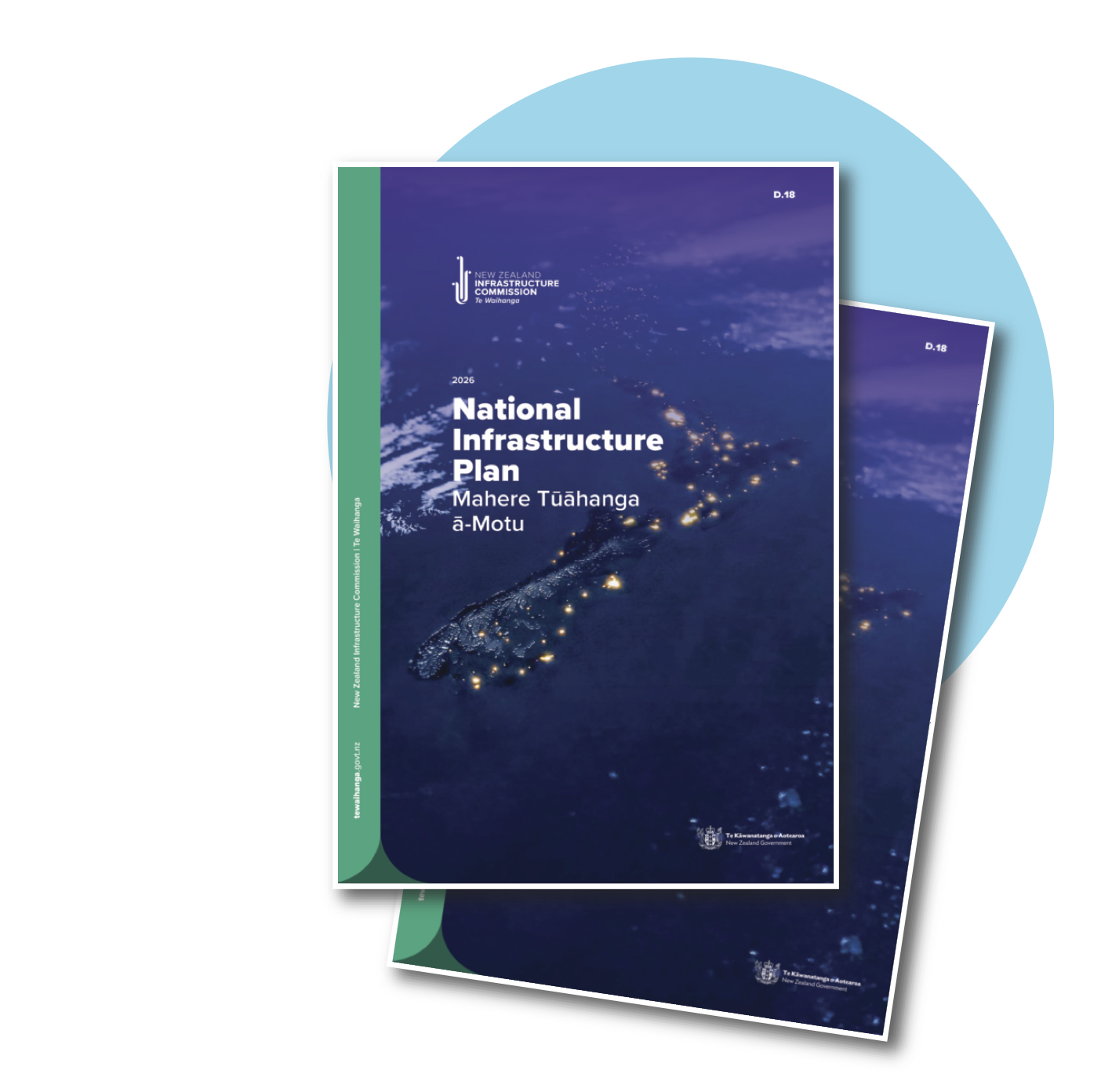
The issue of strategically managing existing infrastructure is central to New Zealand’s ambitious new National Infrastructure Plan, prepared by the Infrastructure Commission and published in March 2026. Not only is this a 30-year plan, yes you read that right, it signals a dramatic change of approach towards its public infrastructure.
For instance, the Infrastructure Commission states in the plan that solving New Zealand’s infrastructure crisis requires shifting focus from “new, flashy projects to maintaining existing assets”, and highlights that much of the infrastructure that needed “over the next 30 years already exists”.
The plan also notes that “infrastructure delivery becomes harder without sufficient planning” and the “biggest investment driver over the next 30 years is the need to replace or rebuild the infrastructure New Zealand already has, potentially taking up 60 cents in every dollar of capital spending”.
The fact that this is a 30-year plan should gain significant international attention and, combined with the clear signal towards maintaining existing assets, the plan also calls for legislation to require “capital-intensive central government agencies to prepare and publish long-term investment and asset management plans” as well as extending “the horizon over which government plans its infrastructure funding intentions and communicates these intentions to agencies and the public”.
There are plenty of other interesting recommendations made by the Infrastructure Commission including for the introduction of multi-year budgeting to “reinforce high-quality infrastructure planning, delivery, and asset management practices”.
Additionally, the New Zealand Government has been actively strengthening its Investment Management System which includes improving asset management practices across public agencies to develop better longer-term investment plans.
It has also established National Infrastructure and Financing to attract private finance to public infrastructure, as well as focusing on user-charging to help reduce the funding burden for public infrastructure on tax-payers.
So why should this be a topic of debate in Ireland now?
In the context of the ambition set out in Ireland’s National Development Plan to tackle Ireland’s infrastructure deficit and maintain economic competitiveness, it is important that Ireland embraces the learnings of other countries with older public infrastructure.
Without a stronger focus on life cycle management, there is a real risk that an increasing share of Ireland’s future capital budgets will be absorbed by maintaining existing infrastructure; limiting the State’s ability to invest in new capacity.
The lesson from other countries is clear: the challenge is not just how much we invest, but how well we manage the existing public infrastructure. Strategic asset management provides a pathway to protect public investment, improve service performance, and safeguard public finances. That was the rationale behind the emergence of strategic asset management 40 years ago and it is still valid today.
TII attended the eolas Transport Ireland Conference on 4 June 2026 in Croke Park to talk about strategic asset management and the work TII is doing to help tackle Ireland’s infrastructure deficit. TII would welcome further engagement on these topics with interested parties.
T: 01 646 36000
W: www.tii.ie

Access the full conference presentation
at www.tii.ie