Autonomous vehicles: Safer roads, smarter systems

Most road traffic collisions stem from human behaviour: including errors, dangerous driving due to intoxication, fatigue, speeding, and mobile phone use. Traditional countermeasures – education and training, enforcement, fines, and penalty points – remain essential. But autonomous vehicle technology presents a more fundamental proposition: what if we could remove these behaviours from the driving equation altogether?
At the core of autonomous driving is perception, the ability of a vehicle to interpret its surroundings in real time. This is achieved through pre-trained neural networks that process sensor data and classify objects such as pedestrians, vehicles, and traffic signals, while simultaneously predicting their likely movements.
These systems rely on high-performance graphical processing units, enabling thousands of objects to be analysed in parallel. The environment is scanned continuously, typically at around 30 frames per second, across multiple sensors.
For example, leading autonomous systems deploy a combination of cameras, radar, and lidar to create a detailed view of the road. Unlike the human eye, the sensor has no single point of focus but scans the entire field at once. The results from the different sensor types are then fused together to produce an estimate of the safest pathways ahead for the vehicle and other road users.
From assistance to autonomy
The progression toward full automation is defined by a framework developed by the Society of Automotive Engineers, which categorises vehicles from level zero, no automation, to level five, full automation.
Levels one and two are already being used by many drivers in Ireland. These include advanced driver assistance systems (ADAS) such as lane-keeping assistance and adaptive cruise control. While helpful, these systems still require the driver to remain fully engaged and responsible at all times.
Level three marks a significant shift. Under specific conditions, such as motorway driving, the vehicle can operate independently, allowing the driver to disengage temporarily, though they must remain available to take control when prompted. This technology is already in limited deployment in parts of Europe.
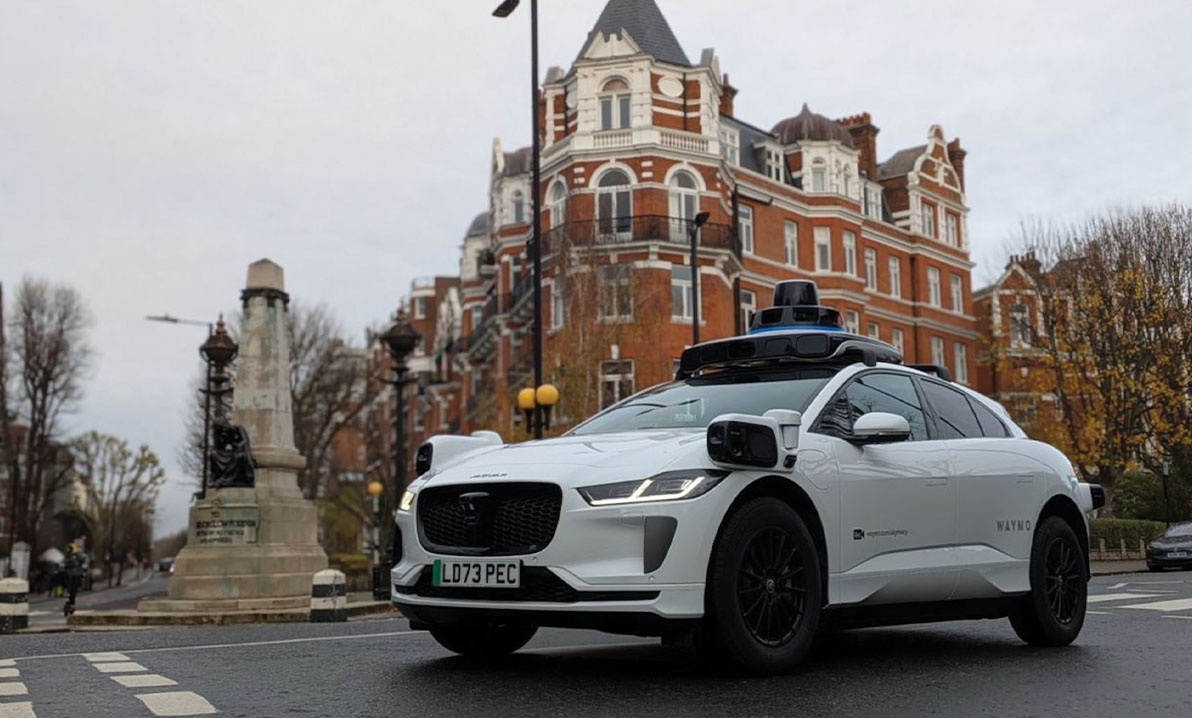
Level four goes further still. Vehicles at this level can operate without a driver in defined environments, such as urban robotaxi services or dedicated freight routes. These systems are being advanced largely by major technology firms, with applications ranging from passenger transport to 24-hour logistics operations.
Evidence from large-scale deployments is beginning to emerge. After tens of millions of miles driven, some operators report substantial reductions in insurance claims compared to human-driven vehicles. While incidents still occur, early data suggests that autonomous systems may significantly reduce the types of collisions most commonly caused by human behaviour.
Level five, the ultimate goal, envisions vehicles capable of operating anywhere, under all conditions, with no human intervention. While this remains some years away, Level five functionality is likely to evolve organically as the number of level four operating regions grows to include new cities, specific road links, and regions around Europe.
Public perception in Ireland
Despite technological advances, public confidence remains a critical factor. Survey research of more than 900 adults, which included more than 700 motorists, conducted by the Road Safety Authority in August 2024 highlights a cautious Irish perspective:
- awareness of autonomous vehicles is high, with 86 per cent of adults familiar with the concept, but only a minority express strong interest in owning one;
- nearly half (49 per cent) of motorists already have some form of driver assistance technology in their car, while 52 per cent of adults agreed that ADAS improves road safety;
- only one in five adults (21 per cent) said they would trust a self-driving car to bring them safely to their destination; and
- concerns include the reliability of the technology, the potential for collisions, cost, cybersecurity risks, and unclear liability in the event of a collision.
In essence, Irish attitudes are measured and pragmatic, with a clear demand for evidence, transparency, and robust safeguards.
An autonomous future
Ireland must now position itself to secure advantage in this evolving landscape. Notably, there is emerging industrial capability in autonomous technologies, particularly in regions west of the Shannon.
Leading companies in Ireland such as Jaguar Land Rover, Analogue Devices, Valeo, and Provisio are creating high value engineering positions and products at the leading edge of this technology field.
Research institutions such as Future Mobility Campus Ireland and national colleges are supporting the needs of these companies. They are also collaborating with European colleagues and pioneering related research topics which supports the vital supply of talent to the field.
At the same time, regulatory and legal frameworks must evolve. The traditional definitions of ‘driver’ and ‘driving’ will need to be reconsidered. Clarity is essential, not only for consumers, but also for enforcement authorities and insurers.
Testing is another key consideration. Many EU countries already permit controlled on-road testing of autonomous vehicles. Facilitating similar opportunities in Ireland, under strict safety oversight, will be crucial to ensuring that these systems are trained effectively in local conditions and can deliver their full safety benefits.
A measured transition
Autonomous vehicles are not a distant concept, they are an emerging reality. However, their integration into Irish society will not happen overnight. It will require a phased approach, balancing innovation with safety, and technological capability with public trust.
Ireland has committed to achieving a 50 per cent reduction in road deaths and serious injuries by 2030 and achieving Vision Zero, zero road deaths and serious injuries, by 2050.
If implemented correctly, autonomous systems have the potential to significantly reduce road trauma. The success of these systems depends not only on the technology itself, however, but on how well we prepare, legally, socially, and operationally for its arrival.
The opportunity is substantial. The responsibility to manage it carefully is even greater.

W: www.rsa.ie