Accelerating rail infrastructure delivery
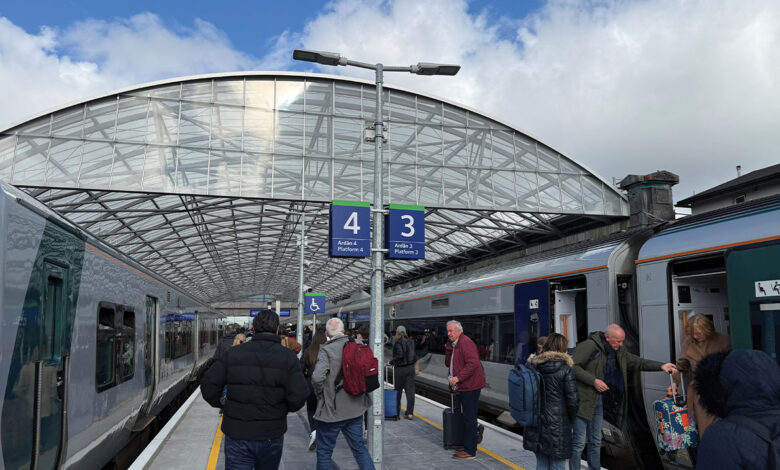
As passenger demand for our rail services soar, and freight and Rosslare Europort growth continues, the year ahead is set to see tangible delivery across a range of projects to enable service expansion.
The year 2025 again saw a new record achieved in passenger numbers on the Iarnród Éireann network, with just over 55 million journeys made, an increase of 9 per cent. This year is once again set to see record demand, bringing with it capacity pressure on a number of key routes at the busiest times.
Matching record demand is a record investment programme and it will, within the coming 12 months, see a number of projects come to fruition. This will begin the expansion of service and network capacity to enable Iarnród Éireann to deliver on our vision to be the backbone of Ireland’s sustainable transport network.
Perhaps the most tangible aspect will be the introduction of our new DART fleet, with battery-electric trains currently in testing for deployment in the first half of 2027.
A total of 285 DART carriages are currently on order, of which 185 will represent new capacity on the network, including the first carriages being introduced next year.
The remaining 100 will ultimately serve to replace the original DART fleet, in service since 1984, themselves an indication of the return on investment for railway assets. With the first trains to be deployed on the Drogheda route, their introduction will also free up commuter and intercity trains currently operating there for use elsewhere on the network.
The DART+ Programme itself is progressing, with DART+West to Maynooth/M3 Parkway, South West to Hazelhatch, and Coastal North to Drogheda all in receipt of railway orders. Works on DART+ West will begin in 2027, and a further application for a new location for the DART+ depot in Kilcock was placed in March 2026. This will also serve to extend electrification and double-tracking to Kilcock, transforming rail services to the growing County Kildare commuter town.
Nationally, the development of Ceannt Station in Galway this year, will deliver an expanded station which will cater for expansion to and from the city for decades to come; facilitating more services on existing routes, and the development of new routes such as the next phase of the Western Rail Corridor from Athenry to Claremorris. Ongoing works at Oranmore Station will also see capacity grow from 2027, through a second platform and passing section of track.
The new Foynes freight line will also be completed in 2026, also enabling a temporary passenger service to Adare for the Ryder Cup in 2027, for which platform works have commenced.
Iarnród Éireann has completed both a new through platform at Kent Station, Cork and twin-tracking of the Midleton line as part of the first phase of the Cork Area Commuter Rail (CACR) programme, with the resignalling of the Cork commuter network to deliver the capacity for trains every 10 minutes each way between Cork and each of Cobh, Midleton, and Mallow to be completed in 2027.
The next building blocks for that high-frequency commuter service in Cork are also being advanced, as public consultation has taken place for the next phase of CACR, for a new Cork fleet depot, electrification and six new stations. Two other stations, Blackpool and Dunkettle, are being accelerated under separate planning applications.
As part of Waterford City and County Council’s North Quays development, a new Plunkett Station is set to open by Easter 2027, providing major improvements in integration with other public transport modes and active travel.
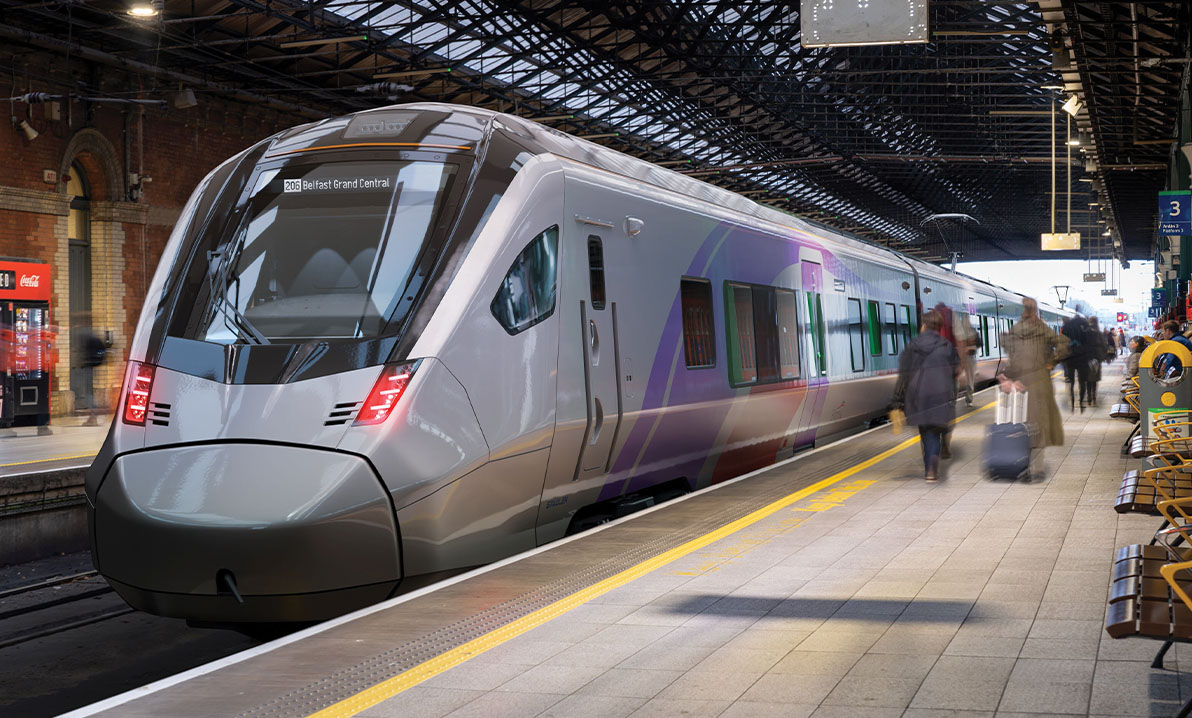
Jointly with Translink, Iarnród Éireann has placed an order for the next generation of Enterprise trains from Swiss manufacturer Stadler, which will further enhance a service that has seen huge growth in demand since the move to an hourly service in October 2024, with the surge in demand of over 45 per cent perhaps the most significant public transport success story on this island of the past few years.
Iarnród Éireann has commenced planning processes for a range of projects including the Navan railway, bringing rail services back to the largest town in Ireland not currently on the passenger rail network; Four North to boost capacity of the Connolly to Malahide corridor; and capacity enhancement feasibilities on routes including Dublin to Galway, Galway to Limerick, and Limerick to Limerick Junction.
Preparatory work for the second phase of the Western Rail Corridor, from Athenry to Claremorris, is also underway.
“This year is once again set to see record demand, with a matching investment programme to boost capacity.”
Longer term, the All-Island Strategic Rail Review sets the strategic direction for the development of the rail network, and the publication of early intervention projects and a priority programme by the Department of Transport in Ireland and Northern Ireland’s Department for Infrastructure give the momentum to bring the vision to reality.
In freight, new wagons on order, and developments at Foynes and Dublin Port will allow Iarnród Éireann to play a far greater role in the country’s movement of goods, with opportunities for new inland ports are being actively explored.
In Rosslare Europort, service expansion to and from mainland Europe is being complemented by investment in the port masterplan and its development as the offshore renewable energy (ORE) hub for the Celtic and Irish Seas. The recently completed T7 permanent border control post and associated facilities, and the N11/N25 Oilgate to Rosslare Europort project by TII and Wexford County Council, facilitate further growth.
The journey of Iarnród Éireann, set to mark its 40th anniversary in 2027, is accelerating, and the destination is a more sustainable future for all.

W: www.irishrail.ie
X: @IrishRail