Addressing overcrowded prisons
 Irish Penal Reform Trust (IPRT) research demonstrates we need a whole-of-government response to address our prison overcrowding crisis writes Saoirse Brady.
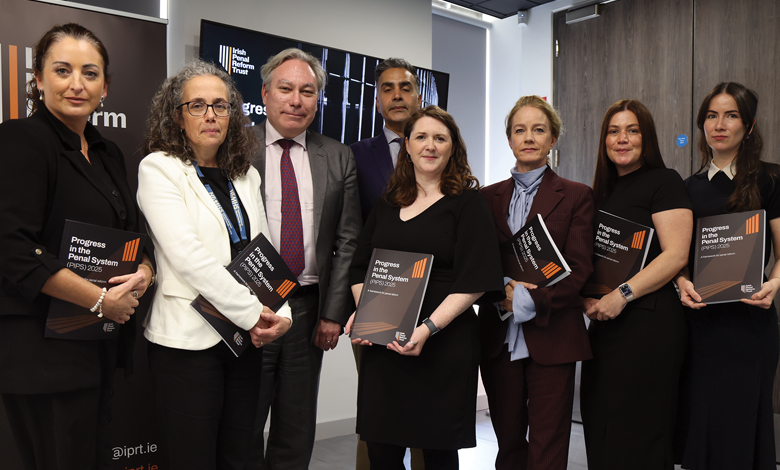
Each year, the Irish Penal Reform Trust (IPRT)’s Progress in the Penal System (PIPS) report takes stock of 35 standards across the penal system. The 2025 edition makes for difficult reading as we saw progress in only one standard while there was roll-back in 21 standards.
We assessed the remaining 11 as either mixed progress or no change. For years now, the Irish Prison Service (IPS) has been treading water but is clearly sinking under the sheer weight of prison numbers. This means that even when the IPS makes attempts towards positive change, and introduces constructive measures, they are all too often undermined by the unsustainable strain caused by prison overcrowding.
Following its 2024 visit to Ireland, the European Committee for the Prevention of Torture (CPT) clearly recommended that once a prison reaches capacity, then no one else should be admitted to that facility. The CPT also called on the Irish Government to address the overuse of pre-trial detention (remand).
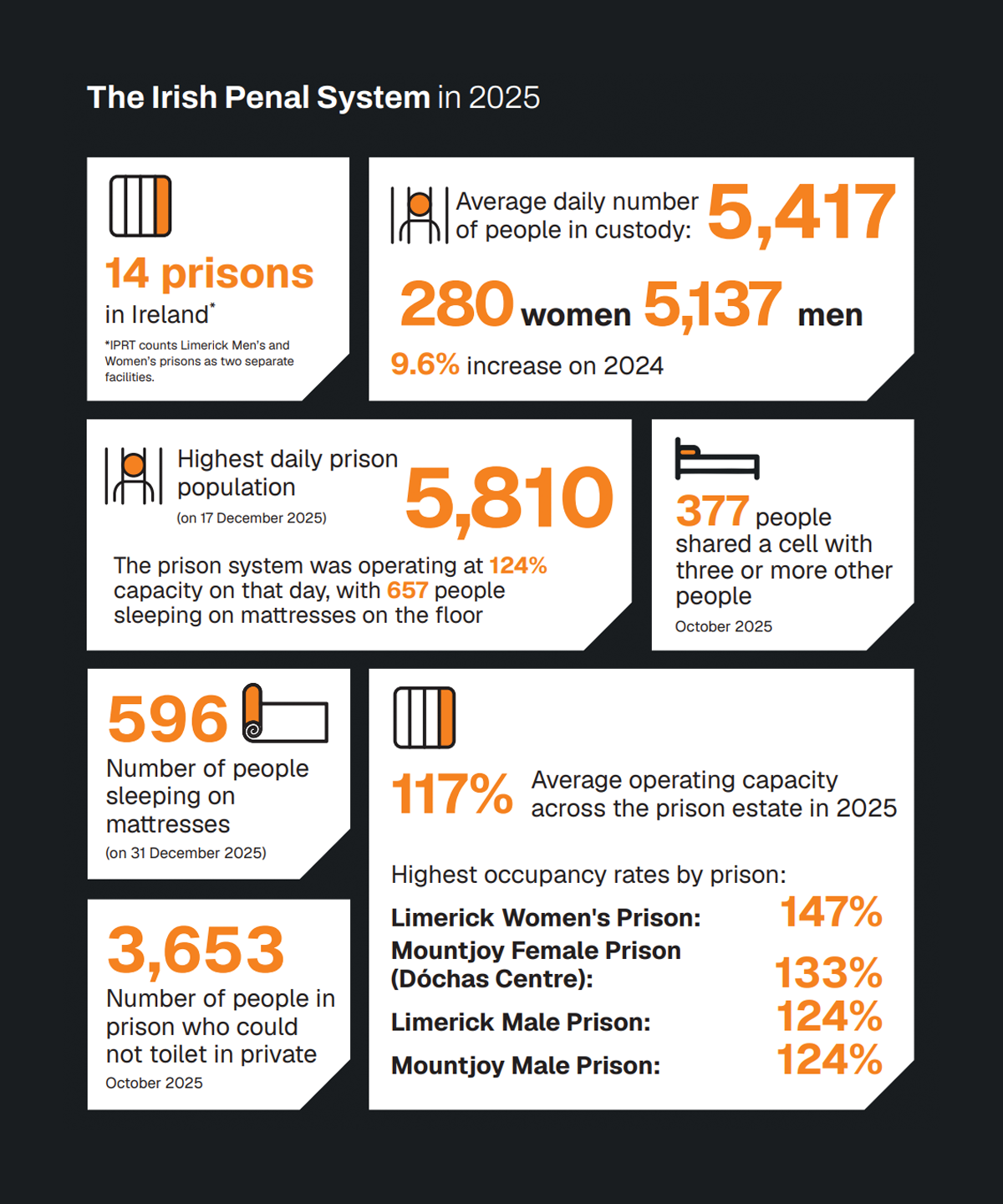
However, in 2025 the average operating capacity across the prison estate was 117 per cent, one in five people in prison were on remand and three quarters of the prison population were serving short sentences of less than a year. Unfortunately, these trends continue unabated in 2026.
The 2025 PIPS report shines a spotlight on access to mental healthcare in prison. While institutionalisation in Ireland has a long and dark past, unfortunately due to limited alternatives and a lack of pathways into the healthcare system, we routinely see people imprisoned who require dedicated psychiatric care or access to mental health community supports.
The housing and homelessness crisis only exacerbates this phenomenon. IPRT is extremely concerned that prisons are acting as inadequate waiting rooms for people with psycho-social disabilities and mental health challenges with nowhere else to go.
This is particularly pertinent when it comes to the remand population. In July 2026, IPRT published Rethinking Remand: An assessment of pre-trial detention practices in Ireland. In 2025, three out of four people held on remand did not go on to serve a sentence. The research indicated a disproportionate use of remand custody for people experiencing homelessness, mental illness, addiction and poverty for minor offences. Clearly this puts unnecessary strain on a prison system that does not have the capacity to provide a bed for everyone in its care and has to resort to using mattresses rolled out on the cell floor beside a communal toilet.
Imprisonment in itself is a traumatic experience, but for people who have not been found guilty of any offence or who do receive any custodial sentence, they face profound and unnecessary costs in terms of their family relationships, employment, accommodation, mental health and wellbeing.
While there are clear legal reasons for custodial remand, IPRT questions why so many people are held in pre-trial detention for minor offences and ultimately released without conviction. Similarly, we question why so many committals to prison are for short periods of time – weeks or months – when this can have long-lasting and sometimes lifelong consequences which do little to prevent reoffending or treat the underlying root causes of crime.
The State clearly recognises the transformative power of early intervention and prevention to address many of the societal issues that intersect with the criminal justice system: poverty, deprivation, homelessness, mental illness, addiction, and structural inequality.
Instead of continuing to pour money into an overstretched criminal justice system or expanding the prison estate, the Government should join the dots and redirect investment into diversion and non-custodial alternatives that work. Its primary focus must be on investing in people and communities.
Rather than spending €103,000 annually to imprison one individual, these resources would be far better spent addressing the reasons why that person ended up in a prison cell in the first place, especially when short custodial sentences rarely facilitate meaningful change.
All too often, when we speak of the people in our criminal justice system, we encounter a siloed response from other government departments and agencies. A person-centred approach requires interagency collaboration as these individuals are not solely the responsibility of the Department of Justice nor the criminal justice agencies.
IPRT’s research clearly outlines a myriad of reasons why people come into contact with the criminal justice system, very often linked to adverse childhood experiences, trauma or circumstances underpinned by poverty, inequality or homelessness. People continue to fall through the cracks, sometimes with tragic consequences, even when they are known to services.
IPRT believes there are real opportunities for systemic reform starting with the enactment of the Criminal Law, Civil Law and Defence (Miscellaneous Provisions) Act 2026 as now judges will be obliged to consider community service instead of a custodial sentence of up to two years and will have to provide reasons for their decisions.
The review of Ireland’s bail laws provides an avenue to address the overuse of remand and to legislate to improve access to therapeutic bail and ensure that local psychiatric hospitals are equipped and obliged to accept transfers of people with mental health difficulties from prison where appropriate.
Both the Prison In Court Liaison Service (PICLS) and the Community Access Support Teams (CAST) pilot in Limerick have demonstrated that they can mitigate the number of individuals with mental illness ending up in prison, but both require expansion and formalisation, to ensure they can continue this crucial work.
People cannot continue to be punished for the failures of the State to provide for them in the first place. What is needed now is a redirection of justice investment to provide secure homes, better access to healthcare, an adequate income, alternative education supports and youth work opportunities. This can only be achieved through a whole-of-government approach and interagency working backed by the political will to take a different approach to deliver a more proportionate, humane and effective system.
Click here to read the full report