Moving Together: Reducing car dependency
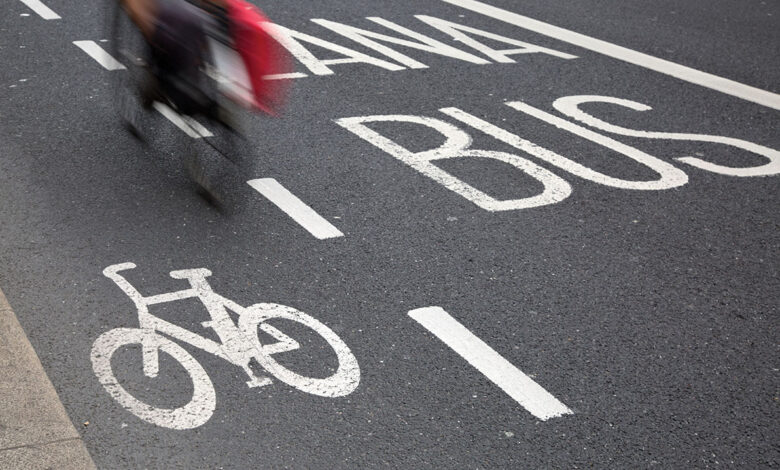
The Government’s Moving Together: A Collaborative Approach to Systems Change in Transport 2026-2030 strategy outlines plans to shift away from the prioritisation of cars through more efficient urban planning and the reallocation of road space in favour of alternative modes of transport.
The strategy, published in March 2026, sets out the Government’s aim to “encourage collaboration across the public, private, and community sectors and to find innovative ways for supporting more efficiency and less congestion across the transport system”.
Planning
One of the key areas of focus in the strategy is integrated land use and transport planning, with the overall aim of ensuring that the built environment is connected in a way that reduces travel demand by car sustainably.
The strategy notes that this “requires a rethinking and reversal of decades of development patterns driven by the prioritisation of the private car as the primary form of transport”.
This involves the planning of homes, workplaces, education facilities, and other services being complementary to the planning of alternative transport infrastructure, resulting in a significant reduction in transport-related emissions.
The prioritisation of car travel has meant that congestion historically was viewed as the primary transport challenge, with road capacity expansion seen as the solution, but this compounded the increasing problem of underutilising space for other functions.
This resulted in the responsibilities of transport and planning being segmented, therefore minimising the role that land use and housing decisions play in the performance of transport systems.
The strategy highlights several challenges which will slow and potentially halt the move away from car dependency.
Retrofitting existing spaces can face pushback from residents due to fears around how they or their community may be negatively affected.
Planning new roads to allow all forms of transport modes to cut through spaces can negatively affect the environment for non-car users, which risks discouraging a shift to sustainable transport modes but also does little to reduce the demand for car use.
To avoid this, the strategy notes that communications and engagement with the local community are vital to the delivery of any proposed measure.
The main way of improving the integration of land use and transport planning will involve new developments rather than retrofitting established ones. Therefore, this may result in limited effects of reducing emissions on an absolute basis due to construction.
To deliver reduced car usage, the strategy recommends strengthening policy alignment, governance, and funding mechanisms to deliver the compact growth priorities detailed in the National Planning Framework.
The strategy also recommends for analysis to be completed on the effectiveness of reducing car parking as a demand management measure.
This would involve the collating and analysing of data on parking at a national level and the preparation of guidelines to better inform behaviour and activities to support the development of targeted measures aimed at demand reduction.
This analysis would also quantify the potential undesirable impact and costs to society of expensive urban centre car parking and free peripheral car parking.
An inventory would gather data on how much of the space is being dedicated to different modes of transport and compare whether that is consistent with climate and wellbeing goals.
“Moving Together is about supporting the development of better and more liveable towns and cities, cleaner air, efficient public transport, safer spaces for walking and cycling, and an end to the inefficiency and pollution of car-clogged streets.”
Minister for Transport Darragh O’Brien TD
Space
The strategy also identifies the optimal use of space as another key area of focus for improving transport across the State.
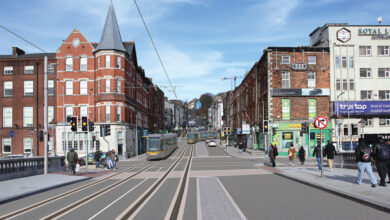
This would involve the reallocation of road space in favour of pedestrians, cyclists, and public transport.
The reallocation of road space would involve the repurposing of space previously dedicated to on-street parking or reducing the number or size of car lanes.
The strategy identifies several considerations essential to the success of this reallocation, such as communication and engagement, equity and inclusion, planning legislation, and ‘tactical urbanism’ which involves small-scale, low-cost pilot interventions.
Reallocating road space is a significant project and will present several challenges, including divergences in the views of businesses and communities, negative media coverage, concerns over traffic flow, and legal and regulatory processes and requirements.
The intersection of cycle lanes with pedestrian paths or footpaths can also cause issues for disabled people and those with physical or sensory issues.
Additionally, reallocating road space to facilitate a move away from the dependence on cars requires suitable and sustainable transport alternatives.
Delivery of a robust public transport network can be a lengthy and expensive process which could deter many local authorities from the reallocation of road space.
To achieve this reallocation of road space, the strategy recommends providing communications and engagement support, updating national guidelines in support of demand management, and providing guidance support for local authorities on the development of tailored strategies.
Recognising the potential huge costs for local authorities of reallocating road space, the strategy recommends the creation of mechanisms to financially support demand management pilot measures.
Minister for Transport Darragh O’Brien TD says: “Moving Together is about supporting the development of better and more liveable towns and cities, cleaner air, efficient public transport, safer spaces for walking and cycling, and an end to the inefficiency and pollution of car-clogged streets.”