Powering Ireland’s energy future
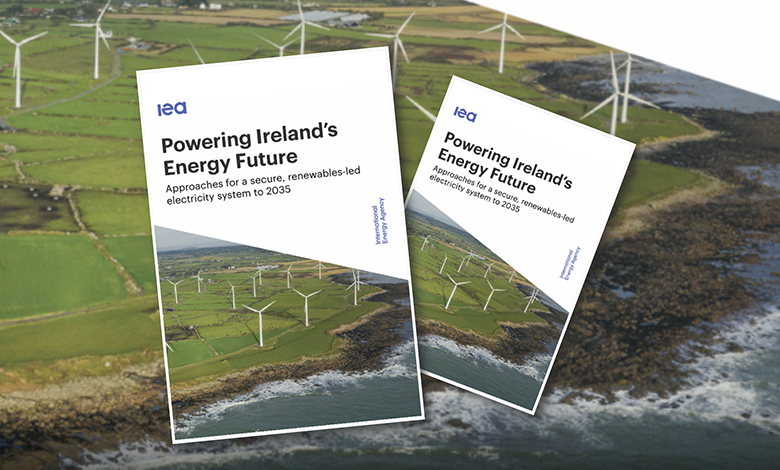
A study from the International Energy Agency finds that Ireland has emerged as a global leader in wind integration and renewable electricity. However, the report warns that rapid demand growth, fossil fuel import dependence, and grid delivery risks will test electricity security through 2035.
Powering Ireland’s Energy Future, published in December 2025, assesses the outlook for Ireland’s electricity security to 2035.
Prepared in collaboration with EirGrid, the study examines how Ireland can align its climate, energy, and socioeconomic ambitions while maintaining a secure and affordable electricity system.
The report identifies Ireland as a frontrunner in wind power integration. In 2024, wind supplied around one-third of electricity demand, placing Ireland among the highest shares globally for systems of comparable scale. Overall renewable electricity accounted for approximately 40 per cent of supply. At the same time, natural gas remained the largest single source of generation, accounting for more than 40 per cent of output and providing essential system services.
The IEA states that Ireland’s power sector transformation to date has been significant. Coal has been phased out of generation and battery storage capacity has expanded rapidly. However, the report emphasises that the next phase of transition will be more complex. Ireland has set a target of 80 per cent renewable electricity by 2030 and aims to operate a system largely based on wind, solar, storage, and imports by 2035.
Demand growth
The study highlights electricity demand growth as a central challenge. Between 2015 and 2023, electricity demand increased by roughly 20 per cent. Data centres accounted for a significant share of this growth and represented 22 per cent of total electricity consumption in 2024. Residential and transport electrification are also expected to increase demand further.
Under the IEA’s Adapted Transition Pathway, electricity demand could nearly double by 2035. Growth in housing, data centre activity, electrified heat, and electric vehicles all contribute to this projection. The report states that managing this demand securely will require accelerated infrastructure delivery and system flexibility.
The IEA notes that electrification presents both benefits and pressures. Replacing fossil fuel-based heating systems and vehicles with electric alternatives could reduce Ireland’s reliance on imported fossil fuels by 38 per cent and lower annual import costs by an estimated €2.8 billion. However, without coordinated grid expansion and demand-side flexibility, new electric loads could increase peak demand pressures.
Supply outlook
The report examines how Ireland’s generation mix must evolve to meet rising demand. In the Adapted Transition Pathway, renewables could supply 88 per cent of electricity by 2035. Wind and solar would provide the bulk of generation, supported by expanded battery storage and interconnection.
Natural gas would continue to play a role but shift from bulk supply to backup and flexibility. The utilisation rate of gas-fired plants could fall from around 46 per cent in 2023 to approximately 12 per cent in 2035. The IEA states that this decline in operating hours may reduce the commercial viability of thermal units, creating challenges for market design and capacity remuneration.
To maintain adequacy, Ireland may require up to 16GW of dispatchable capacity by 2035, including thermal generation, storage, and interconnectors. The study stresses the importance of regularly reviewing capacity requirements as demand projections evolve.
Operational security
The IEA identifies operational security as a defining issue of the next decade. As renewable penetration increases, Ireland’s system will rely heavily on converter-connected technologies such as wind, solar, and batteries. These resources do not inherently provide inertia or frequency stability in the same way as conventional generators.
Ireland is already operating at one of the highest shares of converter-connected generation internationally. By 2035, inertia and other system services in the Adapted Transition Pathway would be delivered largely by batteries, demand response, and synchronous condensers. The report states that this level of reliance has limited international precedent and will require continued modernisation of system operations.
EirGrid and SONI’s operational roadmap is cited as central to enabling secure high-renewable operations. The IEA emphasises the need for advanced modelling, updated grid codes, and strengthened cybersecurity as the system becomes more digital and decentralised.
Infrastructure delivery
Grid development is identified as a critical enabler. Transmission and distribution networks must accommodate both rising electricity demand and expanding renewable generation. Ireland plans record grid investment of €10-14 billion between 2026 and 2030, compared to €5 billion between 2021 and 2025.
The report notes that long lead times, permitting processes, and supply chain constraints pose risks to timely delivery. Climate resilience is also highlighted following recent severe storms that caused prolonged outages in rural areas. The IEA recommends incorporating resilience upgrades into future grid planning.
Import dependence
Ireland’s reliance on imported fossil fuels remains a structural energy security concern. Imported fuels account for approximately 80 per cent of total national energy supply. Natural gas is particularly significant, representing around 60 per cent of national gas consumption for power generation.
The IEA states that reducing fossil fuel dependency through renewable expansion and electrification can strengthen long-term security. However, continued reliance on gas-fired generation for adequacy and flexibility means exposure to international market volatility will persist during the transition.
Policy direction
The report sets out five pillars for policy action. These include establishing a cross-sectoral energy security strategy for the 2030s, accelerating enabling infrastructure, expanding generation and flexibility resources, enabling secure system operation under high renewable penetration, and advancing workforce skills and partnerships.
The IEA concludes that Ireland can build on its progress in wind integration to operate a secure renewables-led system. However, it states that delivery risks, infrastructure constraints, and rising demand require coordinated policy action.