Cover story: Delivering resilience
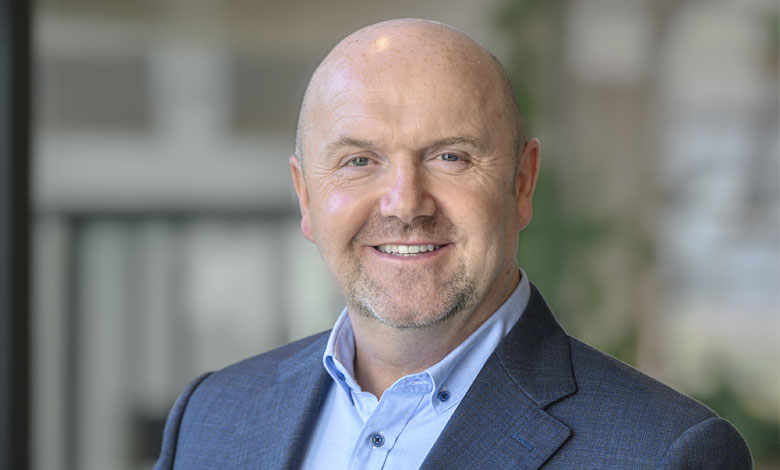
David Kelly, Chief Executive of Gas Networks Ireland, talks to Owen McQuade about the organisation’s refreshed corporate strategy, its record €237 million capital expenditure programme, and the critical infrastructure investments underpinning Ireland’s energy security and decarbonisation pathways.
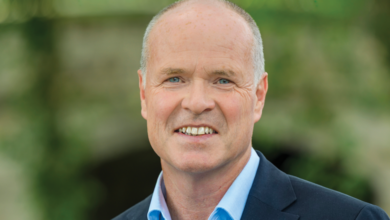
Gas Networks Ireland’s strategic reset has been shaped by a rapidly evolving external environment, with global energy dynamics fundamentally altered in recent years. Under David Kelly, who became Chief Executive Officer of Gas Networks Ireland in February 2026, the organisation’s response has been to sharpen its focus and align its priorities with the realities of energy security, affordability, and decarbonisation.
“When we first separated Gas Networks Ireland out of Ervia, we established a strategy that addressed a lot of areas but in hindsight, it was too broad,” he explains. “That was pre-Russia-Ukraine war, and that changed everything in terms of a massive focus on security, supply, and affordability.”
Rather than abandoning its previous ambitions, the organisation undertook a deliberate simplification of its corporate strategy.
“What we needed to do was simplify it, and we needed to ensure that it was pointed at where our areas of focus were,” Kelly says. “So we brought a relatively lengthy strategy statement down to three main areas: security and resilience; decarbonisation; and supporting our customers.”
The addition of a customer-focused pillar marks a significant evolution in how the organisation frames its role. “That was a new departure for us, ensuring that our customer was at the heart of our strategy, especially around affordability and the cost of energy,” he says.
The streamlined strategy, underpinned by organisational capability and financial strength, has been positively received across stakeholders. “That strategy has landed very well, both with stakeholders, with customers, and indeed with our internal stakeholders, and that is where we are at now. We are very much in execution mode,” Kelly says.
“We had not connected a power station in over 10 years and now we are contracted to connect 13, with construction on eight complete and the remainder at design, planning, or construction stage.”
Record capital investment
That execution is most visible in Gas Networks Ireland’s 2026 capital expenditure programme, which, at €237 million, represents a record level of investment for the organisation.
This investment relates to the company’s core regulated activities, specifically the transport of gas across Ireland’s transmission and distribution systems. “We would call this our core business,” he explains. “This is capital associated with the transport of gas, both on a transmission and a distribution level.”
The scale of activity is substantial with approximately 130 standalone capital projects underway at any given time across the network. “Within that core capital programme, there are 130 projects in varying locations around the country,” Kelly says.
Importantly, this figure does not include additional expenditure on areas such as the Strategic Gas Emergency Reserve or unregulated business activities, highlighting the scale of the organisation’s overall investment footprint.
Kelly states that the emphasis now is firmly on delivery. “This year especially is all about delivery. The time for talking is really over. It is all about now with boots on the ground,” he says.
Major infrastructure investments
A cornerstone of the current investment programme is the €200 million decarbonisation of compressor stations in Scotland, a project with both environmental and operational benefits.
“We are decarbonising our two compressor stations with the addition of an electric motor drive at each. It has a double impact for us, in that it reduces our carbon emissions by 42 per cent and, on top of that, it gives us the option of additional capacity and allows us to put more gas through the existing subsea infrastructure,” Kelly explains.
The project is powered with renewable electricity. “We have had to put in place a corporate power purchase agreement for electricity,” he adds. This dual benefit, reducing emissions while increasing system capacity, illustrates the organisation’s approach to aligning decarbonisation with resilience.
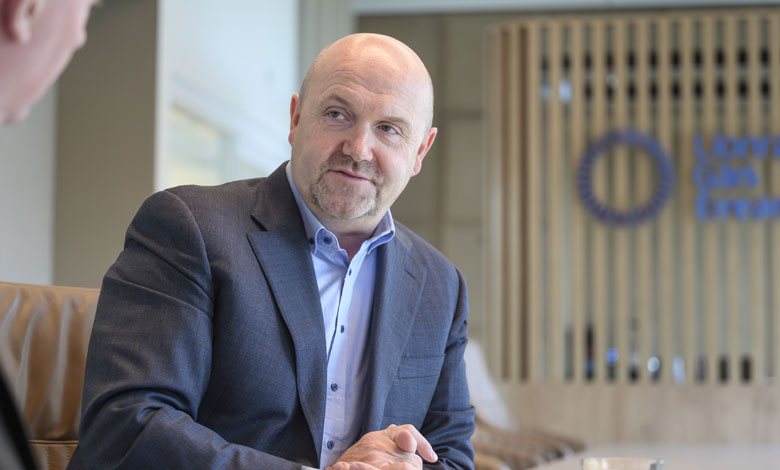
Alongside this, Gas Networks Ireland is progressing the Southern Area Reinforcement initiative, a €50 million investment focused on strengthening infrastructure in a region experiencing growing demand.
“This is just to bolster the level of demand we are seeing coming through in the area and it allows us to be futureproof for the period until the next Network Development Plan window, so the next 10 years is set out.”
The project will increase pipeline capacity in the southern region by approximately 20 per cent, ensuring sufficient gas pressure and resilience during peak winter demand, while supporting continued economic growth.
Generation
Gas Networks Ireland is also playing a central role in enabling Ireland’s electricity system, particularly through the connection of new gas-fired power generation capacity.
“One of the other key programmes of work, especially in the last three years, has been connecting brand new power stations to the transmission grid,” Kelly says.
After more than a decade without new transmission connections, activity has accelerated significantly. “We had not connected a power station in over 10 years and now we are contracted to connect 13, with construction on eight complete and the remainder at design, planning, or construction stage,” he explains.
These facilities are predominantly peaking plants, designed to provide flexible, responsive generation.
“These are plants that are on standby in the event of a shortage. They can be commissioned when required and their contractual arrangements are different to traditional baseload generation.”
“We are absolutely very focused on decarbonisation. Biomethane is a key agenda for us and then, in the longer term, hydrogen.”
Critically, the plants also support the integration of renewable energy.
“They are perfectly matched to that marriage between intermittent renewables like wind and solar. These plants can pick up the slack when the wind is not blowing,” Kelly states.
Biomethane
Decarbonisation of the gas network is being advanced through a growing biomethane programme, combining both centralised and direct grid injection models.
A key development is the €32 million Mitchelstown Central Grid Injection facility in Cork, which Kelly describes as “a very important piece of infrastructure for our biomethane agenda”. He adds: “That hub-and-spoke model allows anaerobic digestion developers to truck their biomethane to this location and inject it into the grid.”
The facility is already demonstrating strong early demand. “We already have an anchor tenant for that, so the first half of that will be fully occupied upon it being commissioned. There is an expansion plan for it over the coming years,” Kelly says.
In tandem, Gas Networks Ireland is directly connecting biomethane producers to the network. “We have seven AD plants where we are actively building pipeline to them, the first three of them will be commissioned this quarter [Q2 2026].”
Combined, these developments will deliver approximately 750GWh of biomethane capacity in the short term. “It is a start, but it is no more than that. We have a long way to go on that agenda,” Kelly acknowledges.
Security of supply
Security of supply remains a critical priority, particularly given Ireland’s heavy reliance on imported gas and the ongoing volatility of market gas prices driven by the Iran War.
Around 80 per cent of Ireland’s gas supply is imported from the United Kingdom through two sub-sea interconnectors, meaning that Ireland’s energy security is dependent on its relationships with other states.
The vast majority of the State’s remaining gas supply comes from the Corrib gas field, which is in decline. “The remaining 20 per cent is secured through the depleting Corrib gas field. At best, it has a life expectancy of a further 10 years.”
In response, the Government has mandated the development of a strategic gas emergency reserve, bringing Ireland into compliance with EU requirements. Kelly specifies that Ireland is “the only outlier now left that does not have strategic gas reserves”.
The proposed offshore floating facility, located in County Clare, is progressing through development stage.
“We expect to go into planning towards the end of this year with a view to a final investment decision next year, and we are hoping to have that commissioned by the middle of 2030.”
The reserve will provide critical backup in the event of supply disruption. While there is no threat to Ireland’s gas supply in the short to medium term, a shifting global landscape makes long-term global supply projections challenging.
“Our strategic gas emergency reserve will be on standby in the event of an interruption to the gas that is transported through the subsea interconnectors. It is a really important piece of infrastructure,” Kelly explains.
Delivering for the future
As Gas Networks Ireland enters an intensive phase of delivery, Kelly emphasises the organisation’s enduring focus on execution and capability. “We are an engineering-led organisation. We are very ‘can-do’, and we have a culture where we quietly get on with it,” he says.
That culture is being reinforced through significant investment in people, including the recruitment of 200 new staff in the past year and a highly competitive apprenticeship programme.
At the same time, the organisation is positioning itself for the longer-term transition to a decarbonised gas system. “We are absolutely very focused on decarbonisation. Biomethane is a key agenda for us and then, in the longer term, hydrogen.”
However, he is clear about the role of natural gas in the transition, describing it as is “the transition fuel that will keep the lights on”.
With a record capital expenditure programme, a sharpened strategy, and a clear focus on delivery, Gas Networks Ireland is positioning itself to meet both the immediate and long-term energy needs of the State.
“The country is very dependent on gas for our economy, and what we are about now is ensuring that we deliver securely, reliably, and at scale,” Kelly concludes.
|
Profile: David Kelly
|