The Irish Language Attitudes Survey 2025
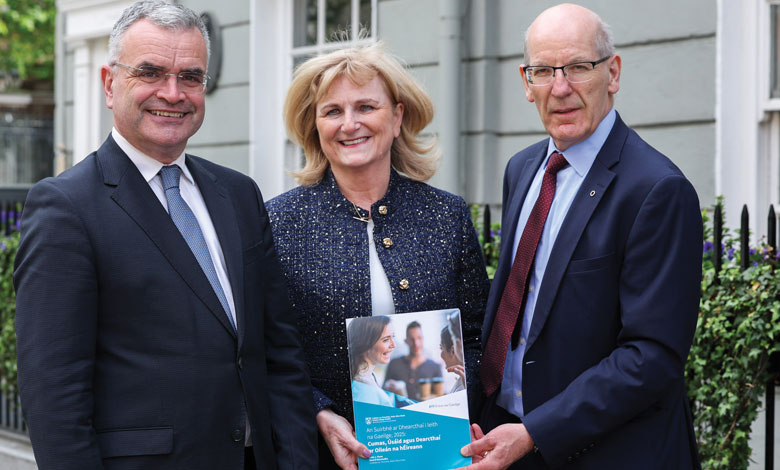
Minister for Rural and Community Development and the Gaeltacht, Dara Calleary TD launched The Irish Language Attitudes Survey, 2025: Ability, Use and Attitudes on the Island of Ireland at an event in Buswell’s Hotel on 19 May 2026.
This piece was originally written in Irish. Please click here to access the Irish language version.
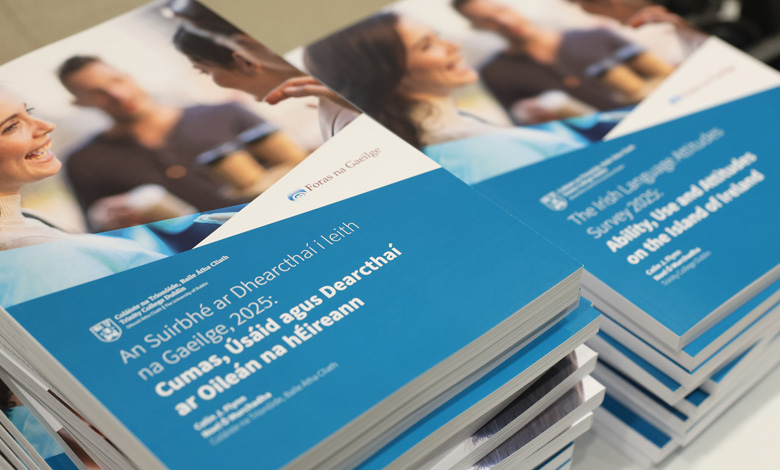
This report analyses contemporary attitudes towards the Irish language across the island of Ireland based on data from a large-scale representative survey conducted in the Republic of Ireland and Northern Ireland in summer 2025.
The report was undertaken to further our understanding of the sociolinguistic dynamics of the Irish language in both jurisdictions at a time when significant policy developments are emerging and debates are continuing about the future of the language.
The Irish Language Attitudes Survey 2025 was conducted by Ipsos B&A and Trinity College Dublin for Foras na Gaeilge with funding from the Department of Rural and Community and Gaeltacht Development during summer 2025.
This research is based on face-to-face interviews with 1,498 adults (1,000 in the Republic of Ireland and 498 in Northern Ireland). The questionnaire was developed and based on an existing questionnaire that has been in use since the 1970s, and was adapted to include Northern Ireland and to reflect today’s policy and societal context.
This report builds on a long-standing tradition of research into attitudes towards the Irish language. Major survey-based research into attitudes towards the Irish language began in the 1970s and, in the case of the Republic of Ireland (RI), versions of the same survey have been conducted approximately every 10 years since then.
The survey was first conducted in Northern Ireland (NI) in 2001, as part of an all-island survey funded by Foras na Gaeilge, and that jurisdiction has been included in all surveys since.
Overall, this collection of works is a reflection of the attitudes of the general public towards the Irish language, and their views on government policy in relation to the language.
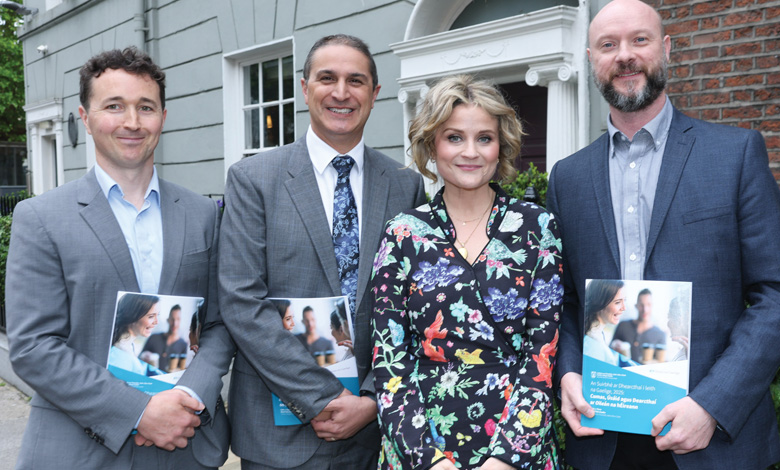
This publication is the latest report in the long-standing series of research into public attitudes towards the Irish language on the island of Ireland and provides a unique and detailed insight into current public attitudes and language proficiency on the island of Ireland, enabling comparisons to be made between statistics collected approximately every decade for the past half century on public attitudes towards, and proficiency in, the Irish language, as well as their use of it.
The study was conducted by Colin J. Flynn and Noel Ó Murchadha of Trinity College Dublin, in collaboration with Ipsos B&A. Flynn was the first author of this report. He is an assistant professor of applied linguistics in the school of linguistic, speech and communication sciences at Trinity College Dublin. Ó Murchadha was the principal investigator on this project. He is an associate professor of language education in the school of education, Trinity College Dublin.
Key findings highlight:
- a majority in both jurisdictions support the Irish language (78 per cent ROI and 55 per cent NI);
- everyday use is higher than reported in 2013: (by 3 per cent in ROI and by 6 per cent in NI) with people speaking Irish more frequently in Munster, Connaught, and Ulster;
- 18 to 24-year-olds are the largest age cohort among regular speakers in both jurisdictions;
- the preferred future is bilingual: with English as the main language, and support for greater prominence of Irish (55 per cent in ROI and 44 per cent in NI);
- support for Irish-medium education and the teaching of the Irish language are higher than reported in previous iterations of the survey; and
- opposition towards the Irish language is lower across all sectors of society in comparison with results reported for previous surveys. The majority position (60 per cent) among respondents in Northern Ireland who identify as British, and who generally identify as protestant, is to have no particular feelings towards Irish.
Foras na Gaeilge CEO Seán Ó Coinn says:
“Overall, this research demonstrates a strong base of support for the Irish language across the island, and Foras na Gaeilge will be working closely with our partners in both governments and the Irish-language lead organisations to strengthen this progress, and to expand the daily use of the language.
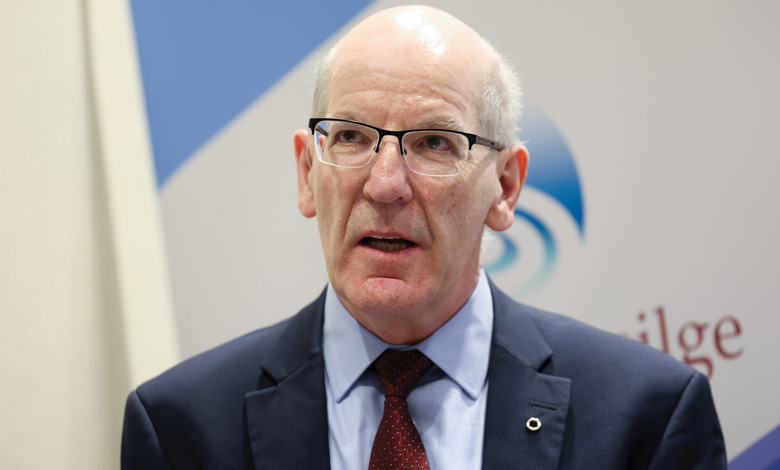
“The research shows a positive snapshot of public attitudes towards the Irish language in the South and among respondents who identify as British in the North; a group that generally identify with the protestant, unionist, and loyalist community. A positive finding that has improved significantly since the 2013 survey.
“However, we have challenges to face in the South: 50 per cent of respondents in the South self-assessed themselves as having little to no ability in Irish, a concerning finding that is 7 per cent higher than reported in 2013. This reflects an urgent need to improve the learning outcomes for Irish in our schools.”
Read the full report on the Foras na Gaeilge website.