Unlocking regional development
The Southern Regional Assembly is currently reviewing the Regional Spatial and Economic Strategy for The Southern Region (RSES), which is the primary statutory mechanism for delivering national planning policy at regional level.
It places balanced regional development at the centre of its vision, highlighting that long-standing disparities in infrastructure, housing, and economic opportunity must be urgently addressed if the region is to reach its full potential.
The Southern Region accounts for 42 per cent of the State’s land area, 33 per cent of its population (approximately 1.8 million people) and 35 per cent of national GDP. It consistently ranks in the upper tier of economic performance in Europe and is targeted for significant growth under the National Planning Framework (NPF).
However, despite its economic strengths, the region faces persistent structural challenges, with investment in infrastructure having been weighted disproportionately against the Southern Region, contributing to weaker competitiveness.
This imbalance is reflected in European benchmarking where the Southern Region ranks among the bottom 15 per cent of EU regions for infrastructure provision, highlighting a critical barrier to growth. Such deficits are not just economic, they also affect quality of life, access to services, and attractiveness of towns and rural areas. Without targeted investment and better spatial planning, these disparities will continue to widen.
Cities underperforming, towns struggling
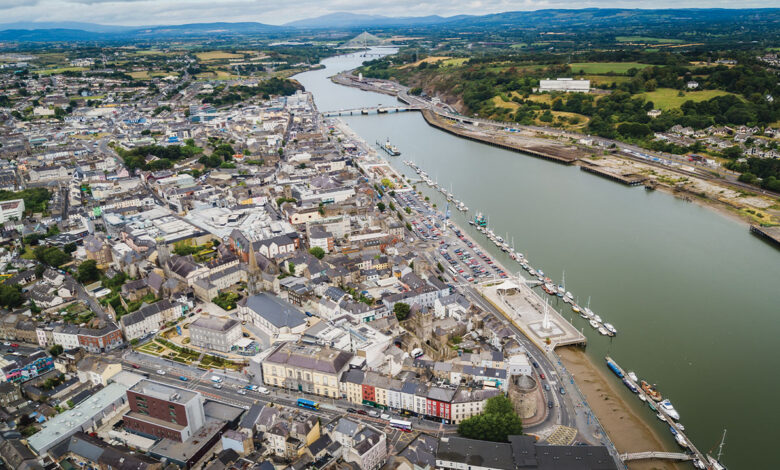
A key strength of the Southern Region are its cities of Cork, Limerick, and Waterford which have significant potential individually and collectively to anchor regional development objectives and to reduce pressure and reliance on the Greater Dublin Area.
However, a key concern is that the region’s cities are not growing as expected. Census data shows that population growth has fallen short of national targets, undermining efforts to build strong urban centres that can drive wider regional development. At the same time, many towns and villages across the region are facing ongoing decline, with dispersed housing patterns and insufficient development in central locations limiting their vitality.
Therefore, balanced regional development requires a renewed focus on strengthening both urban and rural communities. This includes investing in key towns to act as regional hubs, improving access to housing and services, and promoting more compact, sustainable settlement patterns.
Housing imbalance
Housing delivery is one of the most significant barriers to balanced growth, with a mismatch between where homes are being built and where they are needed, and the Southern Region lagging Dublin and the mid-east in housing supply.
There is a particular challenge in our region in delivering higher density, compact growth on brownfield land within our existing urban areas, which is a critical part of ensuring sustainable growth and reducing car dependency.
The failure to deliver sufficient housing in the right locations is constraining economic expansion and population growth. It also risks deepening inequalities between regions as workers and businesses gravitate towards areas with better availability of homes and infrastructure.
Sharing economic opportunity
While the Southern Region hosts a strong and diverse economy, particularly in high-value sectors such as pharmaceuticals, technology and agri-food, the benefits are not evenly distributed. Employment and earnings remain higher in and around the main cities, while more peripheral areas struggle to attract investment and retain skilled workers.
Balanced regional development means ensuring that economic opportunity is spread more evenly across cities, towns, and rural communities. This includes strengthening indigenous enterprise, investing in skills, opportunities, and innovation including reducing brain drain of talent, and improving connectivity across the region.
Connectivity and mobility
Transport and connectivity are key enablers of balanced growth. Better links between cities, towns, and rural areas are essential to unlocking economic potential and ensuring equitable access to jobs, education, and services. Currently, issues such as car dependency, uneven investment, and limited public transport options are hindering regional mobility. Addressing these weaknesses is vital to reducing regional disparities and supporting more sustainable development.
Renewable energy
Renewable energy is also a critical pillar of balanced regional development with significant natural resources, including offshore wind potential, solar capacity and opportunities in green hydrogen; the region is uniquely positioned to lead Ireland’s transition to a low-carbon economy.
Strategic investment in renewable energy infrastructure can drive economic growth in coastal and rural areas, create high-quality jobs, and enhance energy security. However, this potential must be carefully planned to balance environmental protection, community benefits, and long-term sustainability, ensuring that the transition delivers inclusive gains across all parts of the region.
A place-based approach to development
Balanced growth cannot be achieved through a one-size-fits-all model. Instead, development must reflect the unique characteristics, assets, and challenges of each locality, while ensuring that all parts of the region share in future prosperity.
A place-based approach, tailoring policies and investment to specific needs of different areas, from metropolitan centres to rural communities, can be central to this.
Looking ahead: a critical opportunity
The review of the RSES comes at a pivotal moment, with the Southern Region expected to grow by at least 330,000 people by 2040. This growth presents both a challenge and an opportunity. If managed effectively, it could help rebalance development across Ireland, strengthen the region’s role as a counterweight to the capital and help deliver key national objectives. If not, existing inequalities may deepen.
Achieving balanced regional development is not just a planning objective, it is essential to ensuring sustainable economic growth, vibrant communities, and a high quality of life across the Southern Region.