Local government and net zero in the UK

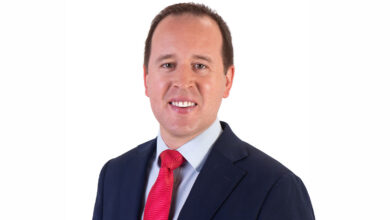
Christopher Hammond, chief executive of UK100, outlines why local government is central to delivering climate action and argues that councils must be empowered with the resources, powers, and public support needed to accelerate the transition to net zero.
Hammond emphasises that while national and international climate frameworks are important, success ultimately depends on local delivery. “Local government is absolutely crucial in the delivery of our climate work,” he says.
UK100, a network of 123 local authorities from across the UK, was founded following the Paris climate accords when local leaders recognised that councils would be essential to delivering climate commitments. Hammond explains that the organisation initially focused on a commitment to 100 per cent clean energy before expanding its ambitions through a net zero pledge.
The network brings together urban and rural authorities from all parts of the UK, providing what Hammond describes as a valuable perspective on both the opportunities and barriers associated with climate delivery.
Powers
Hammond argues that local authorities remain constrained by a governance system that is too heavily centralised. “We are still too highly centralised in Westminster and Whitehall, and there is not enough power and resources in your local town halls, which are the places that can deliver,” he says.
According to Hammond, local authorities are uniquely positioned to translate national climate ambitions into practical outcomes for communities. UK100 was established not only to support councils in delivering climate action, but also to advocate for the powers and funding required to achieve it.
The organisation works closely with members to identify barriers to implementation and develop practical solutions. Hammond points to work undertaken with councils and energy providers to examine obstacles to heat pump deployment.
While national targets for the electrification of heat are clear, he says delivery can become “gummed up” by procurement processes, legal requirements, and organisational challenges within local government structures.
To address these issues, UK100 develops guidance, training, and best practice resources for councils. Hammond highlights Powers in Place, a UK100 initiative that examines the powers available to local authorities and how they can be used to accelerate climate action.
“A lot of our politicians are self-taught,” he says. “They come into these roles, they might have no background whatsoever in delivering.”
For that reason, he says leadership development, coaching, and training are essential to accelerating delivery across the sector.
“We need to go further and faster, and that is only going to be achieved if that is done locally.”
Local influence
Hammond argues that councils are often underestimated in climate discussions because their influence extends far beyond their direct emissions.
“They are not the biggest polluters, but they are the biggest enablers,” he says.
Local authorities influence a broad range of sectors including transport, buildings, energy, waste, and nature. Alongside their statutory responsibilities, they also possess important relationships with businesses, public bodies, and communities.
The effective use of these formal and informal powers is critical, Hammond argues.
“If we can manage to utilise all of these levers across all of the sectors that we need to do, we can deliver a transition that is cheaper, faster, and better compared to national approaches.”
He identifies the electrification of transport and heating as particularly important elements of the net zero transition. However, he stresses that climate policy must also improve affordability and quality of life for residents.
Infrastructure and delivery
Hammond highlights disparities in electric vehicle charging infrastructure across the UK, noting substantial differences between regions. “There are 58 charge points per 100,000 people in Northern Ireland, and there are 338 in London,” he says.
Using Westminster as an example, he states that one London borough has more charging points than several major UK cities combined. “That has to change. We have to look at better locally designed systems, and we have to make sure the Government is providing the money.”
He also advocates for greater use of local area energy planning to support the decarbonisation of the energy system and create opportunities for community energy projects.
“It cannot just be the case that we are going to drop a load of infrastructure on communities and tell them just to lump it,” he says. Instead, Hammond argues that communities must be involved in decision-making processes and share in the benefits generated by infrastructure investments.
Community engagement
A recurring theme throughout Hammond’s presentation is the importance of public engagement and communication.
While Hammond says that climate action continues to enjoy broad public support, he believes there is still considerable confusion about what climate policies mean for individuals and communities. “We need to be better storytellers in the industry,” he says.
Citing Bradford’s Clean Air Zone as an example, Hammond argues that climate action should be communicated through its practical benefits rather than solely through emissions targets or technical policy discussions. Although the policy faced significant opposition, subsequent research indicated that improved air quality had reduced respiratory and cardiovascular illness.
“That means this clean air zone is not just an imposition on people,” Hammond says. “It means you are able to get a GP appointment quicker.”
For Hammond, demonstrating these tangible benefits is essential to maintaining public confidence and building support for future climate measures.
Priorities
Among UK100’s priorities are a statutory climate duty for councils in England, stronger reporting requirements, greater investment certainty, and expanded support for local energy planning.
Funding remains one of the most significant challenges facing local authorities. Hammond notes that 94 per cent of councils identify limited funding and resources as a major barrier to climate action.
Beyond restricting investment, he argues that financial pressures also reduce councils’ ability to engage with communities and co-design projects effectively.
Despite these challenges, Hammond remains optimistic about progress, saying “we have got the momentum on our side”. He points to continued growth in renewable energy generation and electric vehicle adoption as evidence that the transition is gathering pace.
However, he concludes that future success depends on empowering local government and ensuring communities remain engaged throughout the transition. “Empowering councils, they are going to deliver. We need to go further and faster, and that is only going to be achieved if that is done locally.”
Christopher Hammond is the chief executive of UK100, a cross-party network of UK local leaders and councils committed to climate action. Hammond served as a councillor at Southampton City Council between 2013 and 2022 and as leader of the council between 2018 and 2021.