The fast fix for Ireland’s leakage problem
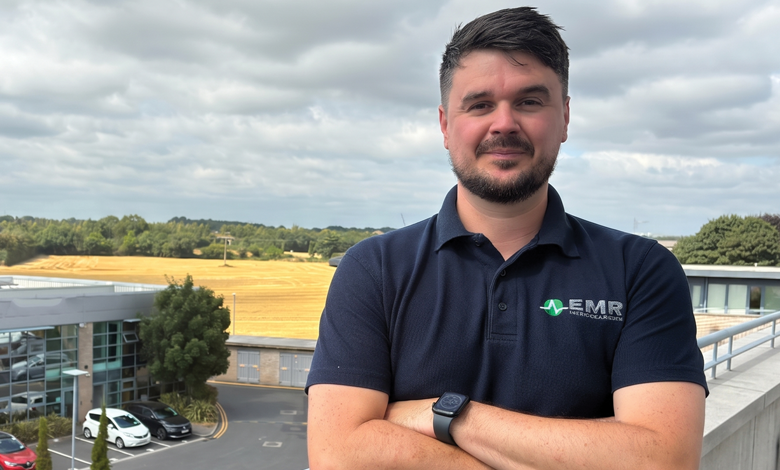
Ireland has just come through a nationwide hosepipe ban. Fixing leakage does not have to mean waiting years for pipes to be replaced; there is a faster way, writes Kevin Martin, Environmental Services Lead, EMR Integrated Solutions.
Weeks of exceptionally warm, dry weather have left some treatment plants and ground water sources under sustained pressure. Against that backdrop, the amount of treated water lost to leakage becomes a direct constraint on what households and businesses are allowed to do with their own supply.
Leakage management is one of the fastest and least disruptive ways for a water network to improve its performance. Rather than waiting years for capital-intensive pipe replacement, counties can get more out of existing infrastructure by combining two complementary approaches: smarter pressure control and continuous acoustic monitoring.
For Uisce Éireann and counties throughout the State, that represents measurable gains in months rather than years. It means Uisce Éireann can focus on tasks that reduce leakage immediately. Repair teams become much more efficient and leak run times can be eliminated if enough repair teams are available.
The first action is pressure management. Smart controllers can adjust water pressure based on demand, trimming it to what is needed in real time rather than relying on fixed pressure settings. This reduces stresses on pipe joints as well as cutting leakage and burst frequency by calming the network.
The second action is acoustic monitoring. Acoustic telemetry loggers sit permanently on the network, listening continuously for the sound signature of a leak long before it surfaces. Used alongside pressure management, this gives counties both a way to reduce stress on the network and a way to catch leaks earlier before they become expensive emergency repairs.
Work we have completed with one of Dublin’s local authorities illustrates the scale of what pressure management can achieve.
A rollout that began with two pilot valves expanded to 20 once the ease of installation and the early results became clear, alongside more than 50 critical point loggers feeding data back to a central dashboard.
The work was completed in six weeks, without civil works or third-party site access, and gave engineers remote visibility over the network for the first time.
A total of 18,500 acoustic loggers and 360 pressure reducing valve (PRV) controllers have now been installed and commissioned by EMR in nine counties.
EMR Integrated Solutions has spent over four decades working across telemetry, SCADA, and instrumentation for critical infrastructure, and both of these leakage management strands sit naturally within that expertise.
We already work with Uisce Éireann and several counties and welcome the chance to work with more. If your network still relies on fixed or two-point pressure settings and reactive leak detection, there is a faster, less disruptive path to achieving your leakage targets.
T: (01) 801 3131
W: emrsolutions.com