Improving drinking water
Quality drinking water is not available for all in Ireland, write Jeremy Auerbach, team lead of UCD’s AMEND project, a citizen science project to unlead Irish water; Trinity College Dublin PhD researcher Méabh Temple; and King’s College London Postdoctoral Research Associate Fraser Curry.
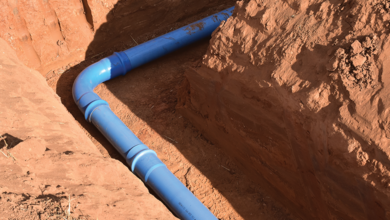
While Uisce Éireann is working to address this inequity, we face serious challenges, from legacy infrastructure issues, regulatory gaps, cultural issues, and perilous emerging drinking water contaminants. Uisce Éireann is dealing with significant legacy infrastructure issues, largely relating to antiquated water mains.
Our ageing pipe network loses nearly 38 per cent of drinking water to leaks, a figure much higher than the EU average, but improvements have been made and this is on a downward trajectory since the rollout of the National Leakage Reduction Programme. However, more state support is needed.
Additionally, there are still lead pipes in the drinking water network. While the public lead pipes are being identified and replaced through the Government’s National Strategy to Reduce Exposure to Lead in Drinking Water and Uisce Éireann’s Lead Mitigation Programme, lead pipes on private property requires new campaigns to ensure property owners are aware of drinking water dangers and have the support to address them.
To protect our children, lead exposure risk reports should be mandated for all homes built before 1970; prior to the lead pipe and paint bans.
Filling regulatory gaps
There are significant gaps in the regulatory systems around drinking water, including accountability gaps between Uisce Éireann and local councils. Ireland also repeatedly breaches EU water standards due to infrastructure delays, resulting in European Court of Justice rulings against the State for excessive chemical byproducts – such as trihalomethanes linked to cancer – and inadequate wastewater treatment.
Furthermore, the State faces strict European Commission scrutiny for failing to properly regulate agricultural runoff and water abstraction under the Water Framework Directive, along with gaps in monitoring and controlling emerging health hazards in our drinking water.
A 2021 study of 87 Irish marine protected areas showed over 90 per cent contained microplastics. Drinking microplastics is dangerous because these particles leach toxic chemicals, cause cellular inflammation, and can enter the bloodstream and tissues which is linked to increased risks of hormone disruption, chronic diseases, and reproductive issues.
“We face serious challenges, from legacy infrastructure issues, regulatory gaps, cultural issues, and perilous emerging drinking water contaminants.”
Additionally, their surfaces attract heavy metals and harmful pathogens. Because about 83 per cent of Ireland’s drinking water comes from surface water (rivers and lakes) rather than deep groundwater, these plastic particles often bypass conventional water treatment plants, so we need strict regulations to limit the importation and use of plastics on the island.
A barrier to quality drinking water
Polyfluoroalkyl substances (PFAS), a class of synthetic compounds linked to immune issues, developmental delays, hormone interference, higher risk of certain cancers, and infertility, are called ‘forever chemicals’ because they do not naturally degrade.
PFAS are found in nearly all water bodies in Ireland and the EU. PFAS were traditionally used in flame retardants but are now used across numerous processes in semiconductor manufacturing. The Intel plant in Leixlip uses PFAS in their chip manufacturing and is lobbying against an EU PFAS ban.
Several highly dangerous water pollutants are also found in data centres. The primary application of water in data centres is for cooling and during this process hazardous chemicals contaminate the water.
The most common being biocides as liquid cooling creates ideal conditions for organic buildup, but exposure to biocides can disrupt nervous systems and cause organ damage, carcinogenic anti-corrosives, and dangerous heavy metals, such as copper, zinc, and lead leach from components.
A single data centre can consume up to 5 million gallons of water per day, equivalent to the daily water usage of more than 15,000 homes, and at this scale, even minor impurities in wastewater can scale and cause significant environmental harm, especially where wastewater is concentrated.
This issue is further exacerbated because centres do not always discharge wastewater into public sewage systems, instead, centre wastewater may be released directly into nearby lakes, streams, or groundwater aquifers. Stronger restrictions on the use and discharge of dangerous chemicals are needed.
Improving trust
Recent polling has found trust in Ireland’s national government and public services is in decline, falling below OECD averages and especially among those experiencing financial difficulties. It is well understood that low trust in the Government or negative experiences with tap water leads to tap water avoidance.
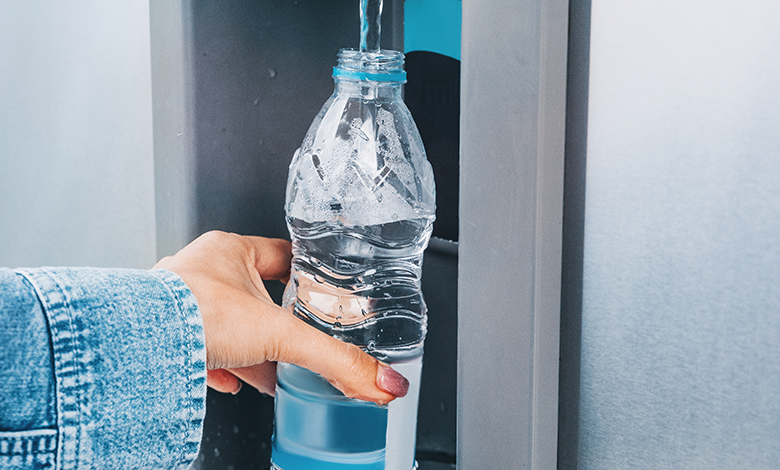
In a consumer survey conducted by An Fóram Uisce, approximately a quarter of respondents (26 per cent) said that they always used bottled water for drinking, while a third (34 per cent) did so sometimes.
Those connected to a public water supply were almost twice as likely to use bottled water than those connected to group water schemes and this reliance on bottled water can be a significant financial cost for some.
A consumer-centric approach, however, can risk incorrectly framing phenomena like tap water avoidance as the result of individual ‘mistrust’, leaving the ‘trustworthiness’ of the water supply system unexamined.
Privatisation of water
Outsourcing of maintenance and repair work by Uisce Éireann and local councils is reflected in hired and contracted services being Uisce Éireann’s largest single operating cost, and in proposals to expand private sector involvement to speed up housing delivery.
This is weakening public accountability and in-house expertise, further eroding trust between the public and service providers, and contributing to poor system performance, most visibly through persistent lead contamination and unreliable water in some local authority housing.
The Minister for Housing, Local Government and Heritage recently proposed increasing private sector involvement in public water, but we only need to look to our neighbours to see that privatisation of water worsens drinking water quality and only helps to enrich shareholders.