Solicitors oppose legal aid reforms

Reforms to the criminal legal aid (CLA) system have resulted in widespread solicitor strikes, court closures, and a collapse in the number of cases being processed.
Introduced in July 2026, the reforms changed the way solicitors are paid for CLA work, replacing a per-appearance system with a €520 flat fee.
Additionally, where a client faces charges for multiple separate incidents but these appear on the same day, the solicitor only receives one €520 flat fee.
Under the previous model, solicitors received approximately €240 for a first appearance and €60 for each subsequent appearance.
Under this, a solicitor would need to make six appearances before earning more than the flat rate, receiving €540.
CLA is the system by which individuals accused of a crime who cannot afford a lawyer are provided state-funded legal representation.
The Department of Justice, Home Affairs and Migration initially proposed a fee of €455 in February 2026, before increasing this to €520 in June 2026 following criticism from the Law Society, the Bar of Ireland, and human rights organisations.
The €455 figure was calculated using the value of four appearances under the previous system and adding 8 per cent to restore fees to their pre-2008 financial crisis levels.
Four appearances were used to calculate this because the Department’s analysis of 350,000 District Court cases between 2022 and 2023 found that the weighted average number of solicitor appearances in a non-CLA case was 3.24.
The equivalent figure for CLA cases was 5.04 appearances, making the €520 fee, which is based on five appearances, a more accurate reflection of workload.
Although, for many offences that attract a large amount of CLA, the average amount of appearances is more than five. Assault, theft, and criminal damage all average more than six appearances and in more than 75 per cent of those cases, CLA is used.
Need for reform?
In January 2025, the Government committed to CLA reform in the PfG as expenditure on the system had increased substantially in the previous decade.
Total CLA expenditure reached €120.6 million in 2025, a 35 per cent increase from €89.45 million in 2024. The total CLA expenditure has increased by €70 million (137 per cent) since 2015.
This dramatic rise was driven mainly by a substantial increase in use. In 2025, 98,617 CLA certificates were issued in the District Courts, compared with 53,937 in 2015, an 83 per cent increase.
Figures released by the Department to Business Plus outline how solicitor’s CLA fees increased by 27 per cent from 2024 to 2025, from €48.08 million to €60.88 million, while payments to barristers rose by 51 per cent from €36 million to €54.42 million. Together, solicitors’ and barristers’ fees accounted for 96 per cent of CLA expenditure in 2025.
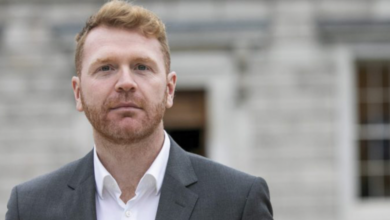
“This dispute is of the Minister’s own making. He insisted on unilaterally introducing a one-size-fits-all payment model that fails to reflect the complexity of cases coming before the courts and misunderstands how the District Court system operates in practice.”
Matt Carthy TD, Sinn Féin justice spokesperson
The Department’s analysis identified several other drivers of increased expenditure:
- increase in crimes that attract CLA;
- defendants frequently receiving multiple CLA certificates for charges heard on the same day and arising out of the same incident;
- multiple certificates being distributed among solicitors in the same firm; and
- CLA cases averaging higher number of appearances than non-CLA cases.
The analysis also found that CLA cases took substantially longer to complete, averaging 313 calendar days, compared to 133 days for non-CLA cases.
The Department’s report was heavily criticised by legal professionals for failing to consider the realities and complexities of cases, particularly those involving vulnerable clients.
Reacting to the report, Law Society president Rosemarie Loftus said: “This is not evidence-based policy analysis. It is anecdote deployed as accusation.
“It is worrying in the extreme that this non-evidence-based analysis is being used to support this flawed proposal from the Department of Justice.”
Loftus told the Oireachtas Committee on Justice that the reforms may stop solicitors from taking on more complex CLA cases such as those involving juveniles or people with mental health difficulties as they usually last longer and can require substantially more work.
Protests
When the reforms were introduced in July 2026, 55 of the 885 solicitors on the CLA panel resigned, while hundreds of solicitors across the country withdrew their services. Striking solicitors are only acting in cases where the defendants are in custody or with children involved.
A judicial review challenge to the reforms was also launched in July 2026 by solicitor John Quinn who claims they are unconstitutional. The High Court was due to deliver its judgment on 13 October 2026, but this has been postponed until 3 November 2026.
The strikes have had significant impact on the courts, with thousands of criminal trials, including rape and murder cases, adjourned across the entire country.
This has caused disarray across all court divisions. No trials took place at Dundalk and Drogheda Circuit Courts in the first week of the new legal term in October 2026 because of the solicitors’ strike.
The Law Society said that only 702 CLA certificates were granted in July 2026, a 93 per cent drop from the 10,277 issued in July 2025.
On 5 October 2026, more than 200 solicitors and barristers protested outside the Courts of Criminal Justice in Dublin.
They called for separate CLA certificates for cases arising from separate dates, capped at five per defendant, per court, and per day. Also, they requested that an additional further CLA certificate be granted once a case reaches more than 10 appearances.
The Law Society has also consistently called for an independent mediator to be appointed and for Justice Minister Jim O’Callaghan TD to engage in discussions.
He has refused, saying that it would not be appropriate to enter discussions until after the High Court ruling has been made.
The Minister maintains that the reforms are working, saying in October 2026, that there have been more than 2,400 CLA certificates issued since their introduction, with 75 per cent concluding “in one day” and 99 per cent concluding within five appearances.
With mediation between the two parties not going to occur, it appears that this dispute will continue until the High Court’s decision on 3 November 2026. The Irish Times reports that if the court upholds the reforms, many solicitors will return to work.
Speaking on 5 October 2026, Sinn Féin’s justice spokesperson, Matt Carthy TD said: “This dispute is of the Minister’s own making. He insisted on unilaterally introducing a one-size-fits-all payment model that fails to reflect the complexity of cases coming before the courts and misunderstands how the District Court system operates in practice.”