Power changes hands in Britain
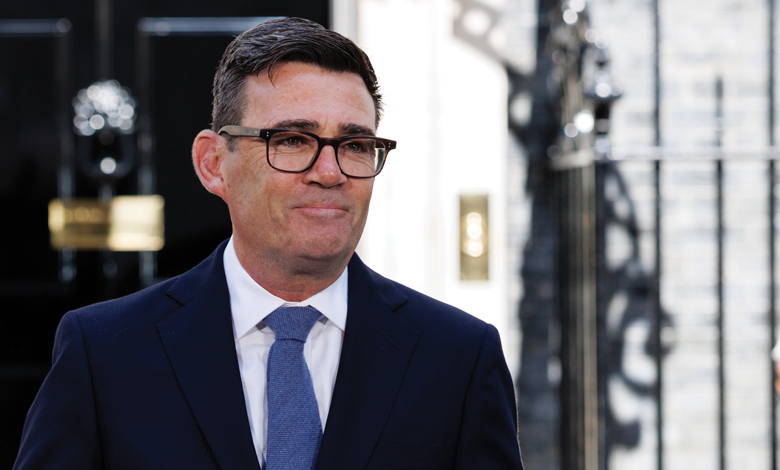
In July 2026, Britain gained yet another new prime minister when Andy Burnham successfully completed his defenestration of Keir Starmer.
Andy Burnham, dubbed the ‘king of the north’ is seen as the British Labour Party’s saviour, mostly due to superficial reasons. Labour members will be hoping that his relatively strong communications skills will be a refreshing change to the wooden nature of Starmer.
In entering 10 Downing Street, Burnham becomes Britain’s seventh prime minister in the last 10 years, a number which had led to Britain being widely ridiculed as “the new Italy”.
Burnham is possibly the last chance for the political establishment to win back the support of British voters, as the populist radical right-wing Reform UK continues to perform well in opinion polls.
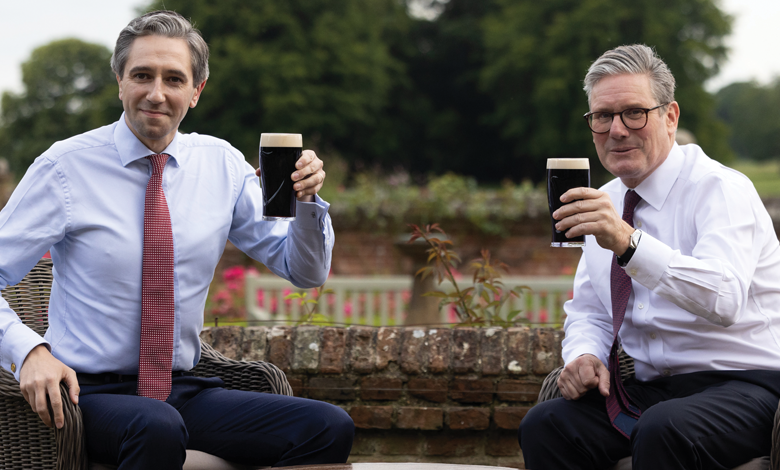
Little is known about how this new British Government will approach Ireland, although radical change from Starmer in this regard is unlikely. When Starmer was elected in 2024 – ending 14 years of Tory government in Britain – the first foreign leader he met was then-Taoiseach Simon Harris, with whom he engaged in ‘Guinness diplomacy’ at the UK Government’s impressive Chequers Estate and promised a “re-set” in Anglo-Irish relations.
Relations between the two countries had been strained under successive British Tory prime ministers, mostly due to the intense Brexit negotiations between 2016 and 2020, then the fallout which has seen the deal in the North renegotiated on occasion.
While Starmer sought to repair relations with Britain’s traditional European allies, the fallout of the emergency of Peter Mandelson’s relationship with paedophile Jeffrey Epstein proved a significant distraction and played a key role in Starmer’s record-breaking unpopularity in Britain.
Starmer’s other key engagements on this island included attempts to secure new legacy legislation with regards to the conflict in the North. In addition, one of Starmer’s appointees to the Northern Ireland Office, Fleur Anderson, perhaps unwittingly revealed that the a prospective decision to call a united Ireland referendum “would be based on opinion polls”.
Despite these blunders, Starmer was warmly received by Irish political leadership. Taoiseach Micheál Martin paid tribute to him saying: “I want to acknowledge the significant role Keir played in resetting the Irish-British relationship as well as relations between the UK and the European Union during his time as Prime Minister.
“Since Keir took office two years ago, he has worked with us to set a new direction and depth in the relationship between Ireland and the UK, for the benefit of all our citizens, north-south and east-west.”
Who is Andy Burnham?
Britain’s new prime minister is an adaptable creature of the establishment. Since entering elected politics in 2001, Burnham has been perceived as both an ally of Tony Blair and Gordon Brown, stood for the Labour leadership in both 2010 and 2015, served in the cabinet in the late 2000s, and later served in Jeremy Corbyn’s shadow cabinet before departing Westminster to become the first elected Mayor of Greater Manchester in 2017.
Burnham was notably one of the few Labour MPs not to rebel against Corbyn’s leadership in 2016, when 171 of the party’s then 232 MPs voted no confidence.
As Manchester Mayor, Burnham has been hugely popular, winning three landslide victories in the city, and becoming a significant national figure in Britain with ‘Manchesterism’ a new entry into the British political lexicon since the early 2020s.
Around this time, he earned the nickname ‘the king of the north’, after he advocated for lockdown funding and small business support from Boris Johnson during the Covid-19 pandemic lockdown.
Burnham has consistently polled as the most popular politician in the UK for a number of years, but Downing Street and the Labour leadership evaded him as he was not a sitting MP. However, as Starmer’s unpopularity grew following his 2024 ‘loveless landslide’, Burnham became the overwhelming favourite to succeed him.
An early attempt to re-enter parliament failed after Labour’s National Executive Committee blocked him from standing in the Gorton and Denton byelection in February 2026. However, after calamitous local election results for the party in May 2026, Labour MP Josh Simons resigned his seat and called on Burnham to stand in the byelection.
In what was expected to be a close election between Farage’s Reform Party and Labour, Burnham won a landslide, proving his electoral credentials and ensuring an immediate path to power.
Earlier in 2026, Burnham attended the Alliance Party’s conference in the North. In his speech, he paid tribute to the family members of the victims of Bloody Sunday in Derry: “What happened in a community centre on the Bogside, as I witnessed two groups of people who might not otherwise have met share a deeply emotional exchange, remains one of the most humbling experiences of my life.
“The families from Derry explained how they had been in the wilderness until the 20th anniversary in 1992 and had only then got organised in the fight for justice. It was striking how the 20th anniversary of Hillsborough brought exactly the same reaction and turning point in Liverpool.
“In that extraordinary moment in Derry, some profoundly uncomfortable truths about our country revealed themselves to me.”
Little else is known about Burnham’s attitude towards Ireland, aside from the fact that his ancestors emigrated from Drogheda to Merseyside in the 1800s. However, this transition in the Labour leadership is one mainly motivated by style rather than substance, meaning there can be confidence that the improvement in Anglo-Irish relations observed under Starmer will likely continue.