Planning for the Ireland we want to build

Planning is often viewed as a process. In reality, it is about ensuring that development happens in an organised way, meeting the needs of the State in the right place at the right time while protecting the environment, writes Olwyn James, Planning, Land, and Utilities Senior Manager, Uisce Éireann.
Planning shapes where people live, where businesses invest, how communities grow, and how infrastructure is delivered. It determines where homes will be built, where jobs will be created, and whether essential services can keep pace with a growing population. At its best, planning is about responding to today’s challenges, while making the decisions that enable better outcomes for the future.
This long-term perspective has never been more important as Ireland seeks to deliver homes, strengthen economic competitiveness, and respond to the impacts of climate change at pace.
Water infrastructure sits at the heart of that challenge.
Every home, school, healthcare facility, and business depends on reliable water and wastewater services. While these services are often taken for granted, they are fundamental to how society functions. Sustainable communities require sustainable infrastructure. Without investment and forward planning, growth simply cannot happen.
At Uisce Éireann, our role is to ensure infrastructure is available where Ireland needs it, today and into the future. That means aligning investment with national, regional, and local development priorities and working closely with local authorities, regulators, developers, and communities to support sustainable growth.
Planning is not simply about securing permissions. It is about creating the conditions for sustainable growth.
Our role spans long-term infrastructure planning, land acquisition, environmental licensing, and project consents. Every day, we work with local authorities, regulators, developers, and communities to ensure that water services can support future housing, economic development, and environmental improvement. As Ireland’s water utility, we have increasingly aligned our planning with the wider planning system, helping to ensure that infrastructure investment supports national, regional, and local development priorities.
One lesson consistently emerges from that experience: the earlier all parties engage, the better the outcome.
Planning authorities, infrastructure providers, developers, regulators, and communities all bring valuable perspectives. When those conversations happen early, issues are identified sooner, decisions can be made with greater certainty, and projects are more likely to progress successfully. Better collaboration delivers better outcomes.
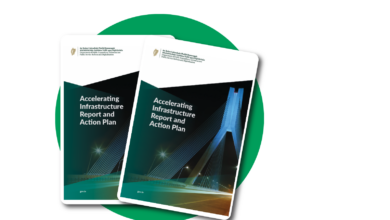
Recent planning reforms, the work of the Accelerating Infrastructure Taskforce and the introduction of the Critical Infrastructure Act reflect a growing recognition that infrastructure delivery is central to housing, economic growth, and climate resilience.
Delivering infrastructure is rarely constrained by a single decision. More often, it involves navigating multiple consenting processes, approvals, and regulatory requirements, each serving a legitimate purpose, but often operating independently of one another.
The opportunity now is to create a more coordinated delivery system that maintains environmental protection and public participation while providing greater certainty around infrastructure delivery. This is as much about collaboration as it is about process.
As Ireland continues to reform its planning framework, four priorities could further strengthen infrastructure delivery.
Enabling infrastructure
First, enabling infrastructure should be recognised and prioritised as a strategic national asset.
Water and wastewater projects do more than deliver infrastructure. They unlock housing, support employment, strengthen environmental outcomes, and enable wider investment. Their value extends far beyond the asset itself.
Strategic infrastructure should continue to receive the prioritisation and cross-agency focus necessary to support national objectives around housing, economic growth and regional development.
“Ultimately, planning is about how the world works and it is our collective responsibility to ensure it works well for future generations.”
Coordinated consenting
Second, Ireland should move towards more coordinated consenting.
Major infrastructure projects often progress through multiple independent approval processes.
Planning, environmental licensing, land acquisition, and sector-specific consents each serve important purposes, but they can also create duplication, delay, and uncertainty. Greater alignment and, where appropriate, parallel processing could significantly improve delivery timelines while maintaining environmental protections and rigorous decision-making.
Reform exempted development provisions
Third, targeted reform of exempted development provisions could help accelerate lower-risk infrastructure projects.
Many utility projects involve upgrading, improving, or expanding existing operational assets to increase resilience, environmental performance, or customer service.
Giving greater flexibility to deliver appropriate lower-risk works outside full planning processes would allow planning resources to focus on the projects that require the most detailed scrutiny while supporting faster delivery of improvements that directly benefit communities.
Joined up planning
Finally, infrastructure planning must continue to be integrated with housing, transport, and spatial planning.
The most successful outcomes occur when growth is planned holistically and when infrastructure is considered from the outset rather than after constraints emerge. A genuinely plan-led system benefits communities, provides certainty for developers, and enables more effective public investment. It also creates a stronger connection between national ambitions and local delivery.
Importantly, these reforms are not about reducing standards or limiting engagement. Public participation, environmental protection, and robust assessment must remain central. Rather, the objective should be to ensure that decision-making processes are coordinated, transparent, and capable of supporting timely delivery.
Ireland has ambitious plans for housing, economic growth, and climate resilience. Delivering them will require continued investment, stronger collaboration, and a planning system that supports delivery.
Infrastructure does not happen on its own. It requires people, partnerships, and long-term thinking. It requires public bodies, regulators, local authorities, and communities working towards shared objectives.
If we continue to build on the momentum now emerging across planning reform and infrastructure delivery, Ireland can create a system that enables sustainable growth while protecting the things that matter most. Ultimately, planning is about how the world works and it is our collective responsibility to ensure it works well for future generations.
W: www.water.ie