Minister of State John Cummins TD: ‘Planning should not become a barrier to delivery’

Since becoming Minister of State with responsibility for planning, one of my priorities has been to get under the hood of our planning system, to understand where the blockages are, why they exist and, most importantly, what we can do to fix them, writes Minister of State at the Department of Housing, Local Government and Heritage with special responsibility for Local Government and Planning, John Cummins TD.
Planning matters. It shapes our communities and ensures that development happens in a considered way. However, planning should not become a barrier to delivery. In recent years, there has been a growing perception and, in some cases, a reality that the planning system is too slow, too complex, and too difficult to navigate.
My approach has been straightforward: identify the problems, find practical solutions, and make changes that help people deliver the homes and infrastructure our country needs, while maintaining the integrity of the planning system. That means removing unnecessary steps where they add little value, freeing up resources where they are needed most, and giving people greater certainty around timeframes and what should be permissible and what is not.
One of the clearest examples has been the work we have undertaken on planning exemptions.
People often want to make modest changes to their homes and that should not precipitate a lengthy planning process and all that it entails in terms of resources. Whether it is building an extension to meet the changing needs of the household or carrying out other small-scale works, people should not be faced with unnecessary red tape, expense, and delay where the impact of the development is limited.
The changes to exempted development are about getting that balance right. By taking appropriate categories of small-scale development out of the planning system, we are giving homeowners more freedom while also allowing planning authorities to concentrate their time and expertise on the applications that require detailed assessment.
That is better for the homeowner and better for the planning system. Tied to these reforms is the ability to build or install a detached garden home between 32 sq/m to 45 sq/m to the rear of your primary dwelling. This is about giving people more flexibility in how they use their land and how families live.
For some families, it can provide an opportunity for older parents to right-size while remaining close to their children and their community. For others, it can allow an adult family member with a disability to have greater independence and privacy while still having the reassurance of family nearby. Whatever the make up of the arrangement, the policy direction is to facilitate sensible housing solutions.
Planning has to recognise that the way we live is changing. We need a system that can respond to those changing needs.
The next phase of this work will focus on infrastructure exemptions. We need to look carefully at where the planning process can be simplified for essential infrastructure and utilities so that necessary development can happen in a speedier fashion. Water, energy, and other essential infrastructure underpin housing delivery, economic growth, and the functioning of our communities.
“My job is to make the system work better, to remove unnecessary barriers, give people greater certainty, and ensure our resources are focused where they add most value.” Minister of State for Local Government and Planning John Cummins TD
This is not about weakening planning. It is about making sure the planning system is focused on the things that genuinely require planning scrutiny.
I am also planning for the future. When I came into this role, one of my priorities was to update the rural and Gaeltacht planning guidelines.
For too long, there have been significant differences between local authorities in how they approach one-off rural housing. That lack of consistency can create uncertainty for families and hold back rural communities. People should have confidence that the planning system is operating according to a clear national framework, rather than finding that the approach can vary significantly depending on which side of a county boundary they live.
The draft National Planning Statement provides that certainty. It is currently undergoing environmental assessment and is expected to be in place early next year. It will help provide greater clarity and consistency across the planning system and ensure that national planning policy keeps pace with the needs of a growing country.
But improving the planning system is not simply about changing rules. It is also about ensuring that the organisations responsible for making decisions have the capacity and processes to do their jobs effectively.
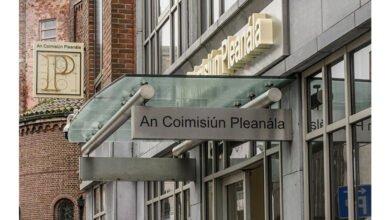
That includes An Coimisiún Pleanála. The reforms that have taken place at An Coimisiún Pleanála have focused on improving decision-making, strengthening the organisation, and reducing turnaround times. There are positive signs from that work, but there can be no slippage.
The Planning and Development Act 2024 provides for significant reform of the planning system, including statutory timelines for consenting processes. As those timelines come into effect, the system needs to be ready to meet them. Certainty matters enormously to communities, homeowners, businesses, and those delivering housing and infrastructure.
In the coming weeks, there will be further changes to the planning system designed to accelerate delivery. They will build on the work already underway and continue the process of making the system more efficient, more consistent, and more responsive.
Government will introduce new regulations that will see the introduction of an exclusion threshold when determining whether an environmental impact assessment is required. It should be noted that environmental screening is already undertaken by local authorities in the context of zoning land for residential use and, as a result a level, of duplication is occurring. This will bring certainty, reduce costs, and speed up timeframes when it comes to delivering housing and infrastructure.
We cannot accept unnecessary delay as an inevitable feature of planning. Nor should anyone see planning as an obstacle to delivery.
My job is to make the system work better, to remove unnecessary barriers, give people greater certainty, and ensure our resources are focused where they add most value.
This is the work that is underway, and it will continue.
John Cummins TD is Minister of State at the Department of Housing, Local Government and Heritage with special responsibility for Local Government and Planning. He is a Fine Gael TD representing Waterford, having been elected in 2024.