Leakage reduction in Uisce Éireann: Not there yet, but getting there

Every day, Uisce Éireann treats and supplies over 1,800 million litres of safe, clean drinking water to homes, communities, hospitals, schools, and businesses across the State.
It does this through a vast and complex network of more than 65,000 kilometres of water mains, long enough to circle the world 1.5 times. Much of this network is decades old, and some of it is more than a century in service.
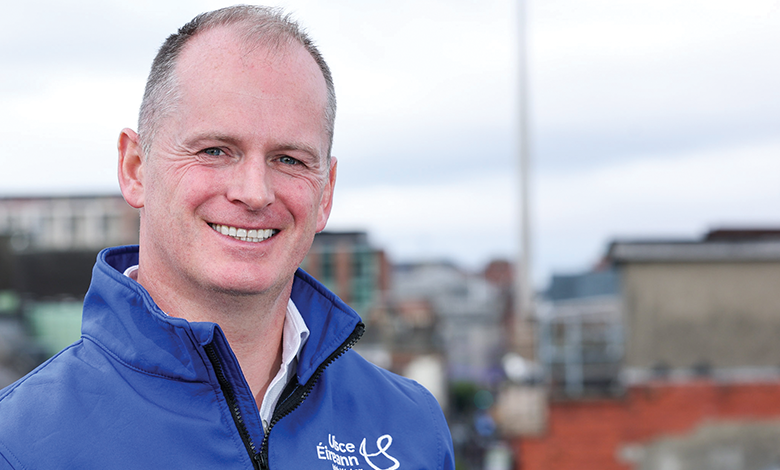
Alan Milton, Head of Water Network Management at Uisce Éireann and a Chartered Surveyor with 25 years’ experience in the sector, says leakage reduction is central to Ireland’s long-term water resilience. “Every leak we find and repair keeps more treated drinking water in the network for the homes, communities, and businesses that depend on it. Reducing leakage supports housing, economic growth and security of supply, while also easing pressure on our existing sources and treatment plants.”
The scale of the challenge remains significant, and Uisce Éireann has been open about that. Too much treated water is still being lost from the public network and reducing that level further remains one of the organisation’s most important priorities.
But the story is also one of real and sustained progress. National leakage is now at its lowest recorded level, having fallen from 49 per cent in 2014 to 35 per cent. In Dublin, leakage has reduced from 37 per cent to 29 per cent, while in the Greater Dublin Area sustained preventative activity is saving approximately 250 million litres of water per day.
That progress reflects a decade of investment in leak detection, pressure management, pipe rehabilitation, and targeted repairs. Every week teams across the State locate, excavate, and repair hundreds of leaks. Behind every number is a crew, a road opening, a traffic management plan, a customer notification, an emergency response, or a carefully planned intervention. Without continued investment, these hard-won gains would quickly be eroded.
Many of the leaks that matter most cannot be seen. They do not burst dramatically through roads or appear at the surface. They are silent losses hidden beneath fields, footpaths, rivers, buildings, and major roads. Some are located on large trunk mains carrying millions of litres each day. Others lie within complex urban environments where excavation is difficult, costly, and disruptive. Finding them requires patience, specialist knowledge, detailed network data, and strong local operational experience.
This is why leakage reduction is about much more than simply finding and fixing a visible burst. Uisce Éireann must combine investment in maintenance, which protects progress and prevents leakage returning to previous levels, with targeted leakage reduction programmes that drive losses down further over time. One protects the gains already made; the other delivers the next phase of improvement.
Milton says expectations must be ambitious, but realistic. “Given the scale, age, and condition of Ireland’s network, leakage can be reduced and managed, but it can never be eliminated completely. The important thing is to keep driving it down in a way that is sustainable, evidence-based, and achievable.”
International comparisons are useful, but they must be understood in context. Ireland is more than 20 years behind the United Kingdom in national leakage management maturity, where the sector continues to struggle to reduce leakage consistently below 20 per cent. Countries with very low leakage, such as the Netherlands, operate in different conditions. The key is to set expectations that are ambitious, credible, and grounded in operational reality.
In the Greater Dublin Area, Uisce Éireann plans to invest €420 million over the next five years in water networks, including approximately €330 million in steady-state activity and €92 million in leakage reduction. Nationally, the programme includes increasing weekly leak repairs to more than 700, building an in-house leakage specialist team, investing in best-in-class technology and metering, and coordinating works with wider national infrastructure projects to minimise disruption.
Innovation is playing an increasingly important role. Traditional methods such as acoustic listening, correlators, and field investigations remain essential, but they are now being supplemented by tools that once would have seemed like science fiction. In the northwest of Ireland, satellite technology scanned approximately 4,000 kilometres of network and identified more than 600 points of interest. This allowed crews to focus on just 10 per cent of the surveyed area and led to more than 460 leaks being found during the initial investigation programme.
Other innovations are travelling through the pipes themselves. SmartBall technology has become part of Uisce Éireann’s approach to managing large trunk mains. It moves through pipelines and listens for the acoustic signature of leaks from within the pipe. One leak identified led to a trunk main repair saving of approximately two million litres per day, demonstrating the value of new technology.
Smart meters, district metered area monitoring, improved logger deployment, pressure data, network modelling, data analytics, and enhanced night-flow monitoring are also transforming how the network is understood. Meter information is flowing more rapidly into operational systems, helping teams identify unusual consumption patterns and target interventions faster.
But technology alone is not the answer. Milton says people and capability are as important as new tools and data. “The technology gives us better information, but it is skilled people who turn that information into action. Leak detection is a specialist skill and building that capability is essential if we are to keep making progress.”
More repairs require more people, and more technology requires more capability, which is why recruitment, training, and workforce growth remain central priorities.
Reducing leakage is not just about fixing broken pipes. It is about protecting water resources, enabling growth, improving resilience, and preparing Ireland’s water network for the next generation. As Milton puts it: “Every litre saved today is a litre available for tomorrow.”
Uisce Éireann is not there yet, but it is getting there.
W: www.water.ie