Digitising the 1926 Census
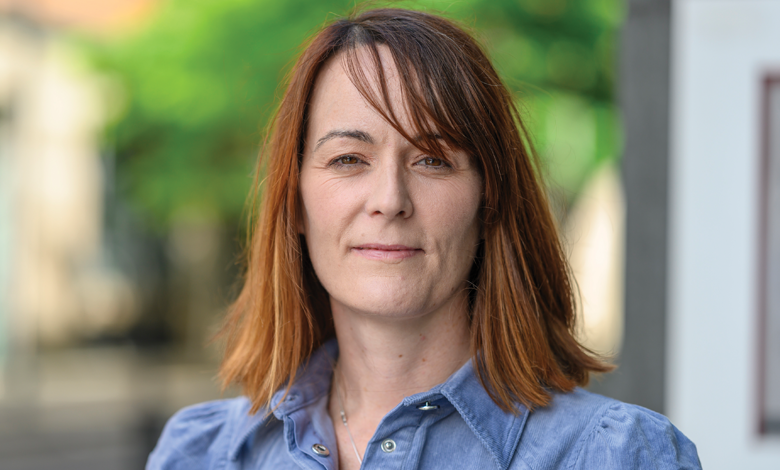
Niamh McDonnell, keeper of manuscripts and head of the digital management division at the National Archives, outlines the scale of the challenge of digitising the 1926 Census.
Niamh McDonnell begins by highlighting the significance of the 1926 Census, which was the first of the Irish Free State. She says: “It was the first post-independence census, the first post-partition census; it is 26 counties not 32.
“There was a huge level of interest in it for those reasons. For many people, it was the first time there was a direct personal connection to people in the Census.”
The data could not be released until this year as it was under the 100-year closure of the Statistics Act. Ownership of the 1926 Census did not transfer to the National Archives until it turned 100 years old on 18 April 2026.
“Even though the records had been in the National Archives for decades, they were still owned by the CSO,” explains McDonnell.
The 1901 and 1911 censuses, which included all 32 counties of Ireland, have been available since 2008. These were digitised from microfilm by the National Archives, says McDonnell. This was done in partnership with Library and Archives Canda from a microfilm produced by the Church of the Latter-day Saints in the 1970s and 1980s.
Upgrading infrastructure
McDonnell says the National Archives was “starting from scratch with this project from the original paper records”, adding: “The timeframe was so short; we had basically three years.”
Due to the project’s scale, the National Archives had to expand its digital infrastructure and upgrade the wiring in the digitisation suites to cater for high-volume scanning equipment. McDonnell explains that this was the first time the organisation had used high-volume scanning.
“We needed to use it because the timeframe was so short,” she says. “Traditionally we would have used overhead scanning and photography, but that is way too slow for this purpose.”
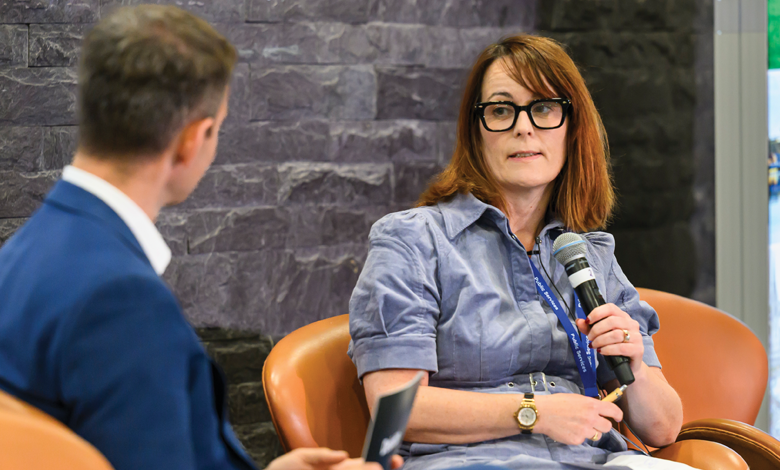
The digital management division received a lot of support in setting up the infrastructure from the National Archives’ ICT department which is part of the Department of Culture, Communications and Sport.
McDonnell explains how the sensitive nature of data privacy impacted processes: “Everything had to happen within our infrastructure because of requirements around the privacy of the data under the Statistics Act.
“Everybody involved in the process, even contractors, was appointed as temporary officers of statistics.”
Approach
The digitisation required by the project was on a greater scale than McDonnell and her colleagues had previously experienced. She explains how the team approached the project: “When you are developing a project like this, you start at the end and work your way back. What is the outcome supposed to look like? What is the minimum viable product?”
The team determined that the launch of a basic genealogical search on 18 April 2026 would be the minimum viable product.
“Anything less than that was to be considered a failure,” says McDonnell. “We only had one chance to do this so we needed to ensure that we were giving ourselves options in terms of what data we can present to the public on day one.
“Because we were digitising 100-year-old records, we ensured that we did it once and we did it properly. Each decision on every facet of the project was crucial.”
One such example of this was the decision on what resolution images should be. McDonnell explains the minimum preservation standard for the images is 300 dots per inch (DPI). However, McDonnell and the team found that 400 DPI “was far better” for an improved transcription output.
“When you are working at scale, these are decisions that have a massive impact because even a 1 per cent difference over 3 million rows of data, 45 million data points, is huge. We had to reconfigure our scanner at that point to digitise at 400 DPI.
“However, that then has a knock-on effect on things like storage capacity. Initially, I requested 50 terabytes of data, but we ended up needing closer to 60 terabytes.”
McDonnell asserts that this led to a “much better product” and creates more opportunities for what can be done with the data.
The team met regularly to ensure each member followed the same practices and process. McDonnell says: “When you are dealing with data on this scale, you have to make sure there is standardisation. The more standardised the data, the better the final user experience is as well.”
Prior to beginning the project, McDonnell spoke to colleagues in national archives from across Europe who provided guidance on minimum standards for transcription and how best to utilise outside resources.
“The National Archives is in a state of transition, and we are expanding a huge amount at the moment. There is a lot of knowledge in the organisation, but there are gaps that need to be filled and we used the census project as an opportunity to expand our capacity and knowledge by being strategic in how we used external contractors,” she says.
Concluding, McDonnell acknowledges the significant “public expectation” regarding the Census, adding: “We are extremely proud that we delivered a large-scale public project on time and on budget that has provided free access to an amazing digital resource for the benefit of all. To date the website has had more than 40 million hits.”