Meeting the energy challenge
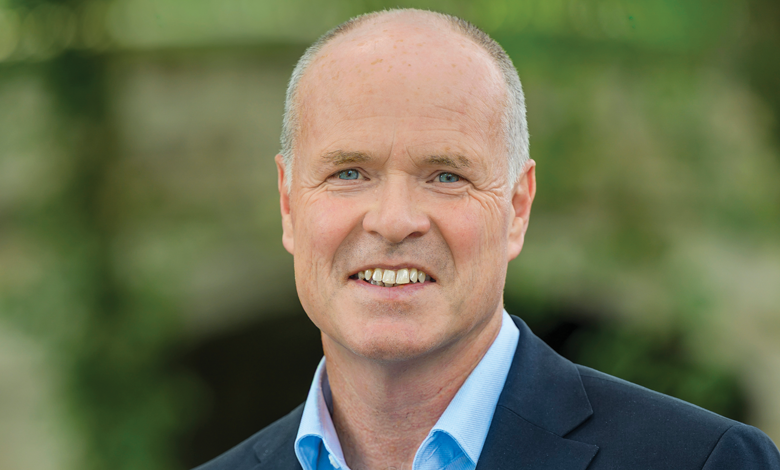
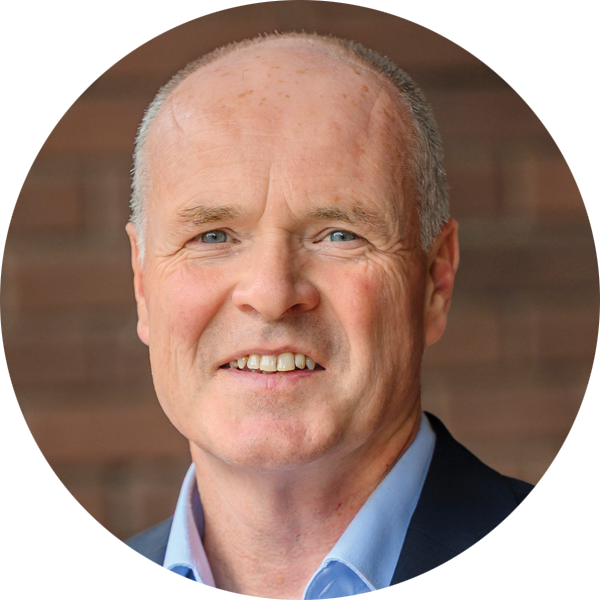
Dave Kirwan, Country Chair at Bord Gáis Energy and Managing Director of Power at Centrica, talks to Owen McQuade about energy infrastructure delivery, the potential role for nuclear energy in Ireland, and looks back on 50 years of Bord Gáis Energy.
In his three decades at the heart of the Irish energy sector, Dave Kirwan has witnessed radical change. He says that the top challenge in 2026 is delivering decarbonisation whilst ensuring secure and affordable energy to end users.
“The energy challenge is also a growth opportunity for Ireland. The challenge is increasingly dominated by infrastructure delivery and that is against a backdrop of war in the Middle East and in Ukraine,” he observes.
Commenting on the economic outlook, he says: “The Irish economy has had an amazing 10 plus years and we can sustain that success by investing in the infrastructure that underpins that growth.” However, Kirwan says that “incrementalism rather than expansive investment in the areas fuelled the growth”.
Kirwan is not overly critical of Ireland’s governance over the past decade and acknowledges the challenging economic context which policymakers faced 10 years ago: “We had the financial crash that was followed by a period of tightened purse strings. We were then ill-prepared when we saw a flywheel of growth. We have been slow to recognise what we need to do to keep that growth going.
“There has also been much debate about the choice between data centres or house building; but the reality is we need to do both. A growing economy needs infrastructure and we need the courage to invest and execute whilst protecting the most vulnerable in society. That is not an either or.”
At the 2022 Energy Ireland conference, Kirwan spoke about complex systems and how they are built on resilience and not efficiency. “Complex systems are around for the long haul by building in contingency and resilience. However, in Ireland we have been guilty of taking an incremental, piecemeal approach.”
“We need to invest ahead of need and not lag behind growth.”
It is widely predicted that the next 10 years will see a transformation of the energy system. Kirwan says for this to happen, the sector “needs to execute better and we also need to take risks in terms of capital investment”.
He adds: “We need to invest ahead of need and not lag behind growth.”
This year, Bord Gáis Energy celebrated its 50th anniversary. Kirwan sees this as not an opportunity for “a dose of nostalgia but as an opportunity to look to the future”. He highlights the journey that has seen the company transformed from a state-owned incumbent natural gas retailer with a power station in Cork, into a much broader energy business with customer offerings including solar energy, EV charging, heat pumps, energy retrofitting, and battery storage. In addition, the company is developing offshore wind energy projects and has outlined ambitions for potential gas and hydrogen storage investments.
“If a company wants to remain relevant, it needs to regularly change its purpose and strategy. But it also needs to retain its essence. In 1976 Bord Gáis had a clear mandate to bring gas for the betterment of Ireland and to diligently build the infrastructure to achieve that. That is a great purpose and that essence of doing public good and doing things with excellence remains 50 years on. The next 50 years will be defined by infrastructure, technology choice, and customer participation.”
Complex and fast changing
Kirwan observes that in a rapidly evolving energy system, environment plans are useful but quickly become redundant after three to four years.
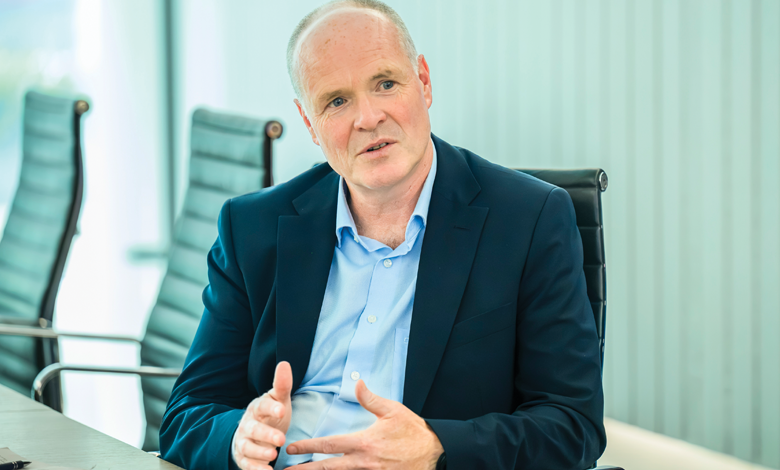
He quotes Dwight Eisenhower’s maxim that ‘plans are useless, but planning is indispensable’. “You need a plan to mobilise. If you look at the CAP (Climate Action Plan) or a white paper, they used to be relevant for a decade but I would now question that premise. With such a quickly changing environment and technologies, you need to be agile and to pivot quickly,” he adds.
Kirwan highlights the role that gas continues to have in the energy mix: “We were all silent about the role gas is going to play in the energy transition. With every passing year it is clear that gas is going to be with us for much longer.”
He also highlights the fast pace that technologies are changing, giving the example of battery technology.
Another trend he highlights is the increasing demand for electricity, a factor which was not recognised a decade ago. “Infrastructure takes a long time. For example, we started the offshore wind energy framework over a decade ago and we are just on the cusp of seeing some actual infrastructure being delivered.”
Kirwan has been spending a lot of his time in the UK in his role as Managing Director of Power at Centrica. Although the UK energy system is much larger than Ireland’s, it highlights the need to move forward on several technology fronts. The UK has a civil nuclear roadmap to 2050 that will be the long-term backbone of its energy system, alongside renewable energy, and with a role for gas.
The UK has also undertaken a long duration energy storage auction and, in parallel, is running offshore wind energy auctions and its nuclear framework. “Ireland has a much smaller system and our challenge will be to embed new technologies at scale into the system. We have also a much more rural dispersal of energy users than the UK.”
This mix of technologies reflects the development pipeline for Bord Gáis Energy and the UK link has helped the cross-fertilisation of expertise. Opportunities include grid projects, such as large scale battery storage and synchronous condensers. “We would like to develop our Whitegate site into a low carbon energy hub and are working with dCarbonX to look at the potential to use the depleted Kinsale gas field to store hydrogen. Our vision for Cork Harbour would be to use offshore wind energy for electrolysis, hydrogen storage, and converting two major power plants to hydrogen. Technically, that is all feasible but we need to bring together all the necessary regulatory frameworks.”
The transformation of the energy system will need significant capital investment. Between 2023 and 2028, Centrica aims to invest around €1 billion in Ireland. “Capital can live with risk; what it struggles with is inconsistency. If the direction is clear and the framework is credible, investors can engage,” he says.
Looking at the investment projects in turn, Kirwan sees its project for gas storage using the depleted Kinsale filed as “compelling because it addresses two time horizons: gas resilience while we still need gas and hydrogen storage potential if we are serious about a future green hydrogen system”. “Kinsale is viable for gas storage for two to three decades and convertible to hydrogen storage.”
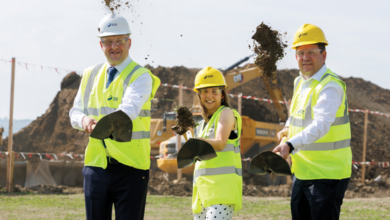
As the first projects in the pipeline, Bord Gáis Energy is in the process of finishing two peaking power plants, one in Dublin and the other in Athlone. “It has been very challenging, with delays to bringing on these critical pieces of infrastructure. We had planned to bring both plants on stream by Christmas 2024 and they will now be online in the summer of 2026. There have been lessons for ourselves, but also for the whole system around the lack of integration in the delivery of infrastructure. That is not just planning but getting the various entities involved to collaborate to deliver such critical infrastructure,” he emphasises.
Nuclear
Nuclear energy has seen a renaissance in recent years. This has been driven by the need to reduce carbon emissions while providing a secure reliable energy supply, and meeting surging electricity demand. The European Commission has a strategy aiming to deploy modular reactors across the EU by the early 2030s, with a target of 53GW by 2050. The UK and United States are both progressing commercial-scale advanced modular reactor projects.
“I did not think two years ago that I would be saying we should consider removing the ban on nuclear in Ireland.”
Kirwan’s involvement with Centrica’s nuclear business is part of his other role as the group’s head of power. Centrica has been invested in UK nuclear generation since 2009, when it acquired a 20 per cent stake in the UK’s existing nuclear fleet. Centrica strengthened its commitment to UK nuclear in 2025 by acquiring a 15 per cent stake in the £38 billion Sizewell C project, committing up to £1.3 billion of investment in a new power station expected to supply around 6 million homes with low-carbon electricity. Kirwan is Non-Executive Director of Sizewell C. He is also responsible for Centrica’s side of a project to pilot a modular nuclear reactor in the UK with X-energy. This year, the company made an advanced nuclear framework submission for an advanced nuclear reactor for Hartlepool, which will be a 960MW modular facility on the site of an old nuclear power station.
Kirwan sees this type of modular deployment as now being very relevant for Ireland. The minimum size is 80MW and to be economic they should be deployed in packs of four. The reactors can load follow from 40 per cent to 100 per cent load. “They are inherently safe with the fuel design, whereas the older nuclear reactors had primary, secondary, and tertiary ancillary safety service systems. This is a nuclear reactor; but not as we know it.
“You need to maintain the impetus to keep the reaction going. It is a self-safe system and the UK civil nuclear road map is for 25GW of nuclear, very much to support the growth in data centre demand.” The modular reactors can be co-located with data centres and the company behind the modular reactors, X-energy, has seen significant investment from the tech sector.
“I did not think two years ago that I would be saying we should consider removing the ban on nuclear in Ireland.”
Future
Kirwan believes that there is an inherent dichotomy in the Irish energy sector, claiming that many still consider applicants to develop as a problem rather than an opportunity.
“If we were to start to design a new energy system that could accommodate the demand for future connections, generation, and load to serve the economy, how would we do that? At the moment we are taking an incremental approach rather than something more expansive.
“The interaction with grid companies at the moment is very much giving a sense that ‘it cannot be accommodated based on our current plans’. We need to look well beyond existing plans and contemplate a world where we are going to have to much more than we initially thought. Our plans need to change when the world changes.
“At present, rather than saying we cannot fit this into our plans, we should be asking how we harness this opportunity for our economy. I am reminded of the Keynesian saying ‘when the facts change, I change my mind’,” he concludes.
|
Profile: Dave Kirwan
Kirwan is also a Non-Executive Director of Sizewell C and represents Centrica’s interests in one of the UK’s most significant low-carbon infrastructure projects. He holds a BE in electronics from UCD, an MBA and DBA from UCC, and is a fellow of Engineers Ireland. He also serves on Ibec’s executive committee. |