Analysing water policy and services

“You don’t miss the water until the well runs dry,” is a familiar phrase that reflects a fundamental truth: water is often taken for granted, and perhaps particularly so in Ireland, until scarcity or quality issues arise writes Fintan Towey, Assistant Secretary for water at the Department of Housing, Local Government and Heritage.
Water policy is about preventing those quality and water supply problems and the disruption they cause. At the highest level, there are two discrete but nevertheless closely related objectives.
The first is about seeking to manage our resources of natural water so that we protect and restore water quality. The second is to meet the needs of society and business by distributing high quality drinking water, collecting wastewater, and treating it appropriately before returning it safely to the environment.
Clean water and healthy aquatic ecosystems
Natural water resources include rivers, lakes, groundwater, and marine waters. They underpin almost every aspect of life, the environment, and the economy.
As well as providing the raw material for drinking water, our natural waters are critical to food production and processing, to support nature and biodiversity, and as the basis of various forms of passive and active recreation that provide enormous economic and social value.
Safeguarding these resources will protect public health, promote economic development, and contribute to long-term sustainability.
The fact that the United Nations speaks of a triple planetary crisis spanning climate change; biodiversity loss; and pollution of soil, water, and air is a clarion call to beware of complacency and a belief that Ireland is exempt from global trends.
Water Quality in Ireland 2025, published by the EPA in June 2026, shows that over half (52 per cent) of our surface waters are in good or high ecological status which, of course, also means that nearly half (48 per cent) are in unsatisfactory condition.
“Despite the progress that has been made, significant vulnerabilities remain in our water and wastewater infrastructure.”
Excess nutrients from agriculture and urban wastewater are the biggest challenges, followed by changes to physical habitat conditions which underpin the health of natural water resources.
Overall water quality in Ireland has changed little over the last two decades. Improvements in some areas have been offset by declines elsewhere. While excess nutrient levels are reducing in areas where actions are being targeted it is clear that an increase in the scale and pace of implementation is required to create an upward trend in overall water quality.
The European Union Water Framework Directive (EU 2000/60/EC) sets the ambitious target of restoring all waters to good status. Alongside setting definitions and standards for water quality it requires member states to adopt multi-year river basin management plans to coordinate protection and improvement actions in order to achieve good ecological status at least in all water bodies.
The current plan for Ireland for the period 2022 to 2027 is the Water Action Plan 2024. Key measures under the action plan include:
- the work undertaken by the River Basin Management Service and local authorities in terms of advocacy and awareness raising and supporting communities and NGOS relating to water quality issues;
- financial incentives targeting farms in priority areas for action under the Farming for Water programme;
- new incentives for nature-based solutions in urban areas that reduce harmful run-off into water courses;
- a new programme to remediate barriers impeding the natural flow and function of rivers; and
- extensive investment by Uisce Éireann to reduce environmental harm from wastewater discharges.
In practice the various measures in the Water Action Plan involve many organisations operating at national and local levels. Collaboration is critical to success in ensuring that natural water resources are resilient into the future.
Work is already underway on a successor to the Water Action Plan. The challenge now is to build on the foundations that have been laid and to make real progress in restoring our rivers and lakes that are below standard.
Improving water services
Drinking water provision and wastewater collection and treatment systems are well developed and operate to a high standard generally but not without some shortcomings.
Drinking Water Quality in Public Supplies 2025, published by the EPA in July 2026, shows that 99.8 per cent of samples from public drinking water supplies provided by Uisce Éireann from over 700 water treatment plants comply with drinking water standards. Uisce Éireann provides drinking water to over 85 per cent of the population with the balance supplied by group water schemes and private wells.
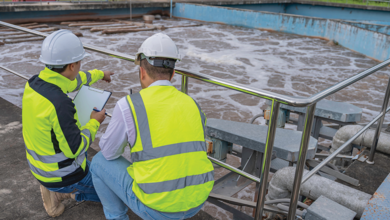
Uisce Éireann operates over 1,000 treatment plants which are subject to regulatory oversight and reporting by the EPA. In its report on 2024 performance, the EPA found that over half of the plants operated do not always meet the standards set to ensure discharges do not harm the environment, with failures ranging from occasional breaches up to continuous discharges of poorly treated sewage.
Some failures can be resolved through better operation and maintenance, while others require major infrastructure upgrades. On a more positive note, raw sewage discharges have been eliminated at 35 locations since 2014 with the remaining 15 to be resolved by the end of the decade.
The report also notes the work on a major upgrade of the Ringsend plant (which treats over 40 per cent of the national load) which has since been completed. While recognising the real improvements, especially where investment has been targeted, the report concludes that there are still significant issues to be resolved.
Despite the progress that has been made, significant vulnerabilities remain in our water and wastewater infrastructure. Historically, local authorities were responsible for establishing the essential elements of our water infrastructure and made enormous progress despite fragmented responsibilities and constraints over resources.
The establishment of Uisce Éireann took place over 10 years ago but, given the scale of organisational transformation, consolidation of its position as the national utility for water services, though nearing completion, is still a work in progress.
In tandem with managing organisational reform, it also faces the proverbial perfect storm of addressing shortcomings in the infrastructure it has inherited, adapting to the additional challenges of climate change, accommodating exceptional growth in both population and the economy, and ensuring compliance with more exacting regulatory standards for both drinking water and treatment of wastewater.
Substantial and sustained investment over a number of investment cycles will be necessary to bring the systems to the quality and resilience standards required of a modern service. Ireland is relatively well placed in this regard. Uisce Éireann has steadily ramped up its capital investment from €300 million in 2014 to roughly €1.4 billion in 2026.
Under the National Development Plan (NDP), record funding of €11.7 billion will be allocated to Uisce Éireann. The NDP represents the largest capital investment programme ever undertaken in Ireland’s water sector.
It will support the infrastructure development that is essential to environmental sustainability, economic development, and housing delivery. Major components of the plan are national strategic projects to expand system capacity and restore system resilience in the east of the county.
The Water Supply Project Eastern and Midlands Region will source water from the Shannon to secure the supply of drinking water to about 50 per cent of our population to 2050.
It is a landmark project that will support continued housing growth while significantly reducing supply risks arising from limited system headroom. The estimated project cost is in the range €4.6 billion to €6 billion. Subject to planning consent and procurement the project is scheduled to commence in 2028 and be completed no later than 2032.
In a similar vein the Greater Dublin Drainage Project with an estimated cost range of €1.9 billion to €2.3 billion is essential to avoid short term constraints on development in the Dublin area.
It will cater for wastewater treatment for a population equivalent of some 400,000 people and following planning consent in 2025 it is expected that the plant will be completed and operational in 2032.
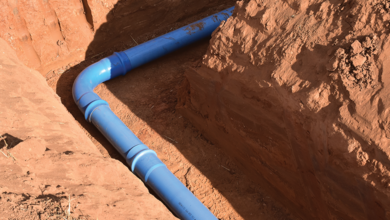
These strategic projects are complemented by an extensive investment across treatment plants generally as well as renewal of the ageing network of pipes and tackling leakage.
The challenges facing Ireland’s water services are considerable, but we understand the problems, know the solutions, and have the policy framework, governance structures, and investment plans needed to address them. It will take time to resolve all of the issues but the coming decade will be one of transformational change.