Assessing long-term water quality
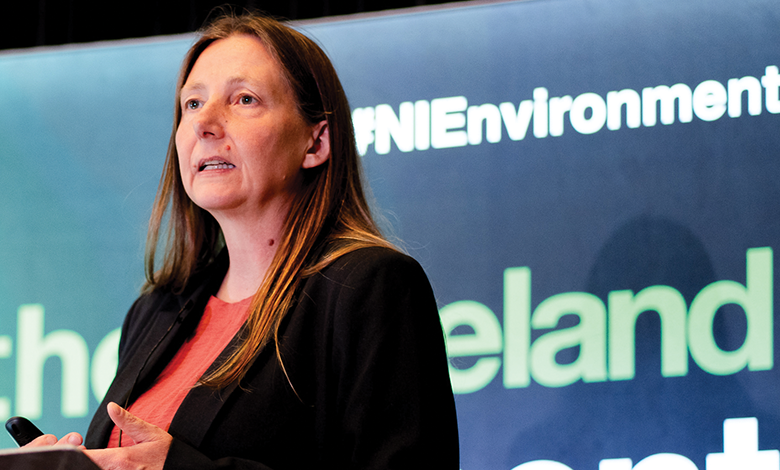
Jenny Deakin, Water Programme Manager at the Environmental Protection Agency (EPA), discusses the current state of Ireland’s water quality, reflecting on over 50 years of monitoring data to examine how environmental challenges have evolved and what lessons can inform future water policy.
Jenny Deakin explains that understanding water quality requires looking beyond chemical analysis to assess the overall health of aquatic ecosystems. Under the Water Framework Directive (WFD), ecological status considers both “how healthy is both what is living in the water and also their living conditions”, bringing together monitoring of aquatic plants, insects, algae, and fish with measurements of nutrients, oxygen, temperature, pH, and other chemical indicators.
Increasingly, the EPA is also assessing physical habitat quality, including riverbeds, riverbanks, riparian zones, river flows, and habitat connectivity.
Deakin outlines that water quality varies across different waterbody types. While rivers and estuaries continue to experience the greatest pressures, coastal waters remain in comparatively strong condition, with lakes occupying a middle position. She emphasises that water quality challenges are evident across the country rather than being confined to particular regions.
Reflecting on the Water Framework Directive’s objective of achieving at least good ecological status across all waters by 2027, Deakin acknowledges that Ireland will not fully meet that target. However, she stresses that “there is a strong ambition both in Ireland and also across Europe to keep the momentum going”, recognising that improving water quality is “long and slow and expensive”.
“We really need to get better at integrating and making our policy more coherent with environment at the core.”
Using monitoring data dating back to the early 1970s, Deakin explains how Ireland’s approach to water management has evolved alongside changing environmental pressures. While earlier decades were characterised by relatively stable agricultural production and growing wastewater challenges associated with population growth, successive policy interventions have significantly reduced some of the most severe forms of pollution.
Summarising the principal issues affecting water quality today, Deakin highlights nutrients as the dominant challenge.
“Firstly, what are our main problems? Well, nutrients, nutrients, nutrients,” she says, identifying agriculture and wastewater as the principal pressures. Alongside nutrient enrichment, she also highlights the importance of physical habitat condition, noting that historical channelisation, drainage, and the removal of riparian vegetation have reduced habitat diversity and affected river ecosystems.
Reviewing historical EPA assessments, Deakin says that many of these issues have been recognised for decades. The EPA’s 1996 State of the Environment Report highlighted excessive phosphorus use in agriculture and its environmental impacts, while also raising concerns regarding declining trout populations. Although substantial progress has been made since then, she observes that “our salmon are in worse condition today, unfortunately”, illustrating the long-term nature of many ecological challenges.
Deakin also highlights the progress achieved through environmental regulation. Investment driven by the Urban Wastewater Treatment Directive, phosphorus regulations, and industrial licensing contributed to stabilising water quality during the late 1990s.
“In fact, that was an achievement,” she says, describing the period as an important milestone before the implementation of the Water Framework Directive, which shifted policy towards protecting entire aquatic ecosystems through integrated catchment management.
Turning to more recent trends, Deakin explains that while the number of seriously polluted water bodies has fallen substantially, other pressures remain. In particular, she says that gradual declines in satisfactory water bodies are increasing pressure on Ireland’s highest quality waters, which play an important role in supporting downstream ecosystems.
Agricultural intensification, following the abolition of milk quotas, has altered the pressure profile on Irish waters, with agriculture now representing the most significant source of pressure. At the same time, successive nitrates action programmes, wastewater investment, and strengthened governance arrangements have all contributed to improving environmental management.
Deakin emphasises that targeted interventions are demonstrating positive outcomes where they are appropriately implemented.
“We have to keep the hope that there is improvement happening,” she says, explaining that when measures are directed towards specific issues and supported by local knowledge and farmer engagement, “they do bear fruit”.
Future outlook
Looking ahead, Deakin identifies implementation as the key priority. While significant investment has strengthened Ireland’s environmental framework, she says that further progress depends upon delivering “the right measure in the right place”, reflecting the local nature of water quality pressures. She also says that climate change is an emerging challenge that will increase nutrient runoff, place additional stress on aquatic ecosystems, and reinforce the need for integrated environmental planning.
Concluding, Deakin says future policy must build on existing measures by combining nutrient management with greater emphasis on restoring physical habitats and strengthening links between water quality, biodiversity, and climate policy.
“We really need to get better at integrating and making our policy more coherent with environment at the core,” she says, arguing that measures designed to address climate change should also seek to deliver benefits for water quality, biodiversity, and public health. “Our health and wellbeing and livelihoods really depend on a healthy environment,” she concludes.