: Innovation and accountability – G4S

Wednesday, November 9th, 2011
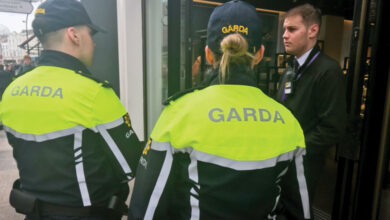
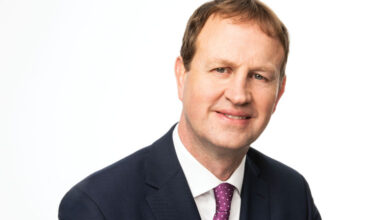
With the reform of the public sector driven by the EU-IMF bailout, outsourcing is now very much on the Government’s agenda. eolas talks to G4S’s Niall Feely about the potential for outsourcing in the justice system and how it can not only reduce cost but deliver innovation in service delivery. There are now over 4,500 people within the justice system which is under pressure because of a number of issues. Increasing prisoner numbers and the early release scheme are causing public concern and these pressures look set to continue. In addition, the quality of the prison estate has been...[full story]

: an overview

Wednesday, November 9th, 2011
eolas outlines the main tenets of the criminal justice system. The criminal justice system and its main components of law enforcement, trial, correction and victim protection are checked by constitutional rights such as the rights to trial by jury, liberty, fair procedures and privacy. Policing An Garda Síochána is headed by Commissioner Martin Callinan. On 11 October 2011 the force had 14,113 Gardaí and 1,002 Garda Reserve members. There were 2,098 civilian staff on 1 March 2011. In its 2010 annual report the force identified key actions for confronting crime such as better management...[full story]

: DPP

Wednesday, November 9th, 2011
After 12 years as Director of Public Prosecutions, James Hamilton retired this month. Before leaving he talked to Stephen Dineen about changes to the criminal justice system. James Hamilton was only the second Director of Public Prosecutions (DPP) since the office was established in 1974. As the man responsible for bring criminal prosecutions to trial, he has seen significant changes to the DPP’s role and the criminal justice system. Among these has been the nature of crime and the type of cases which have crossed his desk. “I know that there’s a general view that, for example,...[full story]

: A changing Garda

Wednesday, November 9th, 2011
eolas reviews progress on modernising Garda procedures and assesses the challenges facing the force amid the economic crisis. Despite the pressures of staff cuts, smaller budgets and rising crime (in some but not all areas), An Garda Sióchána is making good progress in streamlining its work. Under the National Recovery Plan, Garda numbers will fall from 14,500 to 13,000 over 2011-2014. The initial target of 13,500 gardaí for the end of this year is unrealistic (the status quo is around 14,100) but the Justice Minister considers 13,000 sufficient to meet all challenges facing the Garda....[full story]

: Prisons – the way forward

Wednesday, November 9th, 2011
eolas examines the State’s prison system and plans for new infrastructure. Overcrowding, drug use, insufficient recreation or workshops and poor hygiene have consistently been cited as the main problems with the prison system. The Irish Prison Service has said its most pressing issue is the “ever-increasing” number of prisoners and the high number of prisoners on temporary release, due to lack of spaces (see table). The daily average number of prisoners has increased from 2,422 in 1997 to 4,290 in 2010. There were 4,229 prisoners in custody on 10 October 2011, with 765 (18 per...[full story]

: Human rights reviewed

Wednesday, November 9th, 2011
Ireland’s human rights record was examined by the UN’s universal periodic review this year. eolas reports. The Government has promised to strengthen children’s rights and ratify a new protocol on the International Convention on Economic, Social and Cultural Rights as part of the commitments made during Ireland’s first appearance at the UN’s universal periodic review (UPR). The UPR involves a review of the human rights records of all 192 UN member states once every four years. It was described by UN Secretary General Ban Ki-Moon as having the potential “to promote and protect...[full story]

: Minister Alan Shatter interview

Monday, November 7th, 2011
For law and order Minister for Justice, Equality and Defence Alan Shatter updates Owen McQuade on his reform agenda across two departments and where costs will have to come down. Alan Shatter has a lot on his agenda. Between legislative and non-legislative plans for his two departments, there is a lot he wants to achieve. When asked at the start of the interview what his priorities are, he laughs uproariously. “Oh dear God! How many hours do you have?” he asks. When he reveals at the end of the interview that his day starts at 5am and doesn’t finish until 10-11pm, except Fridays...[full story]

: Criminal Justice Bill 2011

Friday, August 19th, 2011
Purpose: to strengthen Garda powers of investigation into white collar crime and to allow the 24-hour detention period to be separated into segments. Those found guilty of serious white collar crime, “rather than doing community service, should exchange the cufflinks for handcuffs,” claimed Justice Minister Alan Shatter following a Dáil debate on the Bill’s second stage on 23 June. A Garda investigation is currently underway into Anglo Irish Bank and the Minister hopes this Bill will strengthen the powers of An Garda Síochana in that case and in future investigations. It would...[full story]

: Brendan Howlin TD

Friday, January 1st, 2010
Brendan Howlin represents Wexford and is Deputy Leader of the Labour Party. He was first elected to the Dáil in 1987 and was appointed as party spokesman on constitutional matters and law reform in 2007. A former Health and Environment minister, Brendan was elected Leas-Cheann Comhairle of the Dáil in June 2007. He was party spokesman on justice and a member of the Houses of the Oireachtas Commission in the last Dáil. How did you get involved in politics? I was raised in a political household. My father was a local councillor and close friend of Brendan Corish TD (former Labour Party...[full story]

: Vatican challenged over abuse

Friday, January 1st, 2010
The Vatican has become embroiled in the clerical child sex-abuse scandal following the release of the Murphy report. Since the release of the Murphy report in November, revealing “scandalous” child sex-abuse in the Dublin archdiocese between 1975 and 2004, the ramifications on the Catholic Church have been felt all the way to the Vatican. Two former arch-bishops of Dublin; Bishop of Limerick Donal Murray, and Bishop of Kildare and Leighlin Jim Moriarity, have resigned because they failed to report incidents of abuse. Victim support group ‘One in Four’ called for the resignation...[full story]