Preventing AI apartheid

Artificial intelligence is creating extraordinary economic potential, but it is also creating a new dividing line.
Those with AI skills will increasingly shape industries and organisations, while those without them risk being left behind. Unless governments, employers, and education providers act now, Europe could find itself facing a new form of exclusion: an AI apartheid.
The challenge is urgent. The World Economic Forum estimates that “59 per cent of workers will require retraining or upskilling by 2030”, making workforce transformation one of the defining policy and economic challenges of this decade. Demand for AI, data, cybersecurity, and digital capabilities continue to accelerate across every sector, with implications extending far beyond the technology industry.
The European Union has acknowledged that successful AI adoption depends as much on people and skills as it does on regulation and innovation. It is becoming a fundamental requirement for competitiveness, trust, and responsible AI adoption in all organisations.
Ireland is in a unique position to lead in this field, as one of Europe’s leading digital economies, and home to many of the world’s largest technology companies. However, maintaining that position will require more than attracting investment. It will require building an inclusive talent pipeline capable of adapting to continuous technological change.
For more than 25 years, FIT (Fastrack into Information Technology) has created pathways into high-demand digital careers. Today, that mission is evolving to meet the demands of the AI era.
Recognising this pace of change, FIT has established its AI Training Centre of Excellence, a national initiative designed to democratise access to AI education and capability development.
The centre provides learning pathways for individuals and organisations, ranging from AI fundamentals to advanced technical training, equipping people with the skills and confidence to apply AI responsibly, enhance productivity, and unlock new opportunities for innovation and creativity.
Developed in collaboration with global technology leaders including Accenture, Google, IBM, and Microsoft, the platform continues to evolve to meet industry needs.
The most recent addition to this ecosystem is Intel, which has partnered with FIT to deliver advanced AI training from autumn 2026, helping to equip Ireland’s workforce with the capabilities needed for the next generation of AI-enabled jobs.
Aligning closely with Ireland’s National Digital and AI Strategy 2030, the training being offered recognises that future competitiveness will depend on workforce capability and technological innovation. FIT bridges that gap, ensuring that AI skills are accessible, relevant, and aligned to the needs of employers and communities across Ireland.
Another key element of this vision is the development of FIT Gold Standard credentials. As technologies evolve quicker than traditional qualification systems can adapt, employers will need the practical capability to meet current market needs.
FIT’s credentials will offer a future-focused framework that provides industry-recognised validation of skills, aligned with role-based pathways and portable competencies that employers can trust and learners can build upon throughout their careers. This aligns with the growing need for validated micro-credentials and skills frameworks focused on industry requirements.
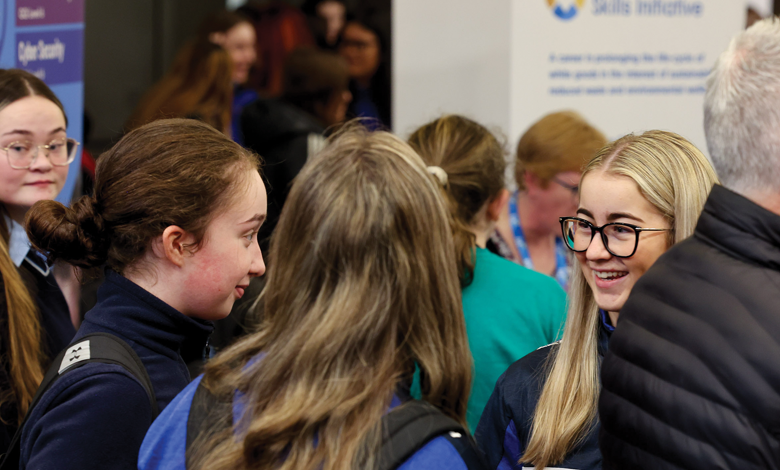
FIT continues to strengthen Ireland’s talent pipeline through its nationally recognised Tech Apprenticeship programme, working with more than 300 SMEs, large corporations, and public sector employers nationwide.
Through the programme, employers can attract new talent and upskill their existing employees, enabling organisations to build digital capability from within and develop a sustainable talent pipeline. FIT offers the tech apprenticeship in critical digital competencies, namely software development, cybersecurity, computer networking, with a new data analytics stream set to launch in late-2026 (subject to QQI validation).
A crucial element in the success of these programmes is ensuring curricula evolve in line with emerging technologies and employer demand. AI is now embedded across all of FIT’s tech apprenticeship pathways, ensuring learners develop both the technical expertise and the AI literacy needed to succeed. This combination of accessible learning, workplace experience, and accredited pathways is essential if Europe is to meet the scale of upskilling and reskilling required over the coming decade.
FIT’s commitment to digital inclusion and workforce transformation extends beyond national initiatives. As the leading coordinating organisation of the Irish Digital Skills and Jobs Coalition, FIT works alongside industry partners, education providers, and policymakers across Europe to address digital skills shortages and support the ambitions of the EU Digital Decade. The coalition reflects a growing understanding that digital transformation is a shared European challenge requiring coordinated action across member states.
As Europe looks to strengthen its competitiveness and strategic autonomy, it is already investing heavily in AI research, infrastructure, and regulation. The next strategic priority must be equivalent investment in its citizens and workforce in the form of a coordinated digital and AI fluency programme and workforce development framework. This imparts the skills, knowledge, and judgement required to use digital technologies and artificial intelligence confidently, responsibly, and effectively for future socio-economic cohesion to prosper.
In response to article four of the EU Artificial Intelligence Act (2026), such interventions necessitate and merit sustained European and national funding to support the Digital Decade agenda and Europe’s AI ambitions.
Such an initiative would support AI literacy for all, industry-recognised credentials, work-based learning, apprenticeship expansion, workforce reskilling, and SME AI adoption across Ireland and all member states.
It will help build the role-based skills frameworks, validated credentials, and inclusive learning pathways required to ensure that every citizen, business, and community can thrive within a landscape increasingly shaped by AI opportunities.
This would directly support Europe’s ambitions for digital competitiveness while helping member states achieve the workforce transformation required to achieve the targets outlined in national and European digital strategies. Aligned with this mission, FIT aims to support the training of over 400,000 people by 2030 in digital and AI competencies to help realise this vision for inclusive digital transformation and sustainable economic growth.
W: www.fit.ie