Planes, trains, and automobiles: Reimagining Irish transport
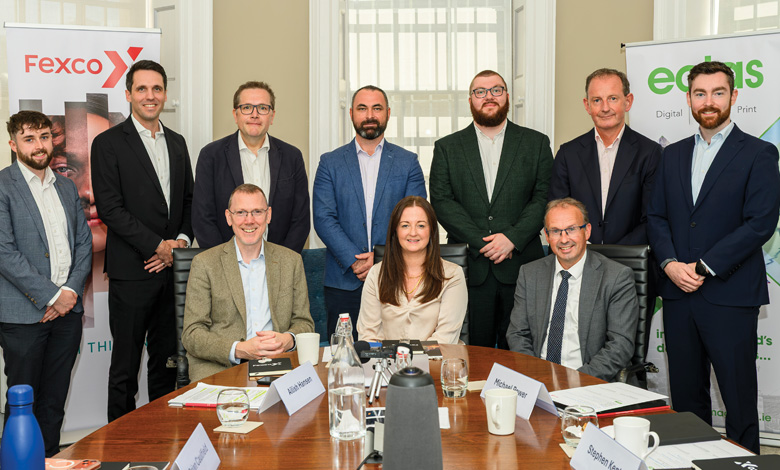
Fexco hosts experts from across the transport sector for a discussion on the future of Irish transport.
What does the shift from planning to delivery mean for your organisation in practical terms?
Michael Power
We are delivering significant construction projects across the rail network while progressing a pipeline of plans in the medium to long term. Our delivery capacity has expanded significantly in recent years, demonstrated by our headcount which has risen to around 5,300. Each team is fully focused on the planning and delivery of an increased scale of construction work over the coming years. We are delivering multiple projects across the State which are all aimed at providing additional services for people and increasing connectivity.
Stephen Kent
CIÉ is evolving to now deal with more transformation, productivity, and new systems. New processes and procedures must be developed to reflect this changing landscape. Bringing the public along with you while you make this change is a major challenge. Stakeholder management is crucial because the funding or legislation is not always in place when plans are completed. It is easy to write a plan, but it is a very different thing to deliver it.
Cathal Masterson
TII is mobilising around delivery of the National Development Plan (NDP) which is a level of capital investment similar to what was seen before the financial crash. We are strengthening our organisational capacity as employee numbers today are significantly lower than they were. We are also seeking to develop programmes based on committed multiannual funding, as planning based on single-year funding is inefficient and more expensive. TII is trying to scale our NDP delivery towards portfolios and programmes rather than just projects.
Brian Caulfield
We must take a wider perspective of planning because we are trying to do everything, everywhere, all at once. That can lead to things falling between the cracks. Morale is low in transport delivery at the moment because the media picks negative stories and runs with them. They are not talking about successful projects, so it is important that we celebrate the wins. We must also acknowledge understaffing in transport. This is most evident in the National Transport Authority (NTA). It delivered 300 million additional trips in 2026 compared to 2025 at a time when it was significantly understaffed.
Ailish Hansen
The Accelerating Infrastructure Report and Action Plan identifies public acceptance as the first barrier to delivery. Infrastructure delivery can succeed or fail depending on how citizens respond to the project. This is something that is important to consider from the planning stage through to delivery. Public acceptance can be achieved through the amplification of good news stories. This can be empowered when decisions around ticketing, information presentation, reliability, and support when things go wrong are included in the design stage.
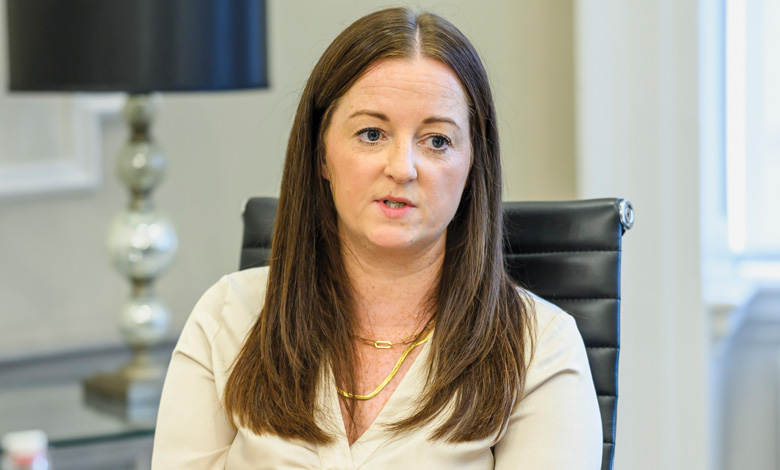
“Developing capabilities that can be shared across departments and agencies can alleviate the challenge of public sector recruitment.”
Ailish Hansen
With various sectors competing for the same talent, how is capacity being built at the scale the National Development Plan requires?
Ailish Hansen
There is no one-size-fits-all approach. Bespoke structures need to be created for each programme and organisation. Shared capability models are being trialled in Ireland, but it is something that is more prominent elsewhere in Europe. Developing capabilities that can be shared across departments and agencies can alleviate the challenge of public sector recruitment. We must also arm the people that we have with the necessary digital tools to enable them to unlock further capacity.
Brian Caulfield
This year, we had the highest number of students picking civil engineering in Trinity since before the 2008 crash. We need to enthuse students who have emigrated to come back. We need to get across the point that we are nation building at the moment. The transport sector is competing with other sectors. Ireland is also not the only country trying to decarbonise and nation build. There are other places that are more attractive. This makes amplifying good news stories critical.
Stephen Kent
We are trying to build an internal talent pool in CIÉ. We are showing people that you will not just be focused on one project, you can have a tremendous infrastructure career. We include employees from within the group in various projects across the group, enabling better asset management. It is also important to look at people’s long-term career projections because continuity is vital to multi-annual funding of projects.
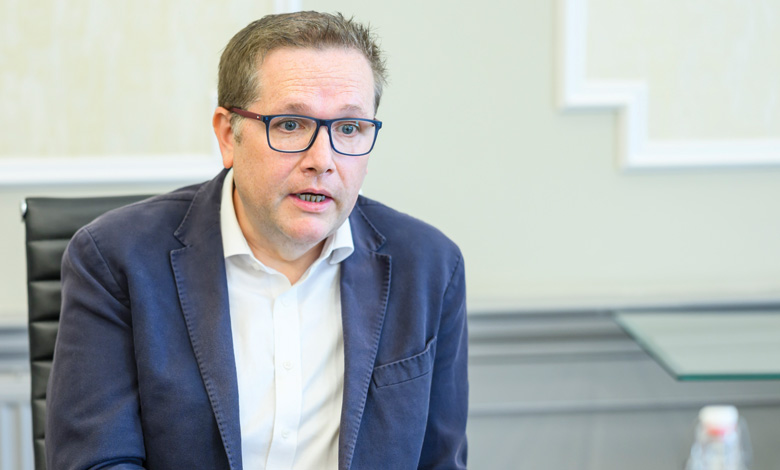
“It is imperative that we do not end up in a scenario where sustainable transport is retrofitted into housing, we need to deliver housing with transport connections in place.”
Brian Caulfield
Colm Tully
The transferring of skills and upskilling within the organisation is really important. Organisational structures must be created in the context of what they have been put in place to deliver. You must look at capacity and capability internally when you are building up the partnerships to deliver these projects. The partnership with the supply chain must then be organised to fit your own needs. These are also long-term collaborative partnerships with knowledge transfer and retention within the delivery agency being an important consideration for successfully delivering the current and future pipeline of large projects and programmes.
Cathal Masterson
TII and Iarnród Éireann are supporting the development of a transport sector workforce capacity strategy which is currently being led by the NTA. Through this work we are collectively seeking to develop a coordinated plan to ensure that the necessary people with the right skillsets are available when needed to deliver the significant volume of work over the next decade. The strategy is focussing on a number of areas including, working with the education sector, strengthening career pathways, improving attraction and retention and labour market entry requirements to grow the workforce.
Stephen Kent
The level of demand for drivers and mechanics cannot be underestimated. Over the next few years, there are thousands of people that will be retiring who will have to be replaced. This is in addition to the significant expansion of transport networks which is ongoing. That is why workforce planning is vital. You must unlock the elements which enable this and then it is about convincing people of the value of their role in the transport sector and providing upskilling opportunities.
“People and relationships will play a critical role in ensuring projects enabling regional balance are delivered.”
Colm Tully
Michael Power
A strong pipeline for projects over an extended period is a key attraction for talent. This can inspire people to return to Ireland to work over the decades ahead. Multi-annual funding is integral to everything we are talking about doing, but this must be worked out collectively. We must then also give the commitment to deliver these projects. That will also incentivise people to relocate to work in Ireland and attract contractors to come to work on these projects. There is not going to be enough funding for all of the projects that are in the pipeline at the moment to be delivered to the desired timelines, so public-private financing will have a role.
As new public transport capacity comes onstream, how should the citizen experience be designed and measured from the outset?
Ailish Hansen
Ireland’s Design for Public Value Guidelines says you should design services with the people who will use them in mind. People go on a service journey as well as a physical journey when using public transport. If you can deliver a reliable service, then people can buy into that and change their behaviour. People will always remember when a journey goes wrong and whether they get to where they need to be on time. This must be considered at the planning and design stage.
Cathal Masterson
TII now use a Gender Lens toolkit following the learnings we took from the Travelling in a Woman’s Shoes initiative. We are now better equipped to design our schemes so that they are integrated into the urban realm. As public transport capacity comes on stream, it also can also activate or unlock additional housing. We are beginning to explore this with Iarnród Éireann and other stakeholders. Transport is not just about carrying people from A to B; it can also unlock other opportunities for the State.
“We see that as public transport capacity comes on stream, it can also activate or unlock additional housing.”
Cathal Masterson
Michael Power
The citizen experience is integral to everything we do. Every stakeholder we engage with says we need more rail services. People ask why we cannot deliver rail to the same scale as other European countries. This demonstrates that the demand and the appetite is there for a scale change in investment in public transport. This feedback has also informed our vision which is that rail is at the centre of a sustainable transport system for Ireland. Delivery of rail can also unlock the delivery of housing at scale which incentivises people in those areas to adopt more sustainable travel patterns.
Brian Caulfield
Transport is like a water network; if there is a crack in it somewhere, you are going to get a leak, these ‘leaks’ are at points where the network is not as efficient as it could be. This results in people giving up on public transport and staying with car trips. When you design for everybody, you design better. There is approximately 1.1 million people in Ireland with a disability and only 6 per cent of them use public transport on a regular basis. It is also important to note that people who use public transport the least and have a bad experience will be the loudest. However, people who use public transport on a regular basis know that it is good. We must also look at the customer experience from a psychological perspective.
Stephen Kent
The scale of growth that we have seen in recent years has been phenomenal and that is reflected in the number of passengers using our services. Customers want public transport to be easier, faster, and more reliable. However, we are trying to catch up on years of underinvestment and that takes time. Additionally, you must design for reliability and not just volume. If you cannot deliver reliability, people do not care that you have increased volume. You must also design with the most vulnerable user in mind to ensure everyone has a positive experience.
“If you cannot deliver reliability, people do not care that you have increased volume.”
Stephen Kent
Colm Tully
It is important that users have a frictionless payment experience across all transport modes. The example I would provide is the Clipper Card in San Francisco which covers all transport modes – bus, rail, ferry, and even cable car – under one payment system. Delivering initiatives like this not only increase customer satisfaction in public transport, they also incentivise people to utilise public transport instead of the private car.
What are the critical technical and regulatory dependencies that need to be resolved to keep the electrification timeline on track?
Brian Caulfield
Changing the appraisal approach is critical. We apply a model to Metrolink or Cork Commuter Rail which we use for motorways and the two are not comparable. In Sydney, upticks in housing are included in cost-benefit analyses for transport projects. This is something that should be incorporated. There is demand for electrification in everything, everywhere, all at once. Transport companies and electricity companies need to be talking to each other regarding housing at a greater scale. It is imperative that we do not end up in a scenario where transport is retrofitted into an increasingly electrified landscape to ensure we reduce the need for the private car.
Colm Tully
Agencies must coordinate their timelines. There is evidence that direct conversations between agencies are happening earlier than may have been the case previously. That is really positive and can enable the delivery of critical long-term transport goals.
Cathal Masterson
There is a need to assess how agencies can collaborate more effectively through the planning process. For instance, it could make sense to build in provision for high-voltage cabling in some transport schemes, but agencies are currently discouraged by planning regulations from doing so, meaning we are potentially missing opportunities. TII is working with the energy sector on facilitating access to the road network to strengthen the grid. This can be challenging as roads are required to move freight, people, and emergency services and we need to be careful to protect the asset and keep in mind potential for future projects.
Stephen Kent
Grid and energy access requires a lot of dialogue and the appropriate discussions are taking place. There is a lot of state money required to build and electrify depots. When we electrified a depot in Athlone, it had 11 buses which consumed the same amount of electricity as three housing estates overnight. Therefore, you need substations developed which requires planning. When it is in place, employees must then be retrained in operating high voltage systems. This is something which is underway across the CIÉ group, so it is crucial that skills are migrated to where they are required.
Michael Power
We are at the start of the second century as an independent state and we are looking to develop infrastructure that can be there for that. Future Forty: A Fiscal and Economic Outlook to 2065 says we are going to need 1 million additional houses by 2050. That is a development the size of Cork City every 18 months. Sustainable transport policy says build high density, high capacity, sustainable transport corridors, and rail offers the highest capacity. We must build the vast majority of those new houses right beside train stations. We know we are behind the rest of the world on electrification of rail. A policy change is needed to make this happen.
“We are delivering multiple projects across the State which are all aimed at providing additional services for people and increasing connectivity.” Michael Power
What is your organisation doing to ensure regional balance and what does this look like in practice?
Cathal Masterson
Most of TII’s work over the past decade has been regional. The last major project delivered in Dublin was the Luas Cross City link which opened in 2017 connecting St. Stephen’s Green to Broombridge. We have further plans for light rail expansion in Dublin and Cork. Additionally, we have road and greenway schemes across the country and TII is also supporting the rollout of EV charging facilities adjacent to the road network. Dublin is not competing with the regions in terms of transport schemes as it is sometimes portrayed. It is about delivering an integrated transport system across all modes for everyone’s benefit.
Stephen Kent
We are tapping into the NTA’s BusConnects programme in the regional cities. Waterford is being transformed and that will be integrated with a great bus network. We are utilising land in Cork and Limerick, demonstrated by the first release of new apartments near Kent Station in Cork. This land has been unlocked to provide people living in those apartments with access to a train station that is integrated with the bus network that provides a link into the city. This is enabled by our partnerships with various organisations including the Land Development Agency, TII, Iarnród Éireann, and the councils. It is a great example of stakeholder collaboration and it will be transformative if it is delivered nationwide.
Michael Power
DART+ is integral for additional services and capacity between the regions and Dublin. Upgrades under DART+ South West provides additional capacity on a critical section of network which enables separation of stopping commuter services and non-stopping intercity services. That is the type of infrastructure you would have in any other city across Europe. Additionally, fleets designed for intercity traffic will get released from the Dublin area as new DART+ fleets are deployed across the entire network. This will provide additional capacity and increase service frequencies both in the regions, and between the regions and Dublin.
Ailish Hansen
Increased availability of services does not lead to increased uptake. The TFI Local Link has seen great uptake. It is boosting tourism and the buoyancy of smaller areas, demonstrating that the biggest answer is not always the best. There are alternative solutions from a regional balance perspective and the Local Link is a great example of that.
Brian Caulfield
Rail is the future of transport, and we need it to bring about a similar sea change to what we had when we blanketed the State in motorways. The Foynes rail extension is crucial for regional development. It is not talked about enough; very few people know that it is about to open up. That is going to take thousands of kilometres of HGVs off our roads due to the additional freight capacity it will create and it has the potential to reduce the pressure on Dublin port. It has amazing capacity and it is an incredible project.
Colm Tully
People and relationships will play a critical role in ensuring projects enabling regional balance are delivered. We have a presence in each region across the State and we are building teams and capabilities across our offices in Dublin, Wexford, Cork, and Galway. Having a local presence and building long-term relationships with clients will be key.