
Legislating in the age of AI
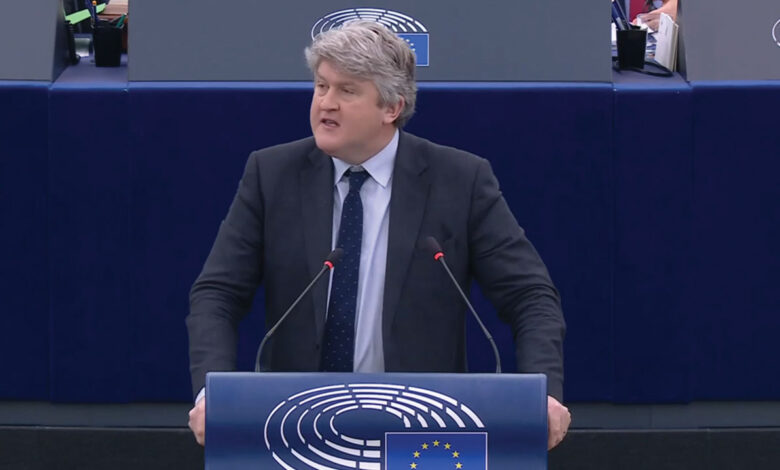
In 2024, the European Union did something no jurisdiction in the world had done before: it passed a comprehensive legal framework for artificial intelligence. The AI Act, four years in the making, established for the first time a binding set of rules governing how AI systems could be developed, deployed, and used across the single market, writes independent MEP Michael McNamara.
It was ambitious, the result of protracted and difficult negotiations, and it set a standard the rest of the world is yet to match.
Scarcely a year later, before the most significant provisions had even come into force, the Commission proposed to amend it. That is the political landscape we now inhabit.
The ‘AI Omnibus’ is just one of many omnibus packages we have seen thus far in this political mandate. For example, there is also a ‘Digital Omnibus’ proposing changes to citizens’ data protection.
I will be honest about my instinctive unease with omnibus legislation. Of course, bureaucracy needs to be minimised; regulations need to be aligned and not contradictory. But often, “simplification” is no more than an attempt to erode protections, a legislative vehicle where deregulatory measures find shelter in “cutting red tape”, and where changes are not based on impact assessments but on “business concerns” i.e. industry lobbying.
What made this omnibus particularly striking was its timing. The AI Act has not yet been fully applied, its chapter establishing the regulatory framework for ‘High-Risk’ AI systems was due to come into force on 2 August 2026.
However, the technical standards underpinning compliance are not yet complete (why those standards are not ready is, frankly, a separate story in itself) and member states were not prepared, the timelines set were simply not going to be met. And so, before the legislation is fully in force, we are revisiting it.
‘Nudification’
As rapporteur, (or lead negotiator), on this file in the Civil Liberties Committee, my task was to ensure that whatever emerged from the negotiations was something that retained protections for fundamental rights. While new compliance timelines have been fixed giving businesses the certainty they need while allowing time for standards to be completed, transparency and bias detection measures have been retained and strengthened.
On balance, the text reflects the political moment. It is a compromise. But within that compromise, there were battles worth fighting and one in particular that I am proud to say we won.
There is a technology available today, accessible to anyone with a smartphone, that can strip the clothes from a photograph of anybody and generate a realistic, explicit image without that person’s knowledge or consent. It takes seconds. The results are often indistinguishable from reality. And it existed in a legal grey zone across the EU.
The AI Act Omnibus now explicitly prohibits AI-generated non-consensual intimate imagery so-called ‘nudification’ as a prohibited practice of the AI Act. This was not in the Commission’s original proposal. I fought to put this in. And I want to explain why it matters.
The women and girls targeted by these tools, and it is predominantly women and girls that are targeted, are harassed, humiliated, and silenced. Some are public figures: politicians, journalists, activists.
The women and girls targeted by these tools, and it is predominantly women and girls that are targeted, are harassed, humiliated, and silenced.
Michael McNamara MEP
Many more are ordinary people: students, and colleagues of men who wish to degrade them. The technology is cheap, the harm is profound, and the gap in European law has been exploited deliberately and systematically for profit.
When we initially raised this ban in negotiations, one argument we encountered was that this was a matter for other legislation that the AI Act was not the right vehicle, that we should wait, that the issue was better handled elsewhere. I do not agree. As legislators, it is our job to legislate.
The societal harm from these tools was not anticipated when the original AI Act was drafted, the technology moved faster than the law, as it so often does, but that is precisely the moment when parliament must act, not defer.
This is not a problem on the horizon; for women and girls across Europe, it is already their reality. It is happening now, at scale. The impulse to pass the problem to another institution, another process, another day is a choice with real consequences for real people.
For European democracy to survive, it must respond to the problems of today and be seen to do so. What is particularly encouraging is that this was achieved across a broad political spectrum. From left to right, this parliament found common ground.
The Council, comprised of a representative from every member state, has also included a similar ban on nudification in its negotiating mandate, albeit in different language.
That means both institutions are entering trilogue, the negotiation between the two co-legislators, the Parliament, and the Council to agree a final text, agreeable to both, with the same fundamental commitment that this practice must be prohibited. There is work to do on the precise wording. That is the nature of trilogues. But the days of arguing about whether this ban should exist at all are behind us.
The age of AI is not arriving. It is here. The challenge is for the law to keep pace with it, to ensure that the safeguards citizens expect are developed as AI develops.
Michael McNamara is an independent MEP for Ireland South who sits with the liberal Renew Europe Group. He is a former Labour TD for Clare. He resigned from Labour in 2017.