Enhancing Europe’s security
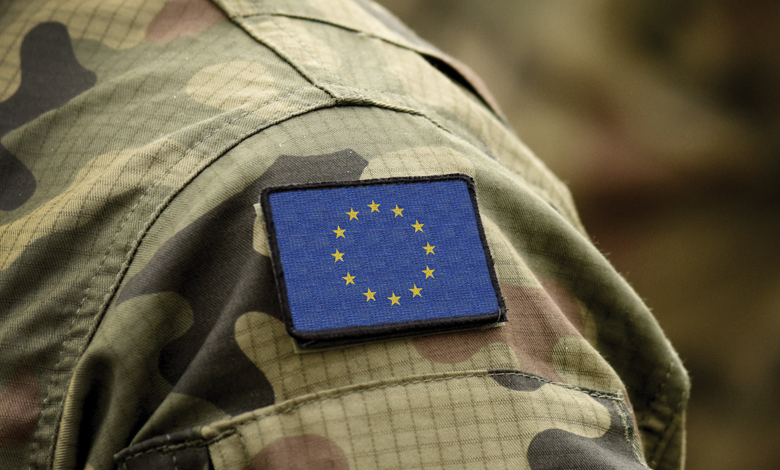
The State has pinned security as one of the core themes of Ireland’s EU Council Presidency with focus placed on launching the European security strategy, maintaining support for Ukraine, and facilitating peace in the Middle East.
The Government’s policy programme for the EU Presidency states: “The current global environment is unstable and deeply challenging. There are many external factors we cannot control. But in vital areas, Europe has the means to take determined action.”
As part of the focus on security, the Government is to advance work on the proposed new European security strategy, which will provide an updated framework for the EU’s defence and security policy.
The strategy is expected to be launched during Q3 2026 and will replace the European Union Global Strategy which was published in 2016.
This is a significant piece of work given the substantial geopolitical changes which have occurred in recent years such as the Russian invasion of Ukraine, the deteriorating relationship with the US, and supply-chain effects related to the conflict in the Middle East.
Another core objective for the State is to move forward the measures set out in the White Paper for European Defence and the associated Defence Readiness Roadmap 2030. These measures include:
- activating the national escape clause of the Stability and Growth Pact, allowing member states to increase defence spending;
- launching Security Action for Europe (SAFE), a €150 billion loan instrument which provides funding for joint-defence projects;
- supporting the European Investment Bank in broadening its lending to defence and security projects; and
- accelerating the savings and investment union to mobilise private capital into defence and security projects.
The Government also aims to progress the revision of the Defence Procurement Directive which sets the rule for purchasing arms, munitions, and military equipment for member states.
Incentivising and streamlining joint procurement as well as strengthening efficiency, transparency, and competitiveness of defence procurement are identified as key priorities of this revision.
To further improve security cooperation, the Government plans to progress the European Commission’s proposed regulation on military mobility. This regulation aims to streamline several processes across member states to facilitate the movement of military personnel and equipment across the EU.
The Government has set a goal of finalising the agreement with the EU’s co-legislators during its presidency.
Ukraine
The Government’s policy programme states “active support for Ukraine will be a defining priority for the Irish Presidency”.
Central to this support is the commitment to the swift disbursement of the Ukraine support loan to “ensure Ukraine has what it needs to defend itself against Russian aggression”.
The loan provides €90 billion of support to Ukraine across 2026 and 2027, with €60 billion allocated for defence support and €30 billion for budgetary aid. On 30 June 2026, the first tranche of €3.9 billion for advanced drone technology was released.
As President of the Council of the EU, the State also advocates for the full integration of Ukraine into EU defence initiatives, giving it the same access as member states.
Additionally, the Government supports the strategic review of the EU’s Military Assistance Mission in support of Ukraine, which has provided training to soldiers in the Ukrainian Army since 2022.
“We live in a time of increased threat and conflict. The EU needs to work harder to protect our citizens, our democracies, and our European way of life.”
Taoiseach, Micheál Martin TD
Global security
During its presidency, the State is also to support the EU’s efforts to achieve peace across the Middle East.
This includes reaffirming the EU’s commitment to the implementation of the two-state solution to end the Israeli-Palestinian conflict and supporting actions in response to the humanitarian needs in Gaza and the West Bank “where unilateral actions which threaten the viability of the two-state solution are causing further instability”.
There is also focus on supporting EU efforts towards peace in the Gulf, where conflict has spread across the region and had a global impact.
In this area, the Government commits to undertaking work to uphold Lebanon’s territorial and economic sovereignty, and says continued EU support to the ongoing governmental transition in Syria will be a priority.
To improve security outside of Europe, close cooperation and partnerships with non-EU states, the UN, OSCE, and NATO is to be promoted throughout the presidency.
Internal EU security
There is also an intra-EU dimension to the State’s focus on security, with particular emphasis placed on fighting organised crime and the smuggling of migrants and weapons into and across the EU.
This will involve supporting work on regulations relating to the facilitation of migrant returns and prioritising early discussions on the digitalisation of return systems.
As part of their effort to improve border security across the EU, the Government is to focus on the full implementation of the Pact on Migration and Asylum which came into effect in June 2026.
The pact mandates that the same procedures and standards are applied to all asylum applicants across the EU. Under it, asylum seekers must apply in the first EU nation they enter and member states must share the costs and effort of hosting migrants more evenly.
To ensure all member states have the appropriate funding to effectively implement this pact, the Government will also seek to progress negotiations on the Asylum, Migration and Integration regulation and the Border Management and Visa regulation as part of the Multiannual Financial Framework (MFF) negotiations.
In June 2026, Taoiseach Micheál Martin TD said: “We live in a time of increased threat and conflict. The EU needs to work harder to protect our citizens, our democracies, and our European way of life.”
In July 2026, People Before Profit leader Richard Boyd Barrett TD said: “The Government should be using the presidency to promote the development of a just and equal peoples’ Europe and to defend Ireland’s tradition of neutrality.
“But on the contrary, it is clear that the Taoiseach and the Government is using the presidency as a festival of pro-militarisation propaganda.”