Digital gender divide
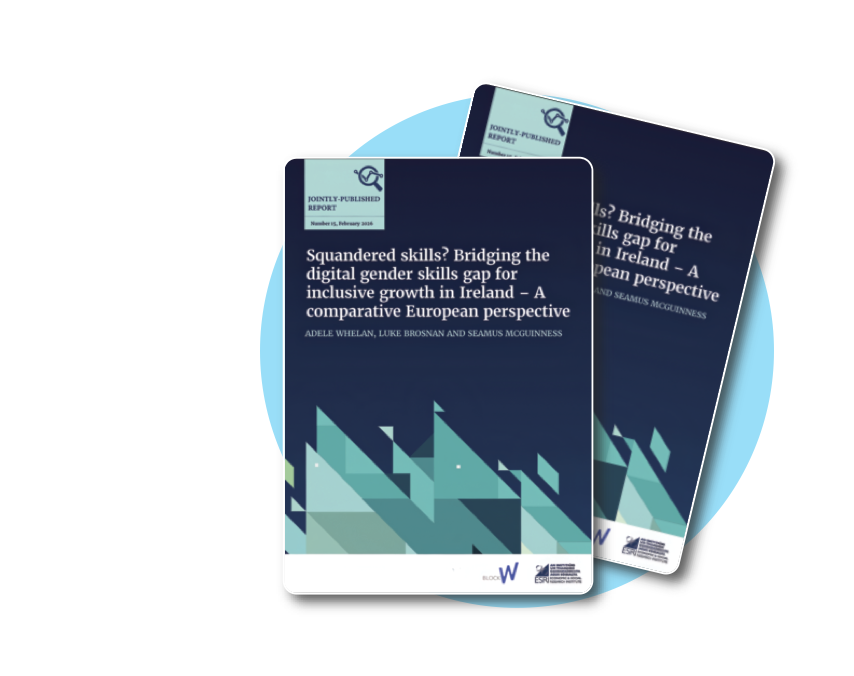
Men in Ireland are twice as likely to report engagement with advanced digital skills than women, according to a joint study by the Economic and Social Research Institute (ESRI) and BlockW published in February 2026.
The report, Squandered skills? Bridging the digital gender skills gap for inclusive growth in Ireland: A comparative European perspective, states that 44 per cent of men in Ireland reported using advanced digital skills at work compared to 18 per cent of women, a gap of approximately 26 per cent and almost double the European average.
The report examines Ireland’s digital skills use in the workplace and highlights the importance of an inclusive workforce, focuses on gender differences in digital skills, and compares the gender divide in Ireland’s workforce to other countries in Europe.
Men are reported as having a better understanding and use of advanced digital skills, with 32 per cent of men saying they were able to programme compared to 11 per cent of women. The study also highlights the gender gap in the use of AI or machine learning (17 per cent of men to 6 per cent of women), and ICT system management (32 per cent of men to 14 per cent of women).
However, when comparing basic digital skills, the gap narrowed significantly, with 94 per cent of women using basic digital skills compared to 96 per cent of men.
Europe
The study finds that Ireland mirrors European patterns with minimal gaps in basic tasks. However, Europe also experiences large gaps, with women being under-represented in advanced digital tasks as well.
The report finds that while women in Europe’s participation in both intermediate and advanced digital skills are roughly average with women in Ireland, Irish men’s rates were significantly higher than females in both Ireland and Europe, and males in Europe.
Women are broadly under-represented in the most digitally intensive jobs, with gender-based digital differences being the lowest in less digitally intensive positions, according to the study. This has been referred to as the ‘digital glass ceiling’ due to women being more likely to work at different intensity levels.
Previous research cited in the report, such as the gender digital divide in Europe report in 2020, discussed how women are often under-represented in science, technology, engineering, and maths (STEM) education.
This is further discussed in the ESRI report where it states that younger women under the age of 35 across Europe face larger digital skill gaps than older women. To close the gap, the report says it will take more than increasing women’s participation in STEM and subjects and will require “further research to understand how digital tasks, responsibilities, and progression opportunities are allocated within workplaces”.
The results highlight a pattern in Ireland when it comes to digital advancements. It shows that though factors such as education, occupation, and work sector can explain a significant share of the gap, a “sizeable portion” remains, mainly in the most digitally advanced jobs.
Other factors not captured in the survey may be relevant, the report suggests. It says that factors that may be important are things such as “how work is organised, how tasks are distributed within roles, and how opportunities to develop advanced skills arise”.
Joyce O’Connor, Chair and Co-Founder of BlockW, says the findings of the study “should cause pause”, adding that Ireland cannot afford to overlook the “potential underutilisation of talent”.
“Ireland records the largest gender gap in advanced digital task use among other European economies. This is not because women lag behind their European peers, but because men are far more likely to be concentrated in highly digital, advanced roles.”
Adele Whelan, senior research officer at the ESRI says: “The finding that younger women already face large gaps is a particular concern for policymakers, as it suggests the problem will not resolve on its own and requires targeted action. Addressing these issues is important not only for gender equality, but also for productivity, innovation, and inclusive economic growth in Ireland.”