Creating momentum for Europe’s goals
Europe is not short of analysis. It is not short of reports, roadmaps, or carefully worded conclusions. What it is short of now is momentum, writes Moyagh Murdock, CEO of Insurance Ireland.
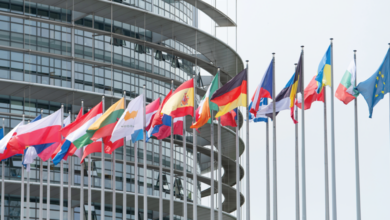
Ireland’s Presidency of the Council of the European Union comes at a critical time. The immediate shocks of recent years may have eased, but the underlying challenge facing Europe has not. Competitiveness is under pressure. Investment is not flowing at the scale required. Regulation has become increasingly complex. Climate, cyber, and geopolitical risks are now no longer exceptional events; they are part of the operating environment.
That is why Ireland’s Presidency matters. Of course, we must manage and broker compromise. But the best presidencies do more than chair meetings and manage files. They set a tone. They build consensus and they help turn ambition into delivery.
Ireland should approach this Presidency not as a holding exercise, but as an opportunity to shape the next phase of Europe’s economic agenda. That means being clear about what Europe needs: deeper capital markets, smarter regulation, more investment, stronger resilience, and a renewed focus on growth.
Insurance has an important role in that conversation. It may not always be the first sector people think of when competitiveness is discussed, but it sits at the centre of many of the challenges facing Europe.
Insurers protect households and businesses when things go wrong, they support communities after storms, floods, and fires. They help companies manage new risks and rank. They are also among Europe’s largest long-term investors. Resilience is not an abstract concept. It has to be financed.
One of Europe’s biggest opportunities is hiding in plain sight. European households hold trillions of euro in savings, much of it sitting in low-yield deposits, while Europe struggles to finance housing, infrastructure, climate adaptation, digital transformation, and business growth. We have the capital. The challenge is getting more of it working productively for citizens and for the economy.
The Savings and Investments Union can help bridge that gap. Done well, it can give people better long-term financial outcomes for citizens, support retirement provision, and channel private capital into the investments Europe urgently needs. This is not just a financial services issue; it is a competitiveness issue, a resilience issue, and a consumer issue.
That same practical test should also apply to regulation. Europe rightly places a high value on consumer protection, financial stability, and trust. Those standards are strengths. But high standards do not require unnecessary complexity.
Over the past decade, businesses have faced a growing volume of rules on digital resilience, cybersecurity, artificial intelligence, data, sustainability, and operational risk. Each measure may have its own logic. Taken together, however, they can create duplication, cost, and uncertainty. Too often, resources that should be focused on innovation and customer service are absorbed by overlapping reporting and compliance requirements.
Simplification is therefore essential. It should not be confused with deregulation. It is about making regulation more coherent, more proportionate, and more effective. The Digital Omnibus provides an opportunity to reduce duplication, align requirements, and give businesses clearer rules without weakening the protections consumers rightly expect.
The same principle applies to other parts of Europe’s financial architecture. Securitisation, for example, has never reached its potential in the EU. Properly designed and properly supervised, it can help financial institutions recycle capital, support lending, and improve access to finance for households and SMEs. That matters for innovation, housing, infrastructure, and growth.
The debate on competitiveness is sometimes presented as a choice between growth and regulation. That is the wrong framing. Europe’s strength has always been its ability to combine open markets with high standards. The Single Market remains one of the great European achievements because it gives businesses scale, consumers’ confidence, and investors certainty.
Ireland’s Presidency arrives when the direction of travel is already clear. The reports by Enrico Letta and Mario Draghi have helped sharpen the debate on the Single Market, investment, and competitiveness. The analysis is there. The question now is delivery.
The Government has chosen ‘Ní neart go cur le chéile’ as the theme of the Presidency. It is a fitting phrase. Europe’s strength has always come from acting together. But unity must be matched by urgency. Consensus matters only if it leads to action.
Many will also remember President Obama’s use of another Irish phrase, “is féidir linn”, meaning ‘yes, we can’. That spirit should guide Ireland’s Presidency too. We should not spend six months simply managing the agenda. We should help shape it.
That means championing simplification where regulation has become too complex. It means pushing the Savings and Investments Union from concept to delivery. It means supporting reforms that deepen capital markets and unlock long-term investment. It means recognising insurance not only as a protection industry, but as a partner in financing Europe’s resilience.
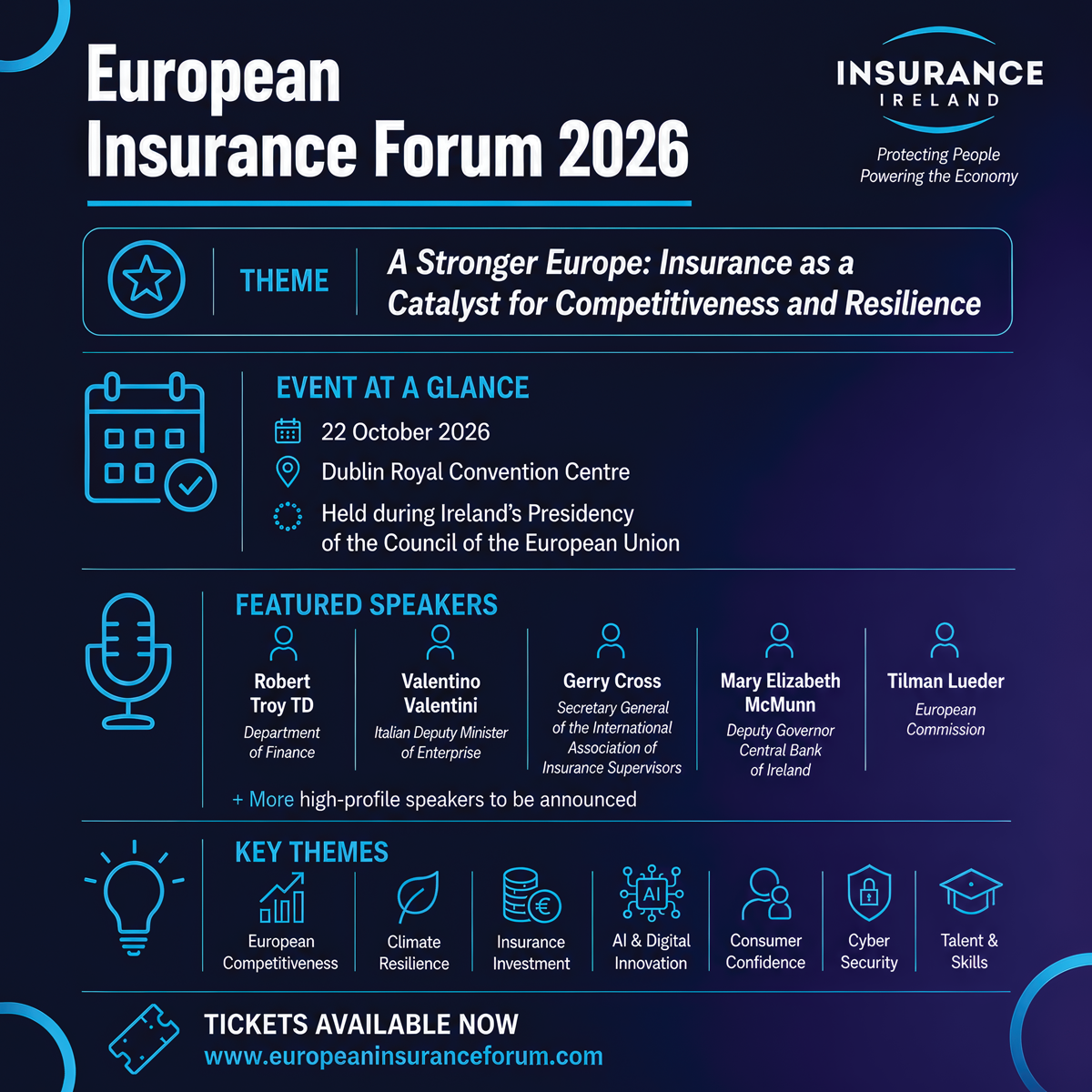
Ireland has a real opportunity to help Europe move from diagnosis to delivery. Through its Presidency, and building on the tradition of dialogue and collaboration reflected in the European Insurance Forum, it should seize that opportunity.