
Activating housing

Karen Kenny, senior adviser at the Department of Housing, Local Government and Heritage, outlines the elements necessary to unlock housing across Ireland and the role the Housing Activation Office (HAO) will play in housing development.
Karen Kenny praises the Government for its “clear commitment” to increase investment in critical infrastructure, calling particular attention towards the Government’s new housing plan Building Homes, Delivering Communities, published in November 2025.
Kenny says zoning additional land, and integrating housing plans into city and country development plans is critical. However, she says this is “pointless” if there are no mechanisms in place to ensure land is serviced and ready to deliver homes. She says that there is a “clear commitment to focus on activation” but adds that a clear path to activation is needed.
The Housing Activation Office (HAO) was established in April 2025. Its purpose is to “accelerate the delivery of the public infrastructure projects that are needed to unlock key housing lands in towns and cities right across Ireland”, Kenny says.
Kenny explains that the key focus of the HAO is to “develop a national picture of the key strategic housing sites around the country”. Kenny elaborates on this, stating that the HAO has engaged with all 31 local authorities and the Land Development Agency (LDA), to get their perspective on issues at a local level and what needs to be improved.
The HAO also has a procedural role to “unlock structural and procedural issues” to alleviate roadblocks to housing delivery. Kenny says that the office has seen the procedural frustrations that stakeholders are dealing with, along with the lack of financial resources available to afford infrastructure.
Kenny explains that one of the key elements in Delivering Homes, Building Communities is the “record levels of investment” the Government commits to housing. She states that a critical part of the HAO was having its own fund to invest directly into housing enabling infrastructure, which bridges funding gaps in relation to “certain types of infrastructure”.
Housing Infrastructure Investment Fund
The Housing Infrastructure Investment Fund (HIIF) is, as Kenny describes, the “largest ringfenced housing infrastructure investment fund that has been launched in Ireland ever”. The €1 billion fund supports direct investment in infrastructure needed to activate supply.
The fund is part of the Government’s target to construct 300,000 homes by the end of 2030. Kenny also states that HIIF is designed to “complement, not replace” investment from other departments or agencies.
A housing activation delivery group was established to coordinate investment decisions across utilities, which Kenny says includes senior officials from government departments and infrastructure agencies. An early call for applications through HIFF Call one, was launched on 21 January 2026 and by the application closure they had over 130 applications from across 30 local authority areas.
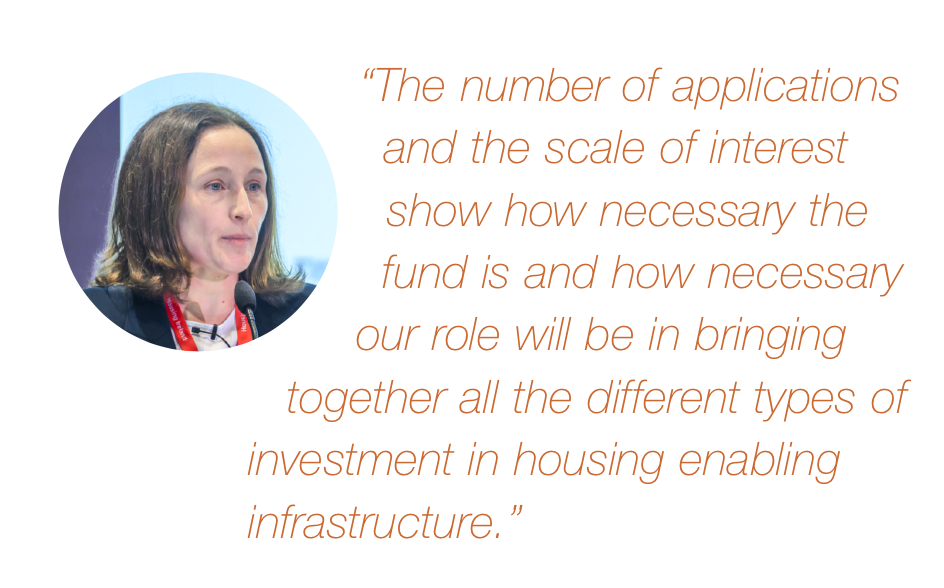
Kenny says: “The number of applications and the scale of interest show how necessary the fund is and how necessary our role will be in bringing together all the different types of investment in housing enabling infrastructure.”
Kenny stresses that fund applications must be related to public infrastructure that enables housing development. Local authorities and the LDA have highlighted that transport, water, electricity, and other infrastructure needed “under relevant development plans” are necessary to activate housing land.
“That is the first step, and we do intend to develop the fund into 2026 to include a broader range of delivery mechanisms and approaches, and a broader range of public and private sector delivery partners,” Kenny says.
Kenny explains that the reason for this is to “accelerate infrastructure delivery at a greater speed”. Kenny states that by relying on one delivery partner, the HAO would not get the pace of delivery needed to accelerate housing.
Priorities
The main priority for the HAO is to assess applications to the fund “as quickly as possible”. This is to be achieved by assessing them against the predetermined eligibility and assessment criteria set out within the scheme. It also intends to continue to develop the fund and address known obstacles as quickly as possible to activate housing.
Other priorities outlined by Kenny include the growth and building of HIIF, bringing onboard other delivery mechanisms, and welcoming new delivery partners. Kenny says these additions would help accelerate housing delivery and enable the HAO to incorporate more strategic investment and planning for new housing areas.
Kenny concludes by saying that building relationships and engagement with key stakeholders such as local authority, transport services, and local government sectors is “critical” for the HAO to “continue to break down the silos and start to work together in a more coordinated way to activate land”.
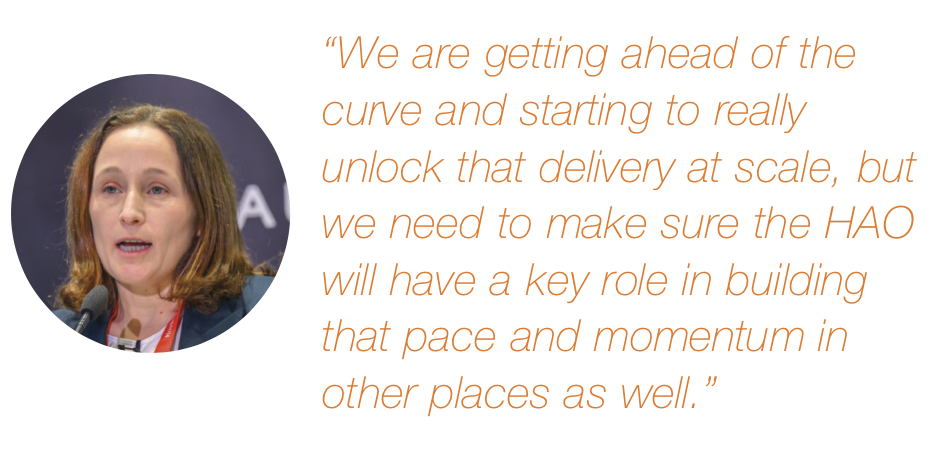
“We are getting ahead of the curve and starting to really unlock that delivery at scale, but we need to make sure the HAO will have a key role in building that pace and momentum in other places as well.”