How violence is eroding access to politicians
The accessibility that historically typified Irish politics is disappearing as politicians ramp up security measures and make themselves less accessible to the public in the face of rising violence, abuse, harassment, and intimidation, writes Ciaran Brennan.
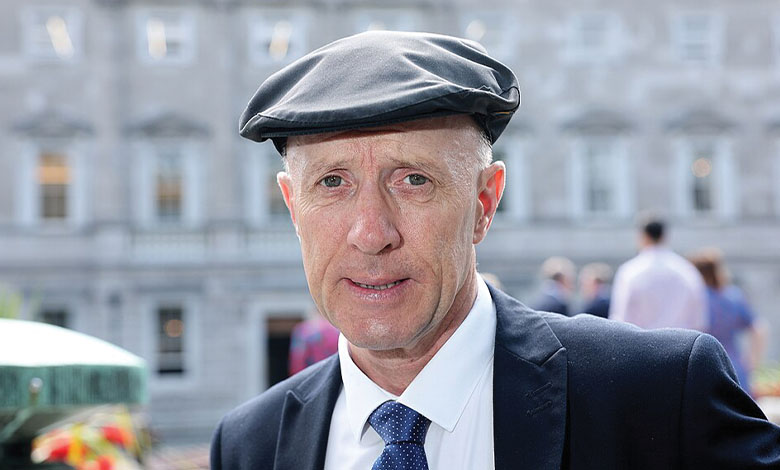
Michael Healy-Rae TD needed seven stitches for a cut on his mouth following an alleged “unprovoked” and “politically motivated” assault while in traffic on Dublin’s Cork Street on 16 September 2026. This followed an alleged attempted assault on Taoiseach Micheál Martin TD at the National Ploughing Championships in Screggan, County Offaly the previous day.
The last two years have seen multiple incidents where Irish politicians have been physically attacked or threatened. In June 2026, a man was jailed for a threat to kill or cause serious harm to Tánaiste Simon Harris TD from August 2024 when Harris was Taoiseach.
In December 2025, a woman was sentenced to six months in prison for sending “a threatening or grossly offensive communication” to Harris “with intent to cause harm”. Harris and his family were also subjected to a coordinated campaign where multiple bomb threats against his home were phoned in to Garda stations. At the time, the Wicklow TD said “vile and horrific threats” were made against a “close family member”.
Ahead of the 2024 general election, Green Party leader Roderic O’Gorman TD was assaulted and verbally abused with a homophobic slur. In March 2024, a man was given a two-year jail sentence for phoning in a false bomb threat on the home of then-Minister for Justice Helen McEntee TD.
Political violence has increased in tandem with the increasing visibility of the far-right. Far-right anti-immigration sentiments were at the heart of the Dublin riots in November 2023, the riot at Citywest Hotel in Dublin in October 2025, and multiple arson attacks on centres housing people seeking international protection.
In April 2024, while O’Gorman was Minister for Children, masked people gathered outside his home. Placards and banners were placed on his gate, along his wall, and fastened to poles outside his home toting anti-immigrant slogans and conspiracy theories.
Harris commented on the gathering, saying: “When you see masked people gathering outside somebody’s family home, I think that’s extraordinarily chilling and disturbing and quite frankly, disgusting.”
Impact
In September 2026, around 30 politicians told the Irish Independent that they have made formal reports to gardaí due to abuse, threats, or intimidatory behaviour. Since May 2024, An Garda Síochána has run Operation Rialtas to investigate threats against politicians. Between 2024 and 2025, 18 arrests were made and 13 charges taken. Offence categories include assault, burglary, criminal, damage, and theft.
Since the last general election in November 2024, 60 Oireachtas members have received €1.5 million in funding through the Personal Security Allowance. Oireachtas members can claim up to €25,000 to install safety equipment through the allowance which can only be claimed on the advice of a garda following a security review.
UCD’s Report on the Abuse and Harassment of Members of the Houses of the Oireachtas and Political Staff, published in May 2024, finds that 94 per cent of Oireachtas members experience threat, harassment, abuse, or violence.
The report finds that 45 per cent of respondents said they hesitated to come forward with a particular opinion due to abuse, while 40 per cent avoided engaging with a specific policy area.
Women
Women for Election research released in July 2026 finds that 96 per cent of female Oireachtas members have experienced online violence and that 65 per cent have changed their social media behaviour as a result.
It also finds that 46 per cent have altered their canvassing and campaigning behaviour, including avoiding lone canvassing. Of survey respondents, 67 per cent have increased security measures at home or in their workplace.
In July 2026, the Association of Irish Local Government (AILG) stated that multiple female councillors from across the State had been subjected to “disturbing and inappropriate sexual comments” from an individual. The AILG described it as “a targeted campaign of harassment against women serving in local government”.
The report of the Task Force on Safe Participation in Political Life, published by the Houses of the Oireachtas in May 2024, finds abuse is “disproportionately targeted at women or minority groups” and that is “experienced increasingly online”.
Response
The State’s political landscape is changing in response to rising abuse and violence. Violence against politicians in Ireland: what does it look like and how is it gendered? published by University College Cork in December 2024, finds that women are more likely than men to “limit their speech, curtail their canvassing and social media activities, and make themselves less visible to the public” as a response to abuse.
It finds that violence and the threat of violence against women in politics discourages women from entering politics in the first instance and makes it “more personally costly for them to remain”.
In November 2025, An Coimisiún Toghcháin recommended a law change to stop election candidates’ personal addresses appearing on ballot paper to provide additional safety for women in politics. Addresses have appeared on ballot paper since the State was established, but the Commission suggested this can incur safety and privacy risks.
Furthermore, several TDs told the Irish Independent that they are increasing security at their homes, while some have installed safety measures at their constituency offices including cameras and panic buttons. In some instances, TDs have had to temporarily close their constituency offices. Some politicians have also fitted their constituency office with buzzers to admit visitors.
While these adjustments are clearly necessary for politicians’ safety, they also symbolise an end to the culture of accessibility that typified the politics of the State since its foundation.
Public representatives are now forced to isolate themselves from the public they are elected to serve. Where there were once open doors, there are now security screenings.
With a public that is evidently becoming more vitriolic, it is likely that instances of violence against politicians will increase, leading to a political system that is increasingly detached from its electorate.
When condemning the attack on Healy-Rae in September 2026, the Taoiseach indicated the direction Irish politics may be heading: “There seems to be an increased propensity for violence, for aggression, for hostility in our society.
“We never had this before in our society. Our democracy is relatively unusual in the sense that our members of parliament – indeed ministers and indeed myself – can walk through our streets unhindered. This is a significant moment that we have to take very seriously.”