Ireland’s moment to lead in Europe
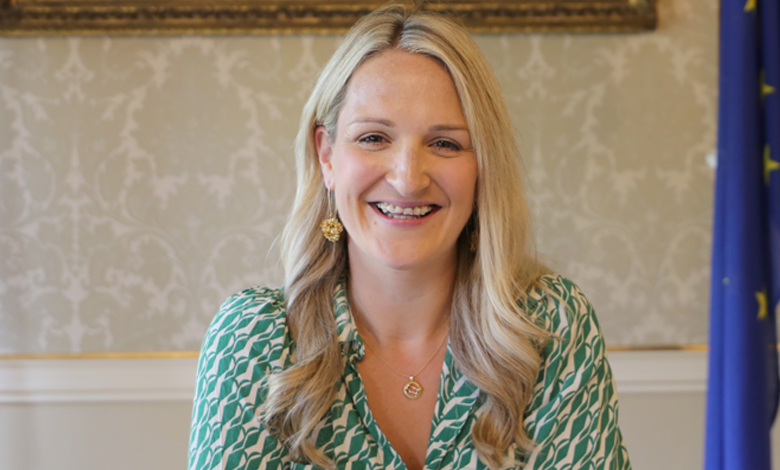
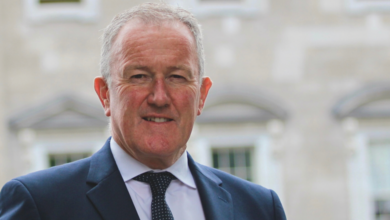
Writing in eolas Magazine Minister for Foreign Affairs and Trade Helen McEntee TD outlines the significant responsibility of Ireland’s Presidency of the Council of the European Union, which comes at a defining moment for Europe.
The world has changed dramatically in recent years. Russia’s illegal invasion of Ukraine continues to threaten peace and security on our continent. Conflict in the Middle East has caused immense human suffering and deepened instability. Economic competition has intensified, global supply chains have been tested, and rapid advances in technology are reshaping our societies and economies.
Against that backdrop, Europe’s ability to act together has never been more important.
For the next six months, Ireland has the privilege of helping to lead that work.
The Presidency of the Council of the European Union can sound technical. It involves chairing hundreds of meetings, managing negotiations, and helping member states reach agreement on legislation. But its purpose is much more practical than that. The Presidency is about ensuring Europe can make decisions that improve people’s lives.
The work we lead over the coming months will shape issues that matter to families, businesses, and communities across Ireland and across Europe: creating jobs, strengthening our economy, keeping children safer online, supporting Ukraine, responding to global instability, investing in infrastructure, and ensuring Europe remains competitive in an increasingly uncertain world.
Ireland does not take on the Presidency to advance a purely national agenda. Our responsibility is to act as an honest broker, bringing together 27 member states with different perspectives and priorities, finding common ground and helping Europe move forward together. That role has long suited Ireland.
As a small country with a strong tradition of diplomacy, partnership, and consensus-building, Ireland has consistently demonstrated that influence is not measured by size alone. We have earned a reputation for listening carefully, building trust, and delivering practical outcomes. Those qualities are particularly valuable at a time when international cooperation is being tested.
Our Presidency is built around three priorities: competitiveness, values, and security. These priorities are closely connected because Europe’s long-term prosperity depends not only on economic growth, but also on protecting the democratic values and security that underpin it.
A more competitive Europe means creating the conditions for businesses to invest, innovate, and grow. It means reducing unnecessary bureaucracy, encouraging research and innovation, and completing trade agreements that open new markets for European businesses.
As Minister for Foreign Affairs and Trade, I have the privilege of chairing meetings of EU trade ministers during our Presidency. At a time of growing geopolitical uncertainty and increasing pressure on global trade, strengthening Europe’s trading relationships has never been more important.
For Ireland, whose economy depends on exports and international investment, helping Europe diversify its markets and strengthen economic resilience supports jobs, businesses, and communities here at home.
Competitiveness, however, must never come at the expense of the values that define Europe.
Democracy, the rule of law and respect for human rights are the foundation of the European project. They are what distinguish the European Union and remain among its greatest strengths.
During our Presidency, we will work to strengthen online safety, particularly for children, recognising that parents expect their children to be as safe online as they are in school or on the sports field.
“Ireland will play its full part in helping to build a stronger, safer, and more prosperous Europe for all our citizens.”
We will continue to support progress on EU enlargement, helping countries such as Ukraine, Moldova, and partners in the Western Balkans advance on their European path where they meet the necessary conditions. We will also continue to champion international law and effective multilateral cooperation at a time when both face unprecedented pressure.
Security will also remain central to our work.
The war in Ukraine has fundamentally changed Europe’s security environment. Ireland will continue to support Ukraine politically, financially, and through humanitarian assistance as it defends its sovereignty against Russia’s illegal aggression. We will also continue to engage actively with our European and international partners in support of lasting peace and stability in the Middle East.
Alongside these immediate challenges, Europe must also become better prepared for future threats. Cyber-attacks, the protection of critical infrastructure, disinformation, and hybrid threats require closer cooperation between member states.
During our Presidency, Ireland will help advance discussions on Europe’s security and defence agenda while fully respecting the different security and defence policies of every member state, including Ireland’s long-standing policy of military neutrality.
One of the most significant tasks during our Presidency will be beginning negotiations on the European Union’s next long-term budget, known as the Multiannual Financial Framework.
While the title may sound technical, the decisions taken will affect every European citizen. The budget determines how Europe invests in agriculture, research, infrastructure, innovation, regional development, security, and support for Ukraine for years to come.
Building consensus around these priorities will be one of the Presidency’s most important responsibilities and will shape Europe’s capacity to respond to future challenges long after our six months have concluded.
The Presidency is also an opportunity to showcase modern Ireland to Europe.
Over the next six months, more than 30,000 delegates will travel to Ireland to attend over 270 Presidency events taking place across towns and cities throughout the country. These meetings will bring together ministers, officials, businesses, academics, and civil society organisations, while our Presidency Cultural Programme will celebrate Ireland’s creativity, heritage, and contemporary culture across Europe.
Later this year I look forward to welcoming foreign ministers and defence ministers to Wicklow, followed by EU trade ministers in Dublin. These meetings are more than diplomatic occasions. They create the space for honest conversations, strengthen relationships between partners, and help build the consensus that allows Europe to respond collectively to shared challenges.
Throughout our Presidency we will be guided by the phrase ‘Ní neart go cur le chéile’, which means strength with unity.
It is more than a motto. It reflects a fundamental truth about Europe today. Whether the challenge is strengthening our economy, protecting democracy, managing migration, addressing climate change, or responding to global conflict, no member state can succeed alone. Our greatest strength lies in working together.
Ireland’s Presidency comes at a time when European leadership matters more than ever. Over the next six months we have an opportunity not only to chair meetings or manage negotiations, but to help shape decisions that will affect almost 450 million Europeans.
That is a responsibility we approach with humility, determination, and ambition. By bringing countries together, building consensus, and delivering practical progress, Ireland will play its full part in helping to build a stronger, safer, and more prosperous Europe for all our citizens.