Embedding tenant voice in governance: Strengthening housing delivery at scale

Across Ireland’s housing sector, the scale and urgency of delivery remain central to policy and public debate. Approved housing bodies (AHBs) continue to play a critical role in meeting national housing need, working in partnership with government, local authorities, and the Housing Finance Agency to deliver social and cost rental homes at pace.
However, as the sector grows in scale and complexity, there is increasing recognition that delivery alone is not sufficient. The long-term success of housing provision depends not only on the number of homes built, but on the quality, sustainability, and responsiveness of the services that underpin them. In this context, tenant engagement is emerging as a key enabler of effective housing management and community development.
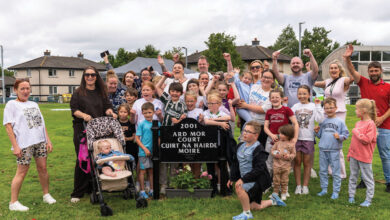
Circle Voluntary Housing Association (Circle VHA), managing over 3,000 homes across urban and rural communities, has sought to respond to this challenge by embedding the tenant voice at the centre of its governance, service design, and organisational decision-making. Supporting a diverse tenant population, Circle has adopted a structured approach to engagement that moves beyond traditional consultation towards meaningful partnership.
A key element of this approach has been the recognition that while tenant participation is widely encouraged across the sector, it can often remain limited in its influence. Without appropriate structures, supports, and pathways, tenant involvement risks becoming tokenistic. Circle has therefore prioritised the development of models that enable tenants to participate as informed, confident, and equal contributors to service delivery.
This is most clearly demonstrated through Circle’s approach to governance. Building on the co-production of its Tenant Communication and Engagement Strategy (TCES), the organisation established the Tenant First Link Committee (TFLC), a dedicated sub-committee of the board designed to create a formal bridge between tenants and governance structures.
Central to this is an eight-step ‘tenant to board pathway’, developed collaboratively by tenants and staff, which supports tenants to build the skills, knowledge, and confidence required to engage at board level.
Through this structured pathway, tenant representatives are not only present but influential. Members of the TFLC have contributed to discussions and decision-making across a wide range of areas, including tenant satisfaction metrics, complaints processes, regulatory compliance, procurement and contractor performance, and policy development.

Crucially, Circle has invested in capacity building to support this engagement, with tenants undertaking governance and leadership training to ensure parity with other board members.
Alongside governance innovation, Circle has embedded co-production as a core principle of service design and improvement. This approach has been applied in areas of significant operational importance, including the review and redesign of its anti-social behaviour (ASB) framework.
Rather than undertaking an internal review, Circle adopted a collaborative model, bringing together tenants with lived experience and staff as equal partners, supported by external expertise. Over a nine-month period, this group co-developed a comprehensive suite of policies, procedures, and tenant-facing resources, ensuring that the resulting framework was both operationally robust and grounded in tenant experience.
Similarly, Circle’s Tenant Communication and Engagement Strategy 2025-2027 was fully co-produced, with tenants directly shaping its priorities, principles, and delivery mechanisms. This work was informed by extensive engagement, including survey feedback from tenants and staff, and facilitated through structured working groups. The resulting strategy reflects a strong emphasis on accessibility, inclusion, and flexibility, recognising the diverse needs and preferences of tenants.
Importantly, these approaches form part of a broader, measurable programme of engagement. In the past year, Circle has delivered a wide range of tenant engagement activities, with hundreds of tenants participating across participation groups, on-scheme events, and targeted initiatives.
Feedback mechanisms indicate that this engagement is having a positive impact, with tenants reporting increased levels of trust in the organisation following participation. Dedicated structures, such as the tenant advisory group, provide ongoing oversight of strategy delivery, ensuring that engagement remains active and accountable.
For the wider housing sector, there are clear lessons emerging from this work. Meaningful tenant engagement requires investment; time, resources, and structured supports are essential to move beyond consultation and enable genuine participation.
Governance pathways must be intentional and supported, representation alone is not sufficient without the capacity to influence. Co-production, meanwhile, offers a practical mechanism to improve service quality, ensuring that policies and processes are informed by lived experience.
As AHBs continue to scale delivery in line with national housing targets, there is an opportunity to embed these principles more consistently across the sector. Strengthening tenant voice is not separate from delivery, rather, it enhances the effectiveness, sustainability, and legitimacy of housing provision.
Circle’s experience demonstrates that it is possible to deliver at scale while also deepening tenant partnership. Embedding tenants within governance and service design enables housing providers to build more responsive organisations and deliver better outcomes for the communities they serve.
W: www.circlevha.ie
E: info@circlevha.ie