Building homes to support ageing
Ireland’s population is ageing. Around 15 per cent of people are now over 65, and this is expected to rise to 21 per cent by 2040. The number of people aged over 85 is also set to more than double. This long-term demographic shift is already influencing how housing is planned, designed, and delivered.
Longer life expectancy reflects significant social progress, but it also brings clear challenges. Housing must support people as their needs change over time, enabling them to live independently, safely, and with a continued connection to their communities. This shift aligns with national policy under the Government’s Delivery Homes, Building Communities plan and wider objectives supporting ageing in place.
For many older people, the priority is not simply having a suitable home, but remaining part of the places they know. Familiar streets, access to services, and established social networks all play a vital role in wellbeing. Housing for later life must therefore be well located, easy to navigate, and support independence without isolating people from everyday life.
Across Ireland, approved housing bodies such as North & East Housing Association (NEHA) are responding by delivering age-friendly homes that combine thoughtful design, strong links to place, and long-term sustainability. Oakvale Way in Stradbally, Co. Laois, recently delivered by NEHA, is a clear example of how this approach works in practice.
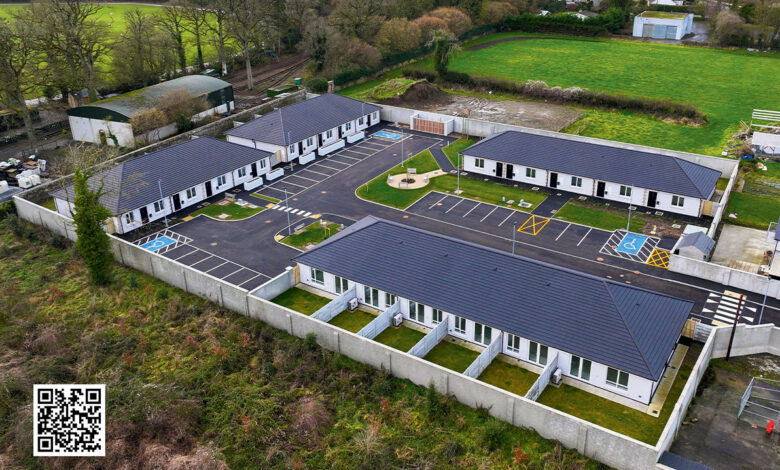
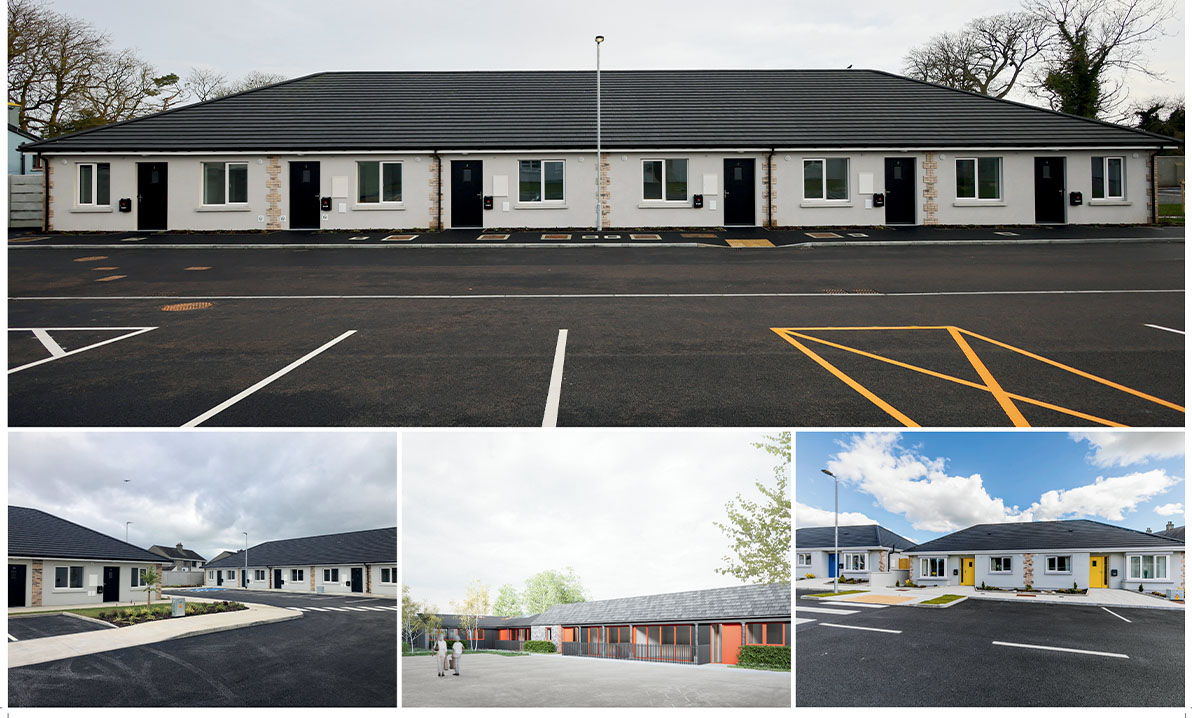
Oakvale Way is a development of 19 age-friendly, single-storey homes, opened to tenants in 2026. The scheme supports independent living while maintaining strong connections to the wider Stradbally community.
Importantly, these homes are not designed for a single stage of life. Instead, they are universally designed to work over time, allowing residents to remain in place as their circumstances change. This reflects a broader shift towards adaptable housing that supports genuine ageing in place, reducing the need for disruptive moves later in life.
The development includes six two-bedroom and 13 one-bedroom bungalows, arranged in small terraces that create a sense of neighbourhood rather than a single block. All homes are single-storey, removing barriers associated with stairs and making layouts easier to navigate and adapt as mobility needs evolve.
Internally, the homes are bright, well-proportioned and finished to a high standard, exceeding national space and design requirements. Generous circulation space, modern kitchens, and bathrooms with level-threshold showers support ease of movement and day-to-day comfort. Each home includes a private rear garden, contributing to residents’ wellbeing.
The external layout has been carefully planned to encourage interaction and support a sense of community. A centrally located landscaped green space with seating provides a shared area, while pedestrian routes connect homes to the internal road network and onwards to the town centre. Public lighting and accessible parking further enhance safety and independence.
Location is a defining strength of the scheme. Oakvale Way sits just off Stradbally Main Street, allowing residents to access shops, services, and community facilities easily and safely. This proximity reduces reliance on transport, supports ageing in place, and helps prevent isolation by keeping people connected to everyday town life.
The development also reflects a strong emphasis on long-term quality, energy efficiency, and sustainability. Homes have been delivered using modern methods of construction and incorporate a range of energy-efficient systems designed to provide consistent indoor comfort while reducing running costs. These include air-to-water heat pump systems, high levels of insulation and airtightness, insulated concrete formwork (ICF) external walls, Joule-insulated hot water cylinders, PVC double-glazed windows, and demand-controlled ventilation systems.
Safety and peace of mind were central to the design and delivery of the scheme. Homes are fitted with interlinked smoke and heat detection systems, fire blankets, and solid core internal doors. Escape routes from living and bedroom areas are clear and direct, with all fire safety measures meeting current standards for domestic dwellings.
Delivery of Oakvale Way was in partnership with Zilic Developments Ltd, and supported by Laois County Council, the Department of Housing, Local Government and Heritage, and the Housing Finance Agency. Independent inspections confirmed that the development meets required standards of design, quality, and regulatory compliance for long-term social housing.
While Oakvale Way provides a dedicated age-friendly living environment, it forms part of a wider response to Ireland’s changing demographics. Developments such as Court View in Stradbally and schemes in Duleek, Co. Meath demonstrate how purpose-built housing can support independence while fostering strong, connected communities. This typology is increasingly viewed as a model of good practice, with similar developments underway with local authority partners.
Looking ahead, planned NEHA employer-led construction projects in Castleblayney and Balbriggan will further expand housing supply for older people while contributing to town-centre regeneration. In Castleblayney, a former fire station is being repurposed, while Marian House in Balbriggan involves the adaptive reuse of a former convent. Both projects combine age-friendly design with the sustainable reuse of existing buildings.
According to Pat Costelloe, Development Manager with NEHA, early design decisions are critical: “When we are designing new homes, we are not just thinking about who will live there today. We are thinking about how those homes will work in 10, 20, or 30 years’ time.
“Features such as step-free access, good circulation space, and adaptable bathrooms allow people to remain in their homes as their needs change, and to do so with dignity and independence.”
Ireland’s ageing population requires a coordinated response across housing policy, planning, and delivery. Housing for older people should not be seen as a niche provision, but as a core part of delivering inclusive, sustainable communities.
As an approved housing body working across towns and rural areas, North & East Housing Association has seen how design and location directly affect people’s ability to age well. Through developments such as Oakvale Way, alongside schemes in Stradbally, Duleek, Navan, Castleblayney, and Marian House, NEHA is delivering homes that support independent living today while planning responsibly for the future.
Scan the QR code on the previous page to view an aerial video of Oakvale Way in the heart of Stradbally, or alternatively visit our website.