
Supporting apprenticeships

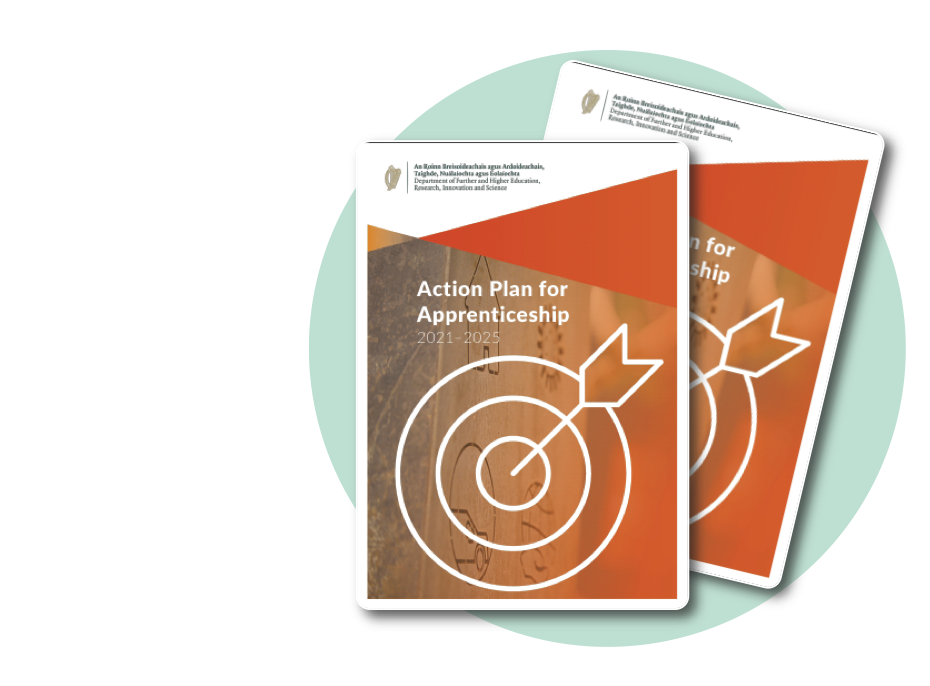
Harry McGoldrick analyses the Action Plan for Apprenticeship 2021-2025 as development of the new Action Plan for Apprenticeship for 2026-2030 continues.
The forthcoming action plan underwent public consultation between December 2025 and February 2026. It is intended to build on the work of the previous action plan.
A document provided to participants by the Department for Further and Higher Education, Research, Innovation and Science about the public consultation, speaks of the necessary growth for the 2026-2030 action plan.
It acknowledges evidence in support of work-integrated learning (WIL), saying that the next action plan will expand apprenticeships and other WIL pathways. It also commits the Government to increasing annual apprenticeship registration levels to 12,500 by 2030.
The transfer of responsibility for craft apprenticeship assessment, certification, and curriculum development from SOLAS and QQI to education employers is seen as a key priority of the 2026-2030 action plan, this is to place quality assurance on those who are best equipped to deliver and maintain standards.
Analysing the 2021-2025 action plan
The action plan initially had a budget of €184 million in 2020, rising to over €410 million by 2026.
One of the main objectives of the action plan was the development and expansion of apprenticeships across all sectors of the economy. As of April 2026, the number of apprenticeships available through the action plan is 81 with 25 in traditional craft and construction, and 56 consortia-led apprenticeships. In 2026, the Department announced three new apprenticeship programmes: software testing, road surfacing technology, and business and operations.
The 2021 action plan also highlighted the need for support for employers. Launched in January 2022, small- and medium-sized business could avail of an employer grant of €2,000 per apprentice if they were not benefitting from indirect support in the form of state training allowances afforded to craft apprenticeships. This saw consortia-led apprenticeships registrations increase from 1,652 in 2021, to 2,239 in 2024.
The action plan also called for a national apprenticeship office (NAO) to be established to implement the action plan, alongside the management, oversight, and the development of the apprenticeship system. It was officially established in 2022, as a joint office of SOLAS and the Higher Education Authority (HEA). The NAO was however, launched behind schedule, as it was meant to be delivered by Q4 2021.
Whilst the action plan aimed to increase the number of apprenticeships across Ireland to 10,000 per year by 2025, it only reached 9,461 in 2025. This represents a 78 per cent rise compared to 2020.
The apprenticeship programmes also experienced delays to in-class training in phases two, four, and six of the education portions of the apprenticeships in the period 2024 to 2026.
Apprentices’ wages were also a point of controversy, as according to Connect Trade Union assistant general secretary Brian Nolan, called it a “national scandal”, that 46 per cent of respondents to research conducted by the trade union reported being paid less than €7 an hour.
The National Survey of Apprentices, however, reports that 87 per cent of apprentices are enjoying their apprenticeship experience, with 94 per cent of apprentices believing their apprenticeships will lead to good employment opportunities. SOLAS data states that between 90 per cent and 92 per cent of apprentice’s progress into their second year.
The Public Services Apprenticeship Plan, which aimed to add 750 apprenticeships to the public service, also fell short of its targets. At the end of September 2025 there were 225 registrations.
Minister for Further and Higher Education, Research, Innovation and Science, James Lawless TD says: “While this remains below the target, it reflects the growing impact of the plan and the public service’s commitment to embedding apprenticeships.”
Speaking in Dáil Éireann in April 2026, Minister Lawless said that he “firmly committed to expanding apprenticeship opportunities”.
“To date in 2026, three new apprenticeships have been launched in software testing, road surfacing technology, and business and operations which I launched earlier this week with ministers Chambers, Calleary, and Harkin. Further programmes, including paramedicine and social care, are scheduled to launch later this year.”
Sinn Féin spokesperson on Further and Higher Education, Donna McGettigan TD argues that the Government must remove all barriers facing apprenticeships. She says: “Targeted financial supports must also be introduced for SMEs during off-the-job training blocks, and public sector participation in apprenticeships should be mandated.”