Ireland’s presidency of the Council of the EU
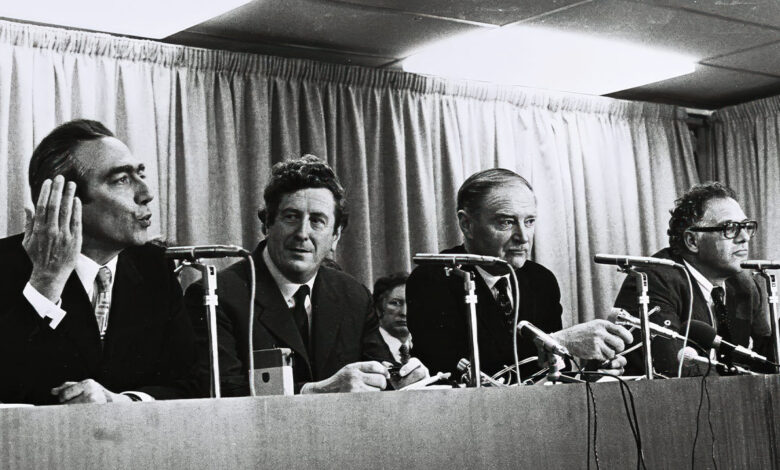
Ireland will play a central role in shaping European policies and laws when it takes over the presidency of the Council of the European Union between July and December 2026.
This will be the eighth time Ireland takes over the presidency having first held the role in 1975. The council is a key decision-maker, and the member state holding the presidency defines what is discussed in council meetings at all levels in line with its presidency programme. Those that hold the presidency must remain neutral and cannot favour the preferences of any member state, including its own.
Its main tasks include negotiating and adopting EU legislation, adopting the EU budget, coordinating member states’ policies, developing the EU’s common foreign and security policy, and concluding international agreements on behalf of the EU.
Member states take turns holding the presidency for six-month terms, a system first introduced in 1958. Each of the 27 member states holds the presidency roughly every 13.5 years. The main responsibilities of the presidency are as follows:
- chairing meetings and steering the work of ministers and officials;
- keeping EU legislation on track by moving discussions forward and handling proposals efficiently;
- helping member states reach agreement by proposing compromises and acting as an impartial broker;
- communicating the council’s work, including decisions and ongoing legislation, to EU institutions, the media, and the public;
- coordinating with the President of the European Council and the High Representative to ensure alignment with the EU’s political direction and foreign policy; and
- ensuring continuity by working within the 18-month ‘trio’ programme.
Groups of three member states holding successive presidencies work together as a trio. This system was introduced by the Lisbon Treaty in 2009. Trios set long-term goals and prepare a common agenda to determine what the council will address over the 18-month period of the trio’s presidencies. Each member state prepares its own six-month programme based on this.
Presidency in practice
As part of its presidency, Ireland will chair around 180 council preparatory bodies such as working parties and committees. It will also host a significant programme of events including:
- 22 informal council meetings of ministers;
- the European Political Community Summit;
- an informal meeting of the European Council;
- around 250 conferences, political events, and stakeholder engagements; and
- additional events organised by universities, cultural institutions, civil society, and business groups.
Ireland, which is in a trio with Lithuania and Greece, will take over the presidency from Cyprus in July 2026 and will stay in the role until December 2026. Its broad thematic priorities will align with the EU’s Strategic Agenda 2024-29, framed around three pillars: values, security, and competitiveness.
One of the key issues likely to feature during Ireland’s presidency is the potential expansion of the EU, with countries such as Ukraine and Moldova seeking to join. Although this is highly unlikely to take place during Ireland’s presidency, both countries may foster closer ties with the EU following Viktor Orbán’s defeat at the 2026 Hungarian parliamentary election.
Competitiveness is also expected to be a key feature, with the 2024 Draghi report finding that the EU faces a widening innovation and productivity gap unless necessary action is taken.
Security and defence will be a key issue in Ireland’s presidency at a time when the State has been criticised by other member states for its lack of defence spending amid Russia’s invasion of Ukraine. The Treaty of Nice, which came into effect in 2003, respects Ireland’s military neutrality. Negotiations on the EU’s multi-year budget for 2028-2034 will also be a key element of the Irish presidency.
As part of a programme of engagement being developed for the presidency, each of the 26 counties in the State will be matched with individual EU member states.
Ambassadors of member states in Ireland and Irish ambassadors across the EU will take part in local events and discussions across society. A cultural programme to showcase Irish creativity and youth engagement activities will also be delivered.
Previous Irish presidencies
Ireland’s first presidency came in 1975, just two years after it joined the EEC. During this presidency, it hosted the first ever formal meeting of the European Council. Additionally, the Equal Pay Directive to mandate equal pay for men and women across member states was passed, and the European Regional Development Fund was established.
In its second presidency in 1979, Ireland oversaw the launch of the European Monetary System and the first directly elected European Parliament. During its 1984 presidency, member states coordinated €29.2 million and 1.2 million tonnes of grain in emergency aid for famine relief in Africa. This term also saw Spain and Portugal enter the EEC.
Ireland’s fourth presidency in 1990 was held following the fall of the Berlin Wall. It hosted an Extraordinary Dublin Summit which managed the integration of the former East Germany into the EEC. The European Environment Agency was established to provide information on the environment which reflect Ireland’s push for green initiatives.
Ireland’s 1996 presidency saw the Stability and Growth Pact brokered at Dublin Castle to establish fiscal rules for member states joining the forthcoming Eurozone. Designs for euro banknotes were selected, and the single currency’s appearance was unveiled during the Dublin European Council.
Ireland’s 2004 presidency featured the ‘Day of Welcomes’ when 10 new member states joined, the largest single expansion in EU history. A draft treaty establishing a constitution for Europe received unanimous consensus which would later define the Treaty of Lisbon.
Ireland’s last presidency in 2013 marked 40 years of the State’s membership and was dubbed the ‘recovery presidency’ as Ireland worked to exit the EU/IMF bailout. During this presidency, progress was made on the single supervisory mechanism to prevent future financial crises. A political agreement was also reached on reform of the Common Agricultural Policy which shift focus toward ‘greening’ and fairer payment distribution.
Minister for Foreign Affairs and Trade Helen McEntee TD says: “It will be an important opportunity to showcase the best of Ireland to our European and international partners.
“This presidency is not just about meetings and negotiations; it is about reconnecting people with what Europe means in their lives.”
Sinn Féin MEP Kathleen Funchion has called on the Government to “use the Presidency to begin structured EU-level discussions on the reunification of Ireland”.
She adds: “This should include preparations for constitutional change, mapping out how a united Ireland would increase Ireland’s role in the EU decision-making process and ensuring representation for the North within the EU in the meantime.”