Reimagining urban mobility with light rail

Cities across Europe are facing intensifying pressures, rapid population growth, congested road networks, and urgent climate action. With 72 per cent of Europeans now living in urban areas and road transport being responsible for almost 73 per cent of all transport CO2 emissions, the need for reliable, low-carbon, high-capacity transport has never been clearer, writes Caroline Lewis, Market Director, Amey.
Against this backdrop, light rail has emerged as an increasingly essential mode of urban transport. More than a way of moving people from A to B, it is helping cities adapt to growth, respond to climate targets, and create healthier, more connected places to live and work.
So, what truly differentiates light rail from other modes of transport, and why is it becoming critical to the future of thriving cities?
Keeping people moving
At its core, light rail is defined by its ability to be designed around how people live and move. Unlike buses or other modes of public transport, it creates fixed, high-quality corridors that support reliable, high-frequency services, and provides the capacity needed to move large numbers of people efficiently through growing urban areas.
But its value extends far beyond mobility alone. When planned and delivered well, light rail helps shape urban form, supporting better place-making, enabling walkable, well-connected neighbourhoods, and providing the transport backbone needed to unlock housing and regeneration opportunities along its routes. These corridors become focal points for growth, easing pressure on roads while improving access to jobs, education, and essential services.
Light rail also plays a critical role in improving health and wellbeing. By reducing car dependency, it contributes to cleaner air, quieter streets, and greater encouragement of active travel. Its electric operation and high passenger capacity provide a credible pathway to cutting emissions, easing congestion and supporting long-term sustainability goals.
Taken together, these benefits show that light rail is not simply a transport solution, but a strategic tool for shaping more inclusive, resilient and liveable cities.
Momentum in the UK and Ireland
This momentum is already visible across the UK and Ireland. In Dublin, for example, the Luas light rail system forms a core part of the city’s public transport network. Public transport journeys now exceed 343 million annually, with Luas accounting for a significant share of daily travel.
As the Greater Dublin Area is projected to grow substantially by 2040, Luas demonstrates how light rail can scale alongside population growth, helping cities manage rising travel demand while maintaining reliable, high-capacity services. Its success highlights the role light rail can play in keeping cities moving as pressures on transport networks intensify.
The question now is how other cities can replicate this success, and, crucially, how light rail needs to be delivered to maximise long-term value.
A systems-thinking approach
Delivering a world-class light rail network requires a different mindset altogether; one grounded in systems thinking, where engineering decisions are coordinated and connected across the entire asset lifecycle. As cities look to harness the full potential of light rail, they need multidisciplinary delivery partners who can integrate data and analytics, design and engineering, and operations and maintenance into a truly whole-lifecycle approach.
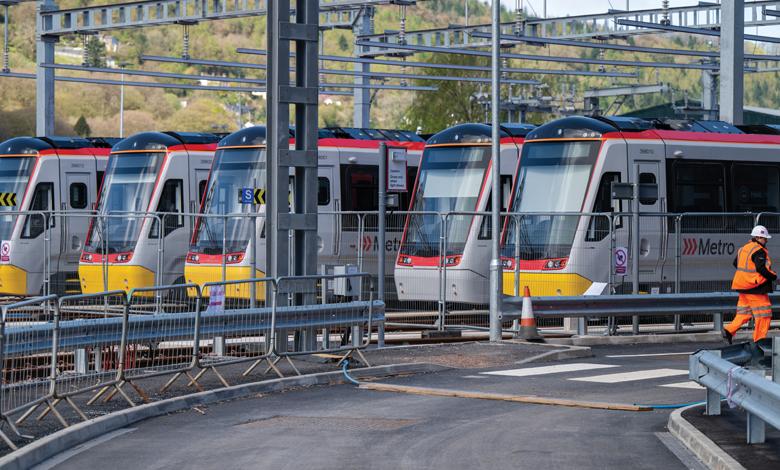
A clear example of this is the Core Valley Lines (CVL) rail upgrade in Wales where Transport for Wales commissioned Amey to support the modernisation of a network serving communities across the Valleys.
Communities across the Valleys experienced long journey times, infrequent services, and ageing infrastructure that constrained access to jobs, education, and essential services. At the same time, the network needed to be modernised without the prolonged disruption and cost typically associated with traditional electrification, particularly given the number of historic structures along the route.
While electrifying and re-signalling more than 170km of track, Amey applied a systems-thinking approach that brought together signalling design, overhead line equipment (OLE), track, telecoms, civils, electrification, and operations within a single, integrated design process. Timetable scenarios were modelled early and embedded into the Core Valley Lines Integrated Control Centre, allowing design teams to shape solutions proactively; optimising maintenance access, signal sighting, and driver visibility.
This integrated view also informed a smart, discontinuous electrification strategy, avoiding major civil interventions such as bridge reconstructions, reducing disruption, accelerating delivery, and saving millions in infrastructure costs.
The outcome was a safer, more efficient upgrade programme that reduced rework, improved delivery certainty, and enhanced the passenger experience. Investment in a new £100 million depot and control centre has created hundreds of long-term skilled jobs and laid the foundations for reliable, future-ready operations.
By viewing the railway as a connected system rather than a collection of isolated assets, the programme embedded resilience, maintainability, and performance from the outset; demonstrating how delivery choices directly shape long-term social, economic, and operational outcomes.
Scaling impact and acting now
For cities across the UK and Ireland, the opportunity is clear. As populations grow and pressures on transport networks intensify, light rail will play an increasingly important role in shaping sustainable urban mobility.
The challenge now is not whether to invest in light rail, but how to deliver it. By embracing partnerships that combine integrated engineering, digital insight, and whole-lifecycle thinking, cities can unlock the full potential of light rail; creating transport networks that support growth, resilience, and prosperity for generations to come.